Nord Quantique raises $30M at $1.4B valuation to build fault-tolerant quantum computers by 2030
 Nickie Louise
Posted On May 18, 2026
Nickie Louise
Posted On May 18, 2026
Quantum computing has attracted billions in investment over the past decade, yet one problem continues to haunt the industry: errors. Qubits are fragile, unstable, and notoriously difficult to scale without massive overhead. Many companies have chased bigger machines packed with more qubits. Nord Quantique is taking a different route.
The Canadian quantum startup said on Monday it has raised $30 million in fresh funding as it pushes to build fault-tolerant quantum computers by 2030. The round adds to a growing pile of public and private backing behind the company’s approach to quantum error correction, an area many researchers see as the biggest obstacle standing between experimental quantum systems and commercially useful machines.
“Our hardware-efficient approach to quantum computing requires a fraction of the qubit overhead and a fraction of the capital. We aren’t interested in building the biggest or most expensive machine. Our goal is to build the most efficient one,” said Julien Camirand Lemyre, CEO and Co-founder, Nord Quantique. “This investment, and the investor interest behind it, is validation we are on the right path.”
The new funding arrives at a time when governments and investors are pouring money into quantum infrastructure in hopes of securing an early lead in what many believe could become the next major computing platform after classical systems and AI.
Backed by Fidelity and DARPA, Quantum computing startup Nord Quantique raises $30M for quantum breakthrough
Nord Quantique has already secured substantial non-dilutive backing before this latest round. The company previously received $16 million from Canada’s Quantum Champions Program, a federal initiative that supports scalable quantum computing projects. It later advanced to Stage B of DARPA’s Quantum Benchmarking Initiative, receiving another $5 million in funding, with the possibility of securing up to $10 million more during the current phase. Stage C of the DARPA program could open the door to as much as $300 million in future funding.
That combination of venture capital support and government backing reflects rising confidence in the company’s technical roadmap, particularly its bet on bosonic quantum error correction.
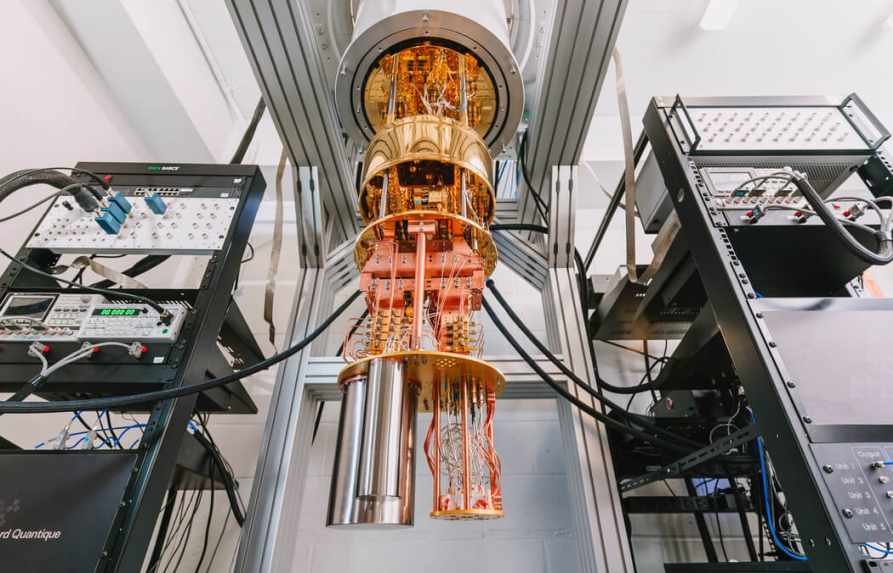
Most quantum systems rely on heavy qubit redundancy to compensate for instability and noise. That approach can require enormous numbers of physical qubits just to produce a smaller number of reliable logical qubits. Nord Quantique claims its architecture sidesteps much of that overhead by embedding error correction directly into the qubit itself through superconducting bosonic codes and multimode logical qubits.
The company says the result is a 1:1 logical-to-physical qubit ratio, a figure that stands out in an industry where many competing systems require far larger qubit stacks to achieve similar fault tolerance goals.
If the approach works at scale, it could lower the cost and physical footprint required to build commercially useful quantum systems. The company says its architecture could support faster clock speeds and data-center-compatible deployments, two areas that continue to challenge the broader quantum industry.
Investors participating in the round include BDC, Fidelity Investments Canada, Panache Ventures, Presidio Ventures, Quantacet, Quantonation, and Real Ventures.
Quantum computing still faces major scientific and engineering hurdles before it becomes widely useful. Yet the funding momentum behind companies focused on error correction shows where much of the industry’s attention has shifted. Bigger qubit counts alone are no longer enough. Investors want systems that can actually work outside the lab.