The human side of agentic AI adoption: Why Google is sending builders, not salespeople, into the enterprise
 Daniel Levi
Posted On May 13, 2026
Daniel Levi
Posted On May 13, 2026

Enterprise AI is no longer a software demo problem. It’s an operational deployment problem.
After nearly three years of nonstop AI hype, enterprises are running into a reality check. Building an impressive chatbot demo is easy. Getting agentic AI systems to work inside large organizations is something else entirely.
That gap between demo and deployment is now reshaping the enterprise AI market.
On May 12, Google revealed a major expansion of its Forward Deployed Engineer program as part of a newly formed AI-focused organization inside Google Cloud’s go-to-market division. The move signals a broader shift happening across the industry. AI companies are discovering that the next phase of adoption will depend less on selling software and more on embedding technical talent directly inside customer organizations.
Google is not sending more salespeople into enterprises. It’s sending builders.
Google’s enterprise AI push enters a new phase
The announcement came from Google Cloud leadership, including CEO Thomas Kurian, who said the company is investing in additional Forward Deployed Engineers, or FDEs, to help enterprises adopt Google’s AI products and build agentic systems faster.
In a LinkedIn post, Kurian wrote that demand for Google engineers helping customers “embrace agent development is growing very rapidly.”
“As part of this expansion, we are investing in hiring additional Forward Deployed Engineers (FDEs) to help us scale customer AI transformation. While having FDEs is not new for Google Cloud, the demand from customers and partners for Google enterprise AI products and Google engineers to help them embrace agent development is growing very rapidly,” Kurian wrote in a LinkedIn job post.
The hiring effort is tied to Google’s broader Gemini Enterprise Agent Platform strategy, previously known as Vertex AI. It arrives alongside Google’s recently announced $750 million ecosystem commitment to help its global partner network accelerate enterprise AI deployments.
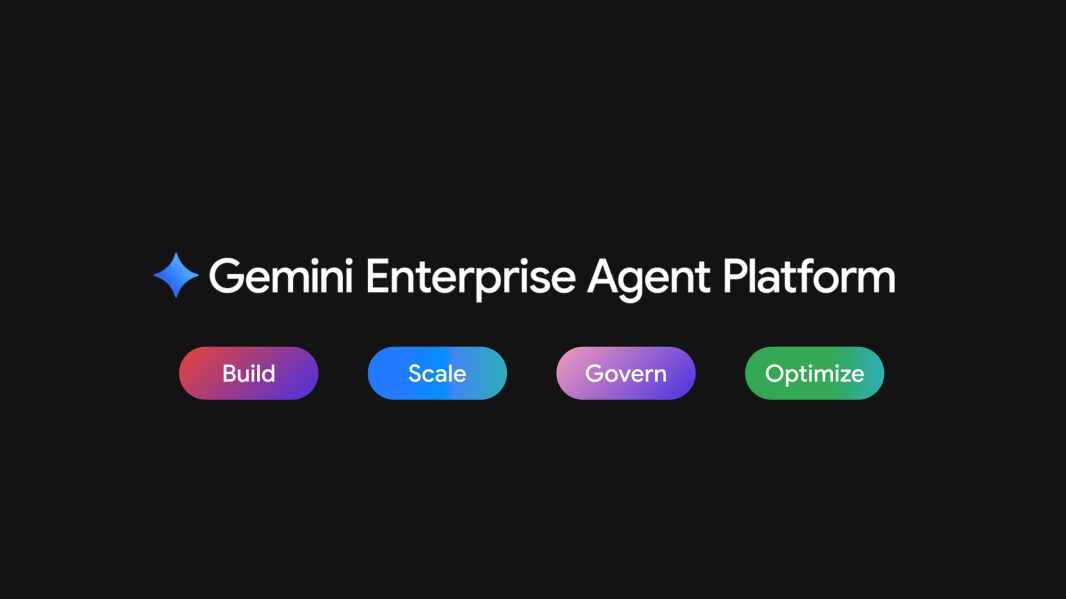
Gemini Enterprise Agent Platform (Credit: Google)
“This is in addition to our recently announced $750 million Ecosystem Commitment to deliver new resources and incentives to partners in our 120,000-member ecosystem to help accelerate joint customers transformations with agentic AI,” Kurian added.
That combination matters.
Google is quietly building something larger than an AI product business. It is building an AI deployment ecosystem.
Why forward-deployed engineers are becoming critical to enterprise AI
Forward-deployed engineers are not traditional consultants. They are hands-on technical operators who work directly within customer environments, often side by side with internal engineering teams.
Google’s own job descriptions make the role clear. FDEs are expected to “code, debug, and jointly ship bespoke agentic solutions directly within the customer’s environment.”
That means integrating models into legacy infrastructure, solving workflow bottlenecks, connecting internal data systems, tuning agents, building evaluation pipelines, and helping organizations move AI systems from experimentation into production.
For years, enterprise software followed a relatively familiar pattern. Companies purchased software licenses, integrated systems, trained employees, and rolled out updates over time.
Agentic AI changes the equation.
Businesses are no longer deploying static software tools. They are deploying systems capable of generating work output, making decisions, interacting with employees, and executing tasks across workflows. That raises the technical stakes dramatically.
An enterprise deploying AI agents is effectively redesigning part of its operational structure in real time.
That process requires builders.
The real bottleneck isn’t the AI model
The AI industry spent years competing on model size, benchmark scores, inference costs, and compute infrastructure. Enterprises care about something more practical.
Can this technology actually work inside my organization?
That question has become the defining challenge of enterprise AI adoption.
In many companies, AI deployments are slowing due to issues that have little to do with the models’ intelligence. Data governance problems, fragmented infrastructure, approval bottlenecks, security reviews, workflow redesign, compliance requirements, and employee adoption are becoming the real friction points.
One AI pilot after another has stalled before reaching company-wide deployment.
Google’s strategy appears built around confronting that reality directly.
Instead of treating implementation as a secondary problem left to customers or consulting firms, Google is placing engineers closer to enterprise operations. The company is effectively acknowledging that AI adoption is still deeply human work.
That may become one of the defining lessons of the agentic AI era.
“Builders, not salespeople” is becoming the new AI playbook
Google is not alone in this shift.
Across the AI sector, companies are investing heavily in deployment-focused talent. OpenAI recently launched DeployCo, backed by billions, to help customers operationalize AI systems. Anthropic has expanded enterprise deployment roles of its own. The trend traces back to Palantir Technologies, which pioneered the forward-deployed engineer model years ago.
Earlier this week, OpenAI announced the launch of OpenAI Deployment Company, a new $4 billion venture focused on helping organizations build and deploy AI systems at scale. The unit will be majority-owned by OpenAI and backed by a multi-year partnership involving 19 firms led by TPG, with Advent, Bain Capital, and Brookfield serving as founding partners. The move signals that enterprise AI deployment is becoming a business category of its own.
The difference now is scale.
Demand for these roles is exploding as enterprises move from experimentation into production rollouts. Industry observers describe FDEs as hybrid operators who combine engineering, product thinking, customer problem-solving, and operational execution.
That combination is becoming one of the most valuable skill sets in enterprise technology.
The AI race is starting to look less like a competition between models and more like a competition for implementation capacity.
Models may become cheaper and more interchangeable over time. Elite deployment talent probably will not.
Why this matters for enterprise AI leaders
For enterprise customers, Google’s move could remove one of the biggest barriers slowing adoption.
Many organizations already believe AI can improve productivity. The harder problem is integrating these systems into existing business processes without disrupting operations or creating security risks.
Forward-deployed engineers help close that gap.
They shorten the distance between proof of concept and production deployment. They help enterprises evaluate models, structure workflows, prepare internal data systems, and continuously tune agentic systems after launch.
That last part matters more than many executives expected.
Unlike traditional software deployments, agentic systems are rarely “finished.” They require constant iteration, monitoring, adjustment, and operational alignment.
That dynamic is pulling enterprise AI closer to large-scale transformation consulting than classic SaaS deployment.
For Google’s competitors, the move raises pressure across the industry. Strong models alone may no longer be enough. The companies that win enterprise AI adoption may be the ones that combine strong technology with strong human execution layers around it.
AI still needs humans to scale
For years, Silicon Valley framed AI as a technology capable of replacing human labor across industries.
Now the industry is hiring armies of engineers to make AI usable inside businesses.
There’s an irony in that shift.
The closer AI gets to real enterprise deployment, the more valuable deeply technical human operators become.
Google’s expansion of its Forward Deployed Engineer program is not a sign that AI is failing. It is a sign that the market is maturing. Enterprises are moving past demos and asking harder questions about reliability, governance, workflow integration, and measurable business outcomes.
That changes the role humans play in the AI economy.
The next chapter of enterprise AI may not belong to the companies with the flashiest demos. It may belong to the companies that know how to embed builders directly inside the messy realities of enterprise operations.