Google just killed the Chromebook, replaces it with AI-powered Googlebook laptops
 Daniel Levi
Posted On May 13, 2026
Daniel Levi
Posted On May 13, 2026
Google just pulled the plug on the Chromebook era. At least that’s what yesterday’s Android Show felt like.
Buried inside Google’s latest Android announcements was something far bigger than another laptop refresh: a brand-new AI-focused computing platform called Googlebook. The new laptops, built with partners including Dell, HP, Acer, Asus, and Lenovo, appear to replace Chromebooks with a system built around Gemini from the ground up.
The message from Google was hard to miss. The browser-first laptop is no longer enough. Google now wants AI at the center of its operating system.
That shift starts with Googlebook.
Googlebook is here: Google replaces Chromebook with Gemini-powered AI laptops
The upcoming Googlebook laptops run on a new Android-based operating system that blends Android and ChromeOS into a single platform. Through leaks and internal references, the OS has been known as “Aluminium,” though Google says that’s only a codename. The company still hasn’t revealed the official branding for the operating system.
Announcing the launch yesterday, Google said: “Over 15 years ago, we introduced the Chromebook, a laptop built for a cloud-first world. Now, as we are moving from an operating system to an intelligence system, we see an opportunity to rethink laptops again. We’re bringing together the best of Android, which comes with powerful apps on Google Play and a modern OS that’s designed for Intelligence, and ChromeOS, which comes with the world’s most popular browser.”
“The result is Googlebook: a new category of laptops built with Gemini’s helpfulness at its core, designed to work seamlessly with the devices in your life and powered by premium hardware. We’re sharing a sneak peek into the Googlebook experience today and will have a lot more to share later this year,” Google wrote in a blog post.
The hardware details remain thin. There are no chip specs, pricing details, or launch models yet. Google only showed teaser renders and confirmed hardware partnerships with major PC makers. Still, the direction is already clear.
“We’ll have more to share on the exact OS branding later this year,” Peter Du of Google’s global communications team told The Verge. “We can confirm it is not Aluminium — that is the codename, not the official branding.”
Googlebook is being positioned as an AI-native laptop platform.
Chrome remains the browser layer. Android apps run directly on the laptops. Users can access files and apps from their Android phones without switching devices. Gemini sits across the operating system, woven into the experience rather than trapped inside a chatbot window.
Then there’s “Magic Pointer,” one of the more interesting features Google previewed.
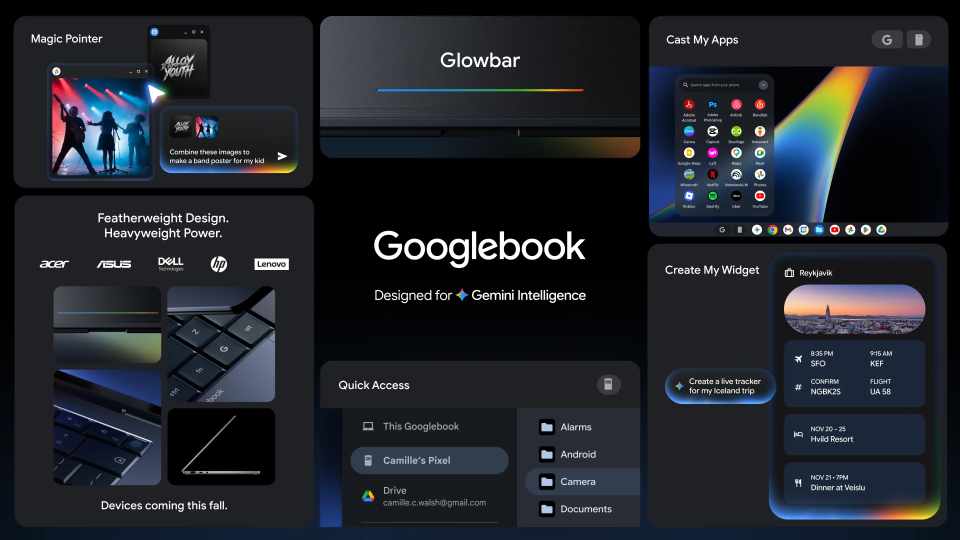
The feature turns the cursor into an AI-aware assistant. Shake the cursor and point it at something on the screen, and Gemini surfaces contextual actions or suggestions. Google showed examples such as tapping a date in an email to create a meeting or selecting furniture images to visualize them in a room layout.
That feature says a lot about where the industry is heading.
AI is moving beyond chat interfaces and into the operating system layer itself. Microsoft started pushing in that direction with Copilot+ PCs. Apple is weaving Apple Intelligence into macOS and iOS. Google’s answer looks more aggressive. Instead of adding AI on top of the operating system, Googlebook appears built around it.
That may explain why Googlebook feels less like a Chromebook refresh and more like a replacement.
Chromebooks carved out a massive market in schools and budget computing by focusing on cheap hardware and cloud-based workflows. They were lightweight, affordable, and easy to manage. They were rarely exciting.
Googlebook aims at something very different.
Googlebook is Google’s answer to Copilot+ PCs
Google is betting people want laptops that behave more like AI assistants than traditional PCs.
The company is even introducing AI-generated widgets across Googlebook, Android phones, and Wear OS devices. Google’s examples included widgets that organize travel itineraries and reservations, and countdown timers generated from natural language prompts.
Some of the early demos looked useful. Others looked like the kind of thing people will try once and forget exists two days later.
There’s still a long list of unanswered questions.
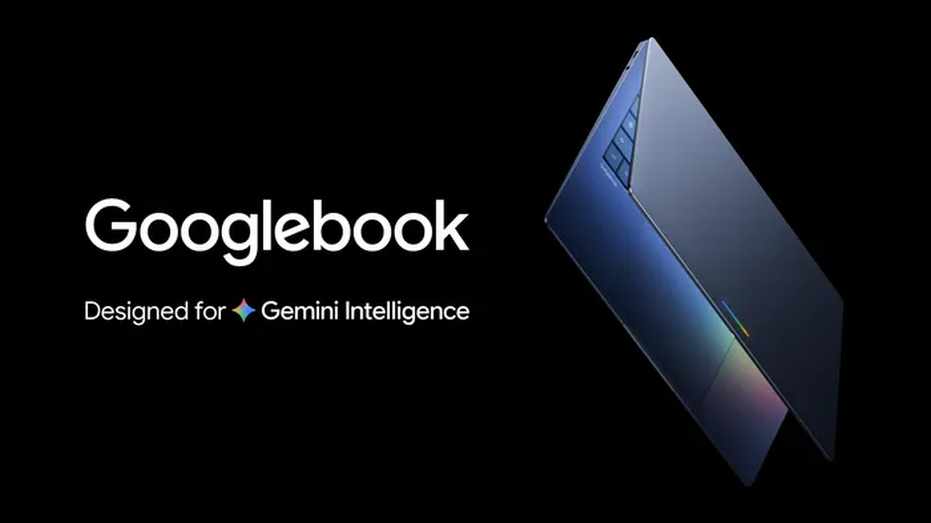
The teaser images show a sleek laptop with a glowing Google-colored light bar, though Google hasn’t said whether the hardware is from a partner or whether the company plans to launch its own Pixel-style Googlebook device. There’s no word yet on battery life, local AI processing requirements, or whether these systems rely heavily on cloud inference.
The uncertainty extends to Chromebooks themselves.
Google says Chromebooks are not disappearing immediately. Peter Du told The Verge that “Yes, there will be Chromebooks released after the launch of Googlebook,” and confirmed that existing devices will continue to receive support through their promised update windows. Chromebooks released in 2021 or later still get up to 10 years of automatic security updates.
Still, it’s difficult to ignore what’s happening here.
Google did not spend years merging Android and Chrome OS just to create another budget-laptop category. Googlebook appears to be the company’s attempt to reset personal computing around AI before Microsoft or Apple lock in the next platform shift.
Chromebooks introduced the browser-first era.
Googlebook may be Google’s attempt to define the AI-first era.
Below is a preview of Googlebook.