Enzo Health raises $20M Series A to scale AI-powered platform for booming home health market
 Daniel Levi
Posted On May 4, 2026
Daniel Levi
Posted On May 4, 2026
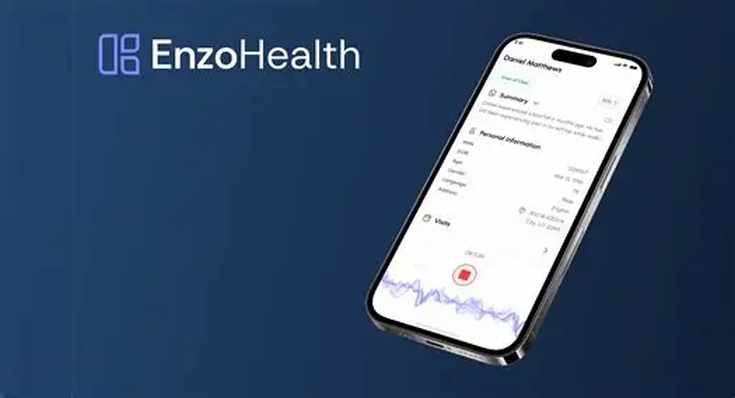
Enzo Health is betting that the future of care doesn’t sit inside a hospital—it starts at home. The AI startup has raised a $20 million Series A round led by N47, bringing its total funding to $26 million, at a moment when demand for in-home care is climbing at a pace the system can’t easily handle.
More than 10,000 Americans turn 65 every day. That shift is already reshaping healthcare, pushing more treatment into living rooms and away from clinical settings. The agencies tasked with delivering that care are under pressure from every direction: tighter reimbursements, heavier compliance requirements, and a workforce that’s burning out faster than it can be replaced.
Enzo is positioning itself right in the middle of that strain.
Founded in 2024, the company has grown quickly, reporting a more than 40x jump in revenue over the past year. Its software is now used by organizations that collectively support over 500,000 patients each year. That early traction is part of what pulled investors like Gradient, Tandem Ventures, and Rigby Watts back into the round.
At its core, Enzo aims to replace the patchwork of tools most home health agencies rely on. Instead of juggling separate systems for referrals, documentation, compliance checks, and billing, the company offers a single platform that handles the entire workflow—from the moment a patient is referred through final reimbursement.
Zach Newman, co-founder and CEO of Enzo Health, said, “Home health is one of the fastest-growing segments in healthcare due to the rapidly expanding 65+ demographic. But the agencies delivering that care are being squeezed from every direction. Their compliance and operational requirements keep growing, while the solutions they’re using were never built to handle these demands. The result is burned-out clinicians, unsustainable turnover, and patients who can’t get the care they need. Enzo fixes that.”
The problem he’s pointing to is well documented. Seven out of ten Americans will need long-term care at some point, according to the U.S. Department of Health and Human Services. At the same time, jobs in home health are projected to grow about 17% over the next decade. That demand is colliding with operational friction inside agencies, where documentation, audits, and billing requirements eat up hours that would otherwise go to patient care.
Turnover tells the story. Industry data show that nearly 80% of home health clinicians leave within their first 100 days, often worn down by administrative work layered on top of already demanding schedules.
Enzo’s pitch is straightforward: reduce that burden with automation. Its platform processes referrals by converting faxes, emails, and PDFs into structured data and checking eligibility within seconds. During visits, clinicians can complete documentation in real time, with built-in validation to catch errors before they become compliance issues. Behind the scenes, the system continuously reviews charts, flagging risks related to reimbursement or regulatory gaps.
The goal is to give agencies back time and stability and to let clinicians focus on care rather than paperwork.
The company plans to use the new funding to push deeper into adjacent areas like skilled nursing and hospice, where the operational challenges look similar but come with their own layers of regulation and clinical nuance.
Investors see a broader shift underway. Vivian Cheng, Partner at N47, said, “Enzo is redefining how home health organizations operate, removing the administrative burden that has long defined the industry and enabling clinicians and agencies to serve more patients. By building an AI-native platform from the ground up, Enzo is enabling a level of automation and efficiency that legacy systems simply can’t match. We’re proud to back Zach and the Enzo team as they scale their vision for post-acute care. The impact for providers and patients alike will be enormous.”
Andrew Brackin, Partner at Gradient, framed it in simpler terms. “As America ages, home health is becoming one of the most important care settings. Yet the agencies delivering that care are still too often held back by documentation-heavy workflows and fragmented legacy software. The category does not need another disconnected AI point solution. It needs a platform. We led Enzo’s seed round because Zach, Dan, and the team were moving exceptionally fast toward a clear and ambitious vision: building the AI-native platform for home health.”
That distinction—platform versus point solution—keeps coming up in healthcare software. Many startups have tried to solve narrow problems inside the system. Fewer have managed to tie the entire workflow together in a way that agencies can actually rely on day to day.
For Enzo, the bet is that scale comes from owning that full pipeline. If it works, the impact reaches beyond agency margins or clinician hours. It could shape how and where millions of patients receive care in the years ahead, as aging shifts the center of healthcare closer to home.
Trending Now

Top Tech News Today, April 17, 2026