Critical Loop raises $26M to cut power connection delays from years to days with modular microgrids
 Nickie Louise
Posted On April 13, 2026
Nickie Louise
Posted On April 13, 2026
Getting power in the United States can take years. For companies trying to build factories, data centers, or EV charging sites, that wait isn’t just frustrating—it can stall growth entirely. Critical Loop thinks it has a faster path.
The industrial power startup has raised $26 million in a Series A round led by Conifer Infrastructure Partners and Hanover, with backing from Better Ventures, Climate Capital, Adapt Nation Capital, and Cyrus Ventures.
The new capital brings total committed funding, including equity and debt, to $49 million. The company plans to use the funds to scale deployments and deepen partnerships, including ongoing work with San Diego International Airport and a supply agreement with LG Energy Solution Vertech for U.S.-made batteries.
Critical Loop’s pitch is straightforward: skip the years-long queue for grid upgrades and get customers connected in weeks. Its systems combine battery storage, generation, and a software-defined controller called Cygnus into a single platform that can be deployed where grid capacity is tight. Instead of waiting for utilities to build permanent infrastructure, customers can tap into flexible interconnection and keep projects moving.
“In just a couple of years, we’ve built a software and hardware stack that has the potential to accelerate time to power from years to days, and with this team, we believe we can keep doing things that were previously considered impossible,” said Bala Ramamurthy, Co-Founder and CEO, Critical Loop. “The caliber of people we have attracted makes me confident about what we’ll build next.”
Critical Loop’s $26M Bet on Fast Power: Startup Targets Grid Delays Slowing AI and Industry
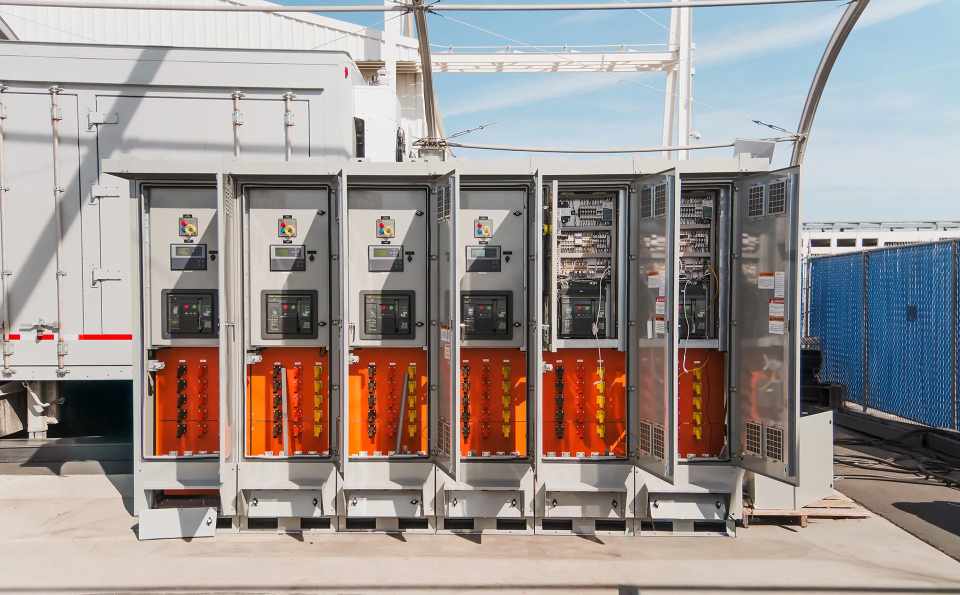
At the center of the offering is the CLB-5100, a 1 MW battery system that can connect to on-site generation, existing grid infrastructure, and newer distributed energy sources. The system is designed to be mobile, shifting to locations where capacity is constrained. That flexibility gives utilities a way to bring customers online sooner, even as long-term upgrades move forward in the background.
The timing lines up with rising pressure on the grid. AI data centers are one piece of the demand surge, though far from the only one. Industrial electrification, EV infrastructure, and digital expansion are all pushing utilities to their limits. Critical Loop is positioning its platform as a bridge between today’s constraints and tomorrow’s capacity.
“Grid interconnection queues are limiting industrial growth, and the current solutions are mostly slow to deploy and inflexible, which does not meet current needs,” said Nick Stork, Founder and Managing Partner at Conifer Infrastructure Partners. “Critical Loop is working on a timeline that actually matches what customers are dealing with. Critical Loop is delivering a real and immediate solution while also offering customers long-term value beyond solving for today’s need for power, and this team has shown they can deliver on that.”
Investors see the company as part of a broader shift in energy systems. Advances in battery technology and power electronics are starting to change how energy gets delivered and managed.
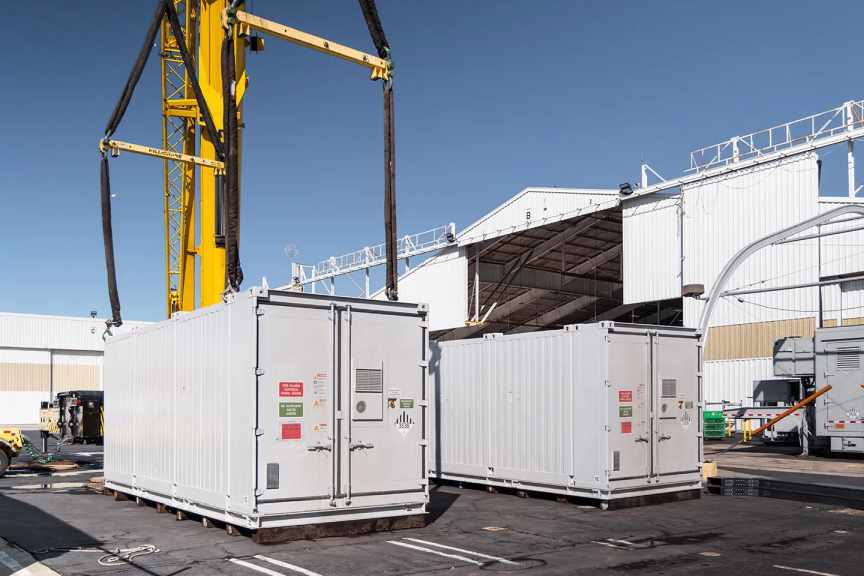
Courtesy: Critical Loop
“Moore’s Law-style effects are beginning to deliver in energy, and the impact for America is profound. After years of working on advanced technologies, including gallium nitride (GaN) in power conversion and silicon-based lithium-ion batteries, I am excited to be bringing a full-stack industrial and commercial power system to power-hungry companies and grid operators alike,” said Joe Malchow, Founder and General Partner at HNVR Technology Investment Management. “Critical Loop’s CLB-5100 speeds time-to-power and buys down net power cost – adding resilience to the grid while unlocking predictable costs for companies whose growth is at stake. This is quite literally the prerequisite to a new industrial revolution. I am immensely proud of the world-class team delivering the CLB product line with quality and speed.”
The company already has a string of deployments that show how the model works in practice. It won a competitive bid to manage solar and battery systems supporting an 11 MW load at San Diego International Airport, one of the busiest single-runway airports in the country. It kept a manufacturing facility operated by Cover running through an eight-month utility outage. It helped Terawatt Infrastructure secure more than 4 MW of additional capacity for EV charging sites within months. In the Mojave, it deployed hybrid microgrids for test facilities on short notice.
Regulators are paying attention. The California Public Utilities Commission cited Critical Loop in a February 2026 rulemaking that requires utilities such as SCE and PG&E to introduce new flexible service connection options for customers facing grid constraints.
For developers and operators, the shift could be meaningful. “The industrial real estate market in Northern California runs on timelines that cannot afford to sit idle for years,” said Greg Matter, Vice Chairman, Head of Advanced Manufacturing, JLL. “When Critical Loop can get a facility connected in weeks or months, that changes what developers and tenants can commit to.”
Critical Loop is currently focused on California, where grid congestion is acute. Expansion into other regions is next, particularly markets facing similar bottlenecks.
The bigger idea is simple. Power shouldn’t be the reason a project stalls. If Critical Loop can deliver on its promise, access to electricity could start to look less like a waiting game and more like a service—available when it’s needed, not years later.

Courtesy: Critical Loop
Trending Now