Cisco in talks to acquire Israeli AI security startup Astrix for up to $350M as AI agent risks surge
 Daniel Levi
Posted On April 10, 2026
Daniel Levi
Posted On April 10, 2026
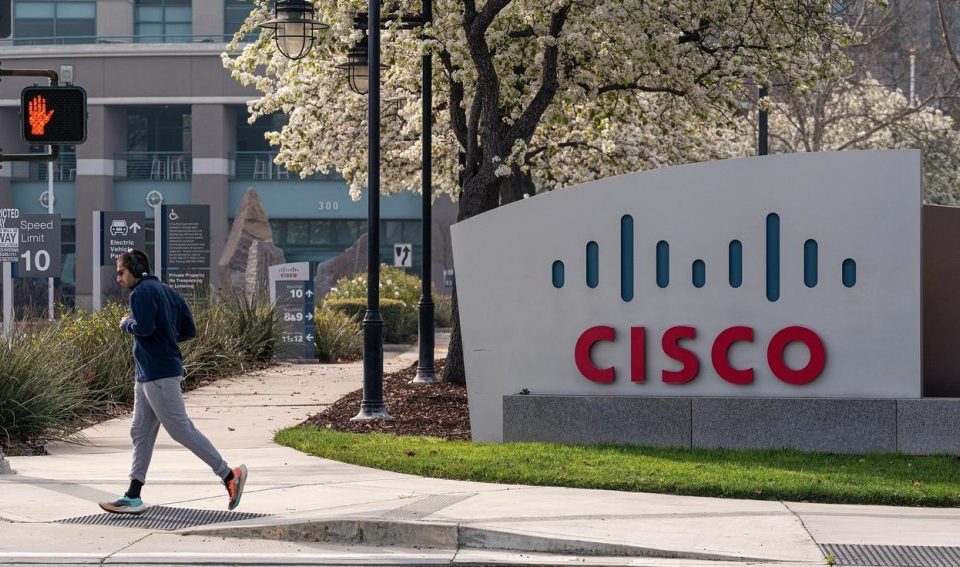
Cisco is moving quickly to lock down a new and growing risk: AI agents that can operate autonomously within enterprise systems.
The networking giant is in early talks to acquire Astrix Security, a Tel Aviv–based AI security startup focused on securing AI agents and non-human identities, according to a report from The Information. The deal could value the five-year-old company between $250 million and $350 million, a notable jump from its last known valuation of around $200 million.
“Cisco Systems is in talks to acquire Astrix Security, a five-year-old Israeli cybersecurity startup that sells software to monitor and secure AI agents, for between $250 million and $350 million, according to people with knowledge of the deal. That would represent at least a 25% premium to the startup’s last valuation of around $200 million,” The Information reported, citing one of the people familiar with the matter.
Cisco Moves to Acquire Astrix Security for up to $350M in Push to Secure AI Agents
The timing says a lot. AI agents are starting to show up everywhere inside companies. They connect to SaaS tools, access internal systems, and carry out tasks with little oversight. That convenience comes with risk. These agents can quietly gain broad permissions, spin up outside official channels, or behave in ways that expose sensitive data. Security teams are now racing to catch up.
Astrix has built its business around that gap. Founded in 2021 by Alon Jackson and Idan Gour, the company focuses on what it calls an identity-first approach. Instead of treating AI agents like traditional software, Astrix treats them like identities that need to be discovered, monitored, and controlled.
Its platform tracks both approved and shadow agents across enterprise environments, including those running quietly on employee devices. It detects risky behavior in real time, restricts unnecessary access, and applies policies that limit what agents can do. It extends familiar identity and access management ideas into a world where machines increasingly act on behalf of humans.
Investors have taken notice. Astrix has raised roughly $85 million to $91 million, including a $45 million Series B round in December 2024 led by Menlo Ventures through its Anthology Fund and backed by Anthropic. Other investors include Workday Ventures, Bessemer Venture Partners, CRV, and F2 Venture Capital. The company has appeared on the Fortune 2026 Cyber 60 list and has been cited in Gartner research focused on agentic AI security.
At RSA Conference in March 2026, Astrix introduced an expanded platform aimed at managing the full lifecycle of AI agents, from discovery to deployment. The message was clear: enterprises lack visibility into what these agents are doing, and the gap is widening.
For Cisco, the potential acquisition fits into a broader push to build out its AI and security stack. The company has made it clear that agentic AI is a priority. At RSA 2026, it introduced initiatives such as DefenseClaw, an open-source framework for building secure agents, alongside broader AI defense efforts to give companies more control over autonomous systems.
The deal talks follow a series of recent moves. Cisco said on April 9 that it plans to acquire Galileo Technologies, a company focused on AI observability. Back in 2024, it closed its $28 billion purchase of Splunk and announced plans to acquire Robust Intelligence, which focuses on securing AI models. Each step points in the same direction: bringing AI development and security under one roof.
Astrix would fill a missing piece. Cisco already covers network, cloud, endpoint, and identity security. What it lacks is a dedicated layer for governing AI agents and non-human identities at scale. That gap is becoming harder to ignore as companies move from AI experiments to real deployment.
Across the industry, the shift is happening fast. Enterprises are no longer asking whether to use AI agents. They are asking how to control them. These systems can access critical tools, move data across environments, and take action without constant human input. Traditional security tools were not built with that behavior in mind.
If the deal goes through, Astrix would likely become part of Cisco’s broader Security Cloud platform, giving customers a way to track and control AI agents alongside the rest of their infrastructure. For Astrix, the acquisition would validate its early bet on a problem that many companies are only now beginning to recognize.
Neither company has commented publicly, and the talks remain subject to change. Still, the direction is clear. As AI agents move deeper into enterprise systems, the companies that can keep them in check are becoming some of the most valuable targets in cybersecurity.
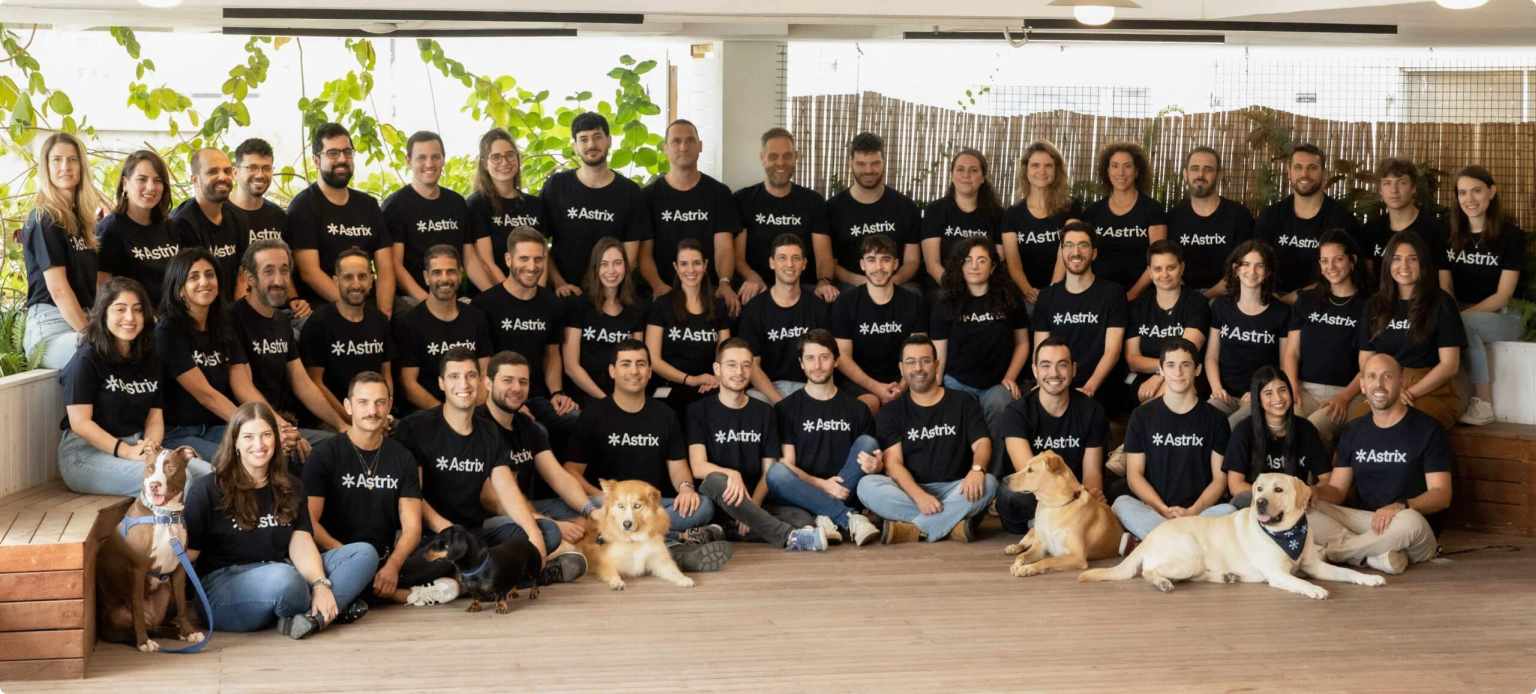
Astrix Security Team (courtesy: Astrix)
Trending Now