Alibaba launches data center with 10,000 homegrown AI chips to challenge Nvidia’s dominance
 Daniel Levi
Posted On April 8, 2026
Daniel Levi
Posted On April 8, 2026
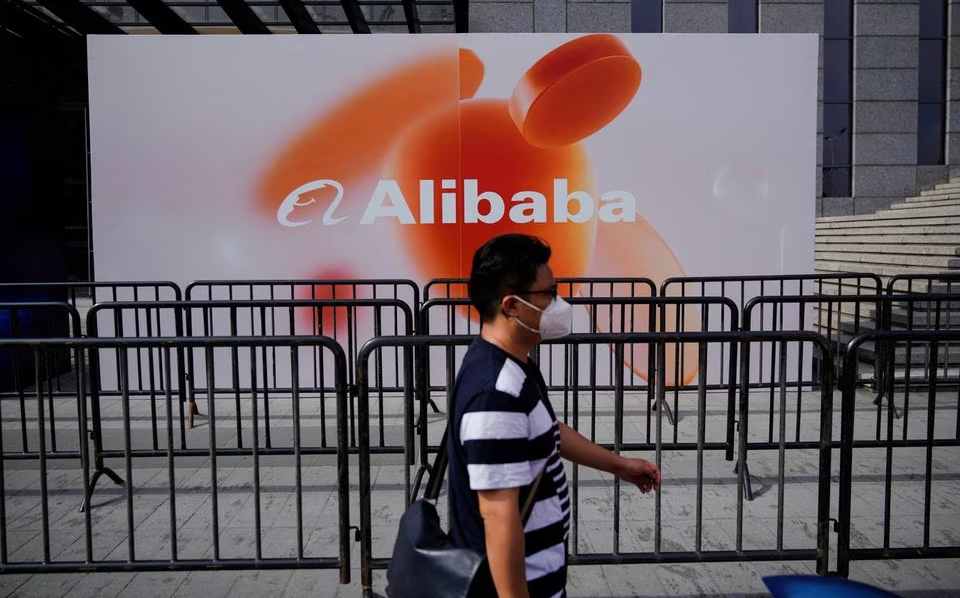
China’s push to build its own AI stack is starting to take physical shape. Alibaba has teamed up with China Telecom to launch a new data center in southern China, powered entirely by chips designed in-house.
At the center of the project are 10,000 of Alibaba’s Zhenwu semiconductors, built for both training and inference. The system is expected to handle AI models with hundreds of billions of parameters, placing it in the same class as some of the largest models running today. It’s a clear signal that China’s biggest tech players are closing the gap on infrastructure that, until recently, leaned heavily on foreign hardware.
The timing is no accident. Washington has tightened restrictions on advanced semiconductor exports, limiting China’s access to high-end GPUs from Nvidia. That pressure has forced a shift inward, accelerating efforts to design and deploy domestic alternatives at scale.
From Nvidia Reliance to Homegrown Chips: Alibaba’s Zhenwu Chips Power New AI Data Center with China Telecom to Rival Nvidia
Alibaba has been laying the groundwork for years through its T-head chip unit. The company now controls more of the AI pipeline than most peers: it designs chips, builds data centers, develops large models, and distributes them through its cloud business. That vertical integration is becoming a strategic advantage as supply chains grow more uncertain.
Inside the company, leadership is reorganizing around that same goal. CEO Eddie Wu has formed a new technology committee to speed up AI development. According to a CNBC report, the group will include Chief AI Architect Zhou Jingren, Alibaba Cloud CTO Li Feifei, and group CTO Wu Zeming. The mandate is simple: move faster.
The broader ecosystem is moving in the same direction. Large-scale computing clusters built on domestic chips are beginning to come online across China. One recent example includes a system powered by Huawei’s Ascend 910C processors, marking another step away from reliance on imported silicon.
There’s a noticeable contrast in how China and the U.S. are approaching the AI buildout. American tech giants are pouring massive sums into infrastructure, with spending expected to reach hundreds of billions this year. Chinese firms are taking a more targeted path, focusing on industries where AI can drive near-term returns.
The new facility, located in Shaoguan in Guangdong province, is only the starting point. Alibaba and China Telecom plan to scale the operation to 100,000 chips over time. The compute capacity will support a range of applications, from healthcare to advanced materials, signaling where both companies see the next wave of demand.
What’s emerging is a parallel AI ecosystem, built on different hardware, shaped by different constraints, and moving at its own pace. For Alibaba, this data center is more than infrastructure. It’s a statement about where the company—and the country—plans to compete next.