It’s Tuesday, March 31, 2026, and here are the top tech stories making waves today — from AI and startups to regulation and Big Tech. AI is no longer just a software story; it’s turning into a global race for land, power, talent, and control.
Over the past 24 hours, we’ve seen billion-dollar bets on data centers in Europe, a massive AI cluster rise in China, and fresh capital flooding into defense, chips, and energy infrastructure. At the same time, Big Tech is quietly reshaping how AI products are built, combining models, tightening platform rules, and locking in talent at scale. Meanwhile, governments are stepping in with new regulations, and the physical limits of electricity and compute are starting to define who can actually compete.
Taken together, today’s headlines point to a shift: AI is moving from experimentation to execution. The winners won’t just be the ones with the best models—but the ones who control the infrastructure, navigate policy, and move fastest in a world where everything is becoming more constrained and more strategic.
Here are today’s 20 top technology news stories moving the global tech landscape right now.
Technology News Today
Apple removes vibe-coding app from the App Store, escalating pressure on AI app builders
Apple has removed the app “Anything” from the App Store for violating its rules, according to The Information, in what the publication described as an escalation in Apple’s crackdown on vibe-coding software. The app’s removal puts a spotlight on the growing tension between fast-moving AI builders and gatekeepers that still control mobile distribution.
This matters because AI coding tools are spreading faster than platform policy is adapting. If Apple takes a harder line on how AI-generated apps are built, reviewed, or shipped, that could affect an entire crop of startups trying to lower the barrier to software creation. The fight is no longer just about code generation. It is about who controls the storefront, once anyone can build.
Why It Matters: Apple’s policy decisions could shape how far the next wave of AI-built apps can go on mobile.
Source: The Information.
Nebius bets $10B on Finland as Europe’s AI data center race heats up
AI infrastructure firm Nebius said it will build a 310-megawatt data center in Finland, a project it values at more than $10 billion. Reuters reported the site would rank among Europe’s biggest AI computing facilities, underscoring how demand for GPU capacity is now driving a new wave of hyperscale expansion across the continent.
The move matters beyond one company. Europe has been trying to build more sovereign AI capacity instead of relying too heavily on U.S. cloud giants, and large local compute hubs are becoming a strategic asset. A buildout of this scale also highlights that AI competition is no longer just about models; it is about land, power, grids, and control of long-term infrastructure.
Why It Matters: Europe’s AI race is shifting from software bragging rights to hard infrastructure, and Nebius is making one of the biggest bets yet.
Source: Reuters.
Big Tech’s $635B 2026 AI Capex Faces Headwinds from Surging Energy Costs
Microsoft, Amazon, Google, and Meta collectively plan to spend more than $635 billion on AI infrastructure next year, but analysts at S&P Global warn that rising oil and electricity prices tied to geopolitical tensions could force project delays or revisions. Data-center operators are already scouting alternative power sources and efficiency upgrades to protect margins. The cost pressure is prompting hyperscalers to accelerate deals with renewable providers and efficient chip suppliers, creating ripple effects for the entire AI supply chain.
Why It Matters: Energy shocks threaten to slow Big Tech’s AI buildout, redirecting investment toward sustainable infrastructure and opening doors for climate-tech startups.
Source: Fortune.
Defense startup Saronic jumps to $9.25B valuation as autonomous shipbuilding draws fresh capital
Autonomous shipbuilder Saronic closed a $1.75 billion funding round that more than doubled its valuation to $9.25 billion, according to Reuters. The company’s rise is another sign that defense tech continues to attract major investor interest, especially among startups building autonomous systems that align with national security priorities.
For the broader startup market, this is another reminder that defense is no longer a niche category in venture. Investors are increasingly treating autonomy, robotics, maritime systems, and dual-use hardware as first-tier technology sectors. That shift could reshape where late-stage capital flows in 2026, especially as governments push for more resilient domestic industrial capacity.
Why It Matters: Big money is still flowing into defense tech, and Saronic’s round shows autonomous hardware startups are becoming central to that trend.
Source: TechStartups via Reuters.
California pushes ahead with new AI rules despite pressure for deregulation
California will impose new standards on AI companies that want to do business with the state, the Guardian reported, after Governor Gavin Newsom signed an executive order giving the state four months to develop policies focused on public safety. The requirements are set to cover issues including child sexual abuse material, violent pornography, harmful bias, unlawful discrimination, detention, surveillance, and watermarking of AI-generated media.
The broader significance is clear: even as Washington pushes against state-by-state tech regulation, California is still moving ahead. Because the state is such a large buyer of technology and a major policy signal-setter, its standards can spill over into procurement rules, startup compliance roadmaps, and product design decisions far beyond Sacramento.
Why It Matters: California is once again testing whether state-level rules can shape the national AI market.
Source: The Guardian.
Palantir’s UK health-tech fight deepens as ministers weigh ending NHS deal
Palantir’s UK chief, Louis Mosley, criticized what he called “ideological” groups as ministers consider using a break clause to scrap the company’s £330 million NHS contract, according to the Guardian. The dispute centers on one of the most politically sensitive public-sector software deals in Britain, where data, health systems, and trust are colliding in public view.
For Palantir, the story is bigger than one contract. The company has built much of its public-sector growth story around being a critical analytics layer for governments and health systems. If the NHS relationship weakens, it could become a test case for the durability of high-value public data contracts when political pressure intensifies.
Why It Matters: Public-sector AI and data contracts remain lucrative, but they are also increasingly vulnerable to political and public backlash.
Source: The Guardian.
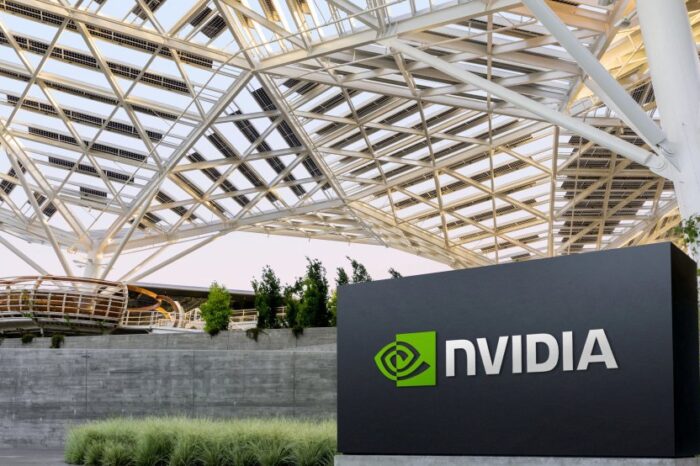
Emerald AI raises fresh funding with Nvidia to speed up data-center power access
Emerald AI announced a $25 million strategic funding round backed by Nvidia’s NVentures, Eaton, GE Vernova, Salesforce, Samsung, Siemens, and others, Fortune reported. The startup says it is working on ways to give data centers a faster path to grid connections, a growing bottleneck as AI infrastructure expands faster than power systems can keep up. Fortune said the round brings Emerald’s total funding to $68 million in just 16 months since its founding.
That makes this more than another AI startup financing. The real chokepoints in AI are increasingly electricity, interconnection queues, and permitting. Startups that help developers secure power more quickly could become among the most important enablers in the AI stack, especially as hyperscalers and model builders race for capacity and local communities push back against massive new facilities.
Why It Matters: The next AI winners may include companies that solve power and grid bottlenecks, not just those training models.
Source: Fortune
Microsoft Takes Over Texas AI Data Center Expansion After OpenAI Pulls Back
Microsoft has assumed full leadership of a major AI data-center project in Abilene, Texas, following OpenAI’s withdrawal from the joint effort. The campus forms part of the larger Stargate supercomputer initiative in partnership with Crusoe Energy. Construction timelines remain unchanged despite the shift. The transition illustrates the dynamic realignments inside the AI infrastructure race as companies adjust partnerships to manage unprecedented compute scale and power requirements.
Why It Matters: Microsoft’s Texas data-center takeover highlights the fluid alliances driving AI capacity growth and underscores the strategic importance of U.S.-based infrastructure.
Source: AP.
Raspberry Pi profit surges as the AI boom lifts demand for low-cost computing hardware
The Financial Times reported that Raspberry Pi’s profit has surged as AI demand boosts sales, with growth said to be especially strong in China and the U.S. The company, long associated with hobbyists, education, and low-cost computing, is benefiting from a market that increasingly values inexpensive hardware for edge AI, prototyping, and experimentation.
That matters because AI is not only enriching GPU giants and cloud incumbents. It is also driving demand for accessible edge hardware, where developers, students, and smaller teams can test, build, and deploy lightweight applications. Raspberry Pi’s momentum suggests the AI boom is spreading into the long tail of computing tools, not just the top of the chip market.
Why It Matters: AI demand is lifting smaller hardware players too, expanding the economic impact of the boom beyond premium chips and cloud platforms.
Source: Financial Times.
Shenzhen switches on China’s first 10,000-card AI cluster using domestic Huawei chips
Shenzhen has activated what the South China Morning Post described as China’s first 10,000-card AI cluster built with Huawei’s advanced chips, delivering 11,000 petaflops of computing power. The project is a major milestone in Beijing’s push to build a homegrown AI infrastructure and reduce reliance on foreign technology.
The bigger picture is geopolitical. China’s AI strategy increasingly depends on demonstrating its ability to build large-scale training and inference capacity despite export controls. A cluster of this size is not just a technical achievement; it is also a signal that the competition between the U.S. and China is now playing out at the systems level, where scale, supply chains, and domestic substitution matter as much as raw model performance.
Why It Matters: China is pushing harder to show it can build serious AI infrastructure with domestic technology.
Source: South China Morning Post.
Xiaomi and Alibaba ramp up AI hiring as talent becomes the next big battleground
Xiaomi and Alibaba are stepping up AI recruitment, with AI-related positions making up more than 80% of Alibaba’s open roles, up from about 60% during last year’s fall recruitment cycle, according to the South China Morning Post. The hiring spans 16 Alibaba business units, including Alibaba Cloud and chip-design arm T-Head.
This hiring surge shows the AI contest is not only about chips and models. It is increasingly about labor concentration, compensation, and where top researchers and engineers choose to work. As large tech companies absorb more talent, startups may find it harder to compete unless they offer sharper missions, more upside, or faster paths to product impact.
Why It Matters: The AI race is becoming a global hiring war, and Big Tech is moving aggressively to lock in scarce talent.
Source: South China Morning Post.
Microsoft’s new Copilot research tools mix Anthropic and OpenAI models
Axios reported that Microsoft is using multiple models within Microsoft 365 Copilot Researcher, combining Anthropic and OpenAI systems to improve accuracy and reduce errors. Microsoft executive Charles Lamanna told Axios that the company expects many more models to be integrated into Copilot by summer, signaling a clear move toward multi-model orchestration.
That is a meaningful shift in the AI product layer. Instead of betting everything on one frontier model, companies are increasingly treating models as interchangeable components that can cross-check, critique, or specialize. It also helps Microsoft show enterprise customers it is not overly dependent on OpenAI, a message that could matter as buyers ask for flexibility, cost control, and model choice.
Why It Matters: The future of enterprise AI may be multi-model by default, not winner-take-all.
Source: Axios.
Amazon buys 1,300 acres in Oregon for a possible exascale data-center campus
GeekWire reported that Amazon has purchased 1,300 acres near the Columbia River in Boardman, Oregon, land that could eventually host up to 16 to 20 data-center buildings. A proposal tied to the site described an “exascale” campus with a possible $8 billion to $12 billion investment and roughly 1 gigawatt of power demand, though Amazon said development plans are not final.
The story lands as data-center expansion draws sharper scrutiny over electricity costs, water use, and local environmental impact. In Oregon and Washington, policymakers and communities are paying much closer attention to how hyperscale AI infrastructure reshapes regional grids. That makes Amazon’s land move important both as a growth signal and as a sign of the political fights likely to follow.
Why It Matters: AI infrastructure is now large enough to become a land, energy, and public policy issue at the local level.
Source: GeekWire.
JPMorgan Rolls Out AI System to Monitor Employee Generative-AI Usage and Performance
JPMorgan Chase has deployed internal AI tools that track how employees interact with generative models, providing analytics on productivity and compliance without storing personal content. The system flags inefficiencies and suggests workflow improvements while adhering to privacy safeguards. It reflects a growing trend among large financial institutions. The rollout sets an enterprise precedent for responsible AI governance, helping companies balance innovation with oversight and creating demand for similar compliance platforms.
Why It Matters: JPMorgan’s AI tracking initiative shapes corporate standards for workplace AI use, influencing productivity tools and policy across finance and tech sectors.
Source: Economic Times.
Snap buys Rec Room assets as the social-gaming platform shuts down
Snap has acquired select assets from Rec Room after the Seattle-based social gaming platform said it will shut down on June 1, GeekWire reported. Some Rec Room employees will join Snap’s Specs hardware subsidiary to support its eyewear and augmented-reality efforts, though the deal does not appear to mean Rec Room itself will continue under Snap.
This is a notable read on the XR market. Rec Room once reached more than 150 million players, yet still could not survive as an independent platform. Snap, meanwhile, is using the moment to strengthen the team behind its next-generation Specs glasses. The outcome says a lot about where value is shifting: away from standalone metaverse-style destinations and toward hardware-linked AR experiences.
Why It Matters: XR consolidation continues, and talent from struggling virtual worlds is being pulled into wearable-computing bets.
Source: GeekWire.
AI chip startup Rebellions raises $400M at a $2.3B valuation ahead of IPO plans
South Korean AI chip startup Rebellions raised $400 million at a $2.3 billion valuation in a pre-IPO round, TechCrunch reported. The company had already completed a successful Series C round in November, and the fresh capital reinforces investor appetite for challengers trying to break into the AI semiconductor market.
This is the kind of funding story worth watching because the AI chip market is still searching for credible alternatives to Nvidia. Most startups will not get there, but capital is clearly still available for teams that can pitch performance, regional relevance, and a real shot at scaling in a market hungry for more supply and more options. Rebellions’ raise also adds to Asia’s growing role in the AI hardware stack.
Why It Matters: Investors are still backing AI chip contenders that promise to loosen Nvidia’s grip on the market.
Source: TechStartups.
Softr launches an AI-native no-code platform aimed at nontechnical teams
VentureBeat reported that Softr has launched an AI-native platform designed to help nontechnical teams build business apps without code. The update marks a bigger push into a market where AI is making software creation more accessible to operators, marketers, and internal teams that historically depended on IT or engineering.
The significance here is broader than one product launch. The next software wave may be shaped by tools that sit between traditional no-code and full agentic development, giving teams just enough structure to build quickly without needing deep engineering talent. That could expand the market for internal software creation while also squeezing startups that rely on selling simple workflow tools.
Why It Matters: AI-native no-code tools are pushing software creation further into the hands of business users.
Source: VentureBeat.
Europe’s AI push faces a regulation, funding, and energy reality check
Fortune reported that Europe’s AI sector is wrestling with a widening innovation gap, high power costs, fragmented energy systems, and startup brain drain, even as business leaders argue the region still has the technical depth to compete. The piece cites AWS 2026 data showing that 56% of European startups would consider leaving for better funding, 50% for faster international scaling, 46% for better global market access, and 45% for lower operating costs.
While this is more strategic than transactional, it matters because Europe’s position in AI is becoming one of the year’s central tech questions. The region has talent, established industrial players, and regulatory muscle, but it is still trying to prove it can move fast enough on capital, energy, and execution. That tension will shape where founders build and where investors place long-term bets.
Why It Matters: Europe’s AI future may depend less on ambition and more on whether it can fix energy costs, fragmentation, and funding gaps.
Source: Fortune.
That’s your quick tech briefing for today. Follow us on X @TheTechStartups for more real-time updates.