Autonomous ship startup Saronic raises $1.75B at $9.25B valuation to scale AI-powered naval fleet for U.S. military
 Daniel Levi
Posted On March 31, 2026
Daniel Levi
Posted On March 31, 2026
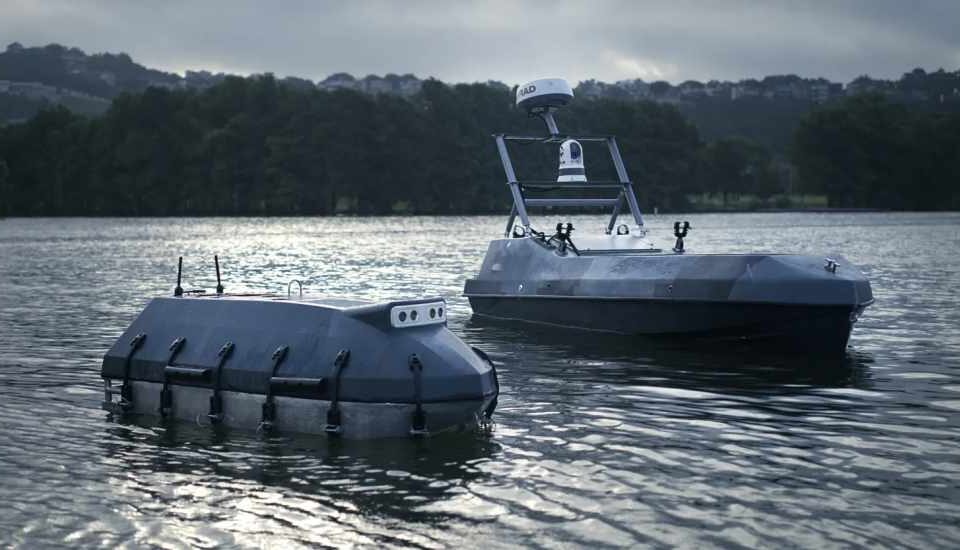
As the war between the U.S. and Iran intensifies, the race to modernize naval warfare is accelerating—and one startup is suddenly at the center of it.
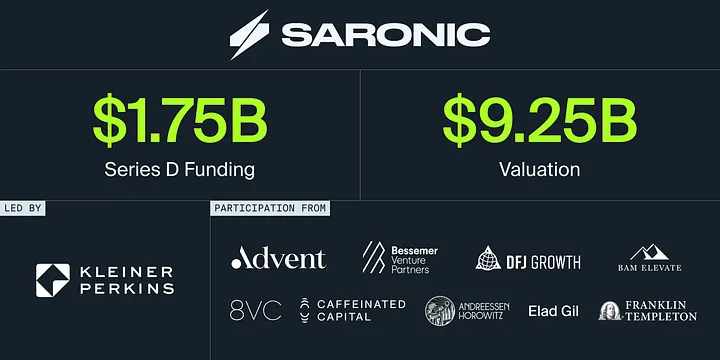
Saronic, an Austin-based defense tech startup building autonomous surface vessels, has raised $1.75 billion in fresh funding, pushing its valuation to $9.25 billion, the company announced Tuesday. The round, led by Kleiner Perkins, more than doubles the company’s previous $4 billion valuation set after a $600 million raise last year. The message from investors is clear: the future of naval power may look very different from the past.
Saronic isn’t chasing incremental upgrades. It’s rethinking how ships are built, deployed, and scaled. The company plans to pour the new capital into its supply chain and shipyard capacity, aiming to produce more than 20 vessels annually by 2027. A major piece of that plan is a new Texas facility called Port Alpha, which will anchor its push into higher-volume manufacturing.
“Over the past decades, the U.S. has experienced a steady erosion of its ability to build ships and manufacture critical maritime infrastructure,” Dino Mavrookas, Co-Founder and CEO of Saronic, said in a post on Medium
Mavrookas added: “We are confronting this challenge with a fundamentally new model of American shipbuilding, one that integrates first-principles engineering, advanced manufacturing, and software-defined production to deliver autonomous vessels with unprecedented speed, precision, and scale. The new capital will accelerate Saronic’s ability to bring that model to life, generate entirely new classes of autonomous ships and maritime capabilities, and scale U.S. shipbuilding capacity on a timeline not seen since World War II.”
Backed by Kleiner Perkins, Saronic hits $9.25B valuation after $1.75B raise to build next-gen autonomous fleet
That shift is happening under pressure. The United States has watched China build out massive ship production capacity over the past decade, creating a gap that policymakers now want to close. Tensions in key waterways, including the Strait of Hormuz, have sharpened that urgency. The war in Iran has only added to the sense that existing fleets, built around expensive, crewed ships, may not be enough for what comes next.
“We’re seeing a real shift in demand towards unmanned systems that can be delivered at scale and at a fraction of the price point of traditional vessels,” Mavrookas told CNBC’s Morgan Brennan in an interview.
Saronic’s pitch is simple: smaller, autonomous vessels that reduce risk to human crews and can be deployed in larger numbers. That model leans on software as much as hardware, with autonomy at the core of how these ships operate. “It’s rethinking the entire ship,” Mavrookas said, pointing to a design philosophy built around autonomy from the ground up.
The company already has traction with the U.S. government. Last year, Saronic secured a $392 million contract with the Navy, a signal that its technology is moving beyond prototypes and into real deployments. At the same time, its main shipyard in Franklin, Louisiana, is undergoing a $300 million expansion, with production expected to increase fivefold over the next year.
Saronic’s lineup ranges from compact systems like its six-foot Spyglass vessel to larger platforms such as the 40-metric-ton Marauder. That range reflects a broader shift in defense strategy, where flexibility and scale are starting to matter as much as raw firepower.
The surge in funding around Saronic fits into a wider trend across defense tech. Venture capital has been flowing into startups seeking to challenge legacy contractors such as Lockheed Martin, RTX, and Northrop Grumman. New entrants are pitching faster build cycles, lower costs, and software-driven systems.
Recent deals highlight how quickly the space is heating up. Autonomous drone company Shield AI pulled in $2 billion at a $12.7 billion valuation just last week. Players like Palantir Technologies and Anduril Industries have already carved out major roles in defense programs tied to AI and autonomy.
For Saronic, the goal goes beyond winning contracts. The company wants to help the U.S. reach production levels not seen since World War II. That’s an ambitious target, especially in an industry known for long timelines and high costs. Still, the momentum behind autonomous systems suggests that defense spending is starting to favor speed, scale, and software-first design.
If that shift holds, Saronic’s bet on autonomous ships could reshape how naval power is built—and how it’s used in the years ahead.
Trending Now