Air Street Capital closes $232M AI fund as solo VC model challenges traditional venture firms
 Nickie Louise
Posted On March 23, 2026
Nickie Louise
Posted On March 23, 2026
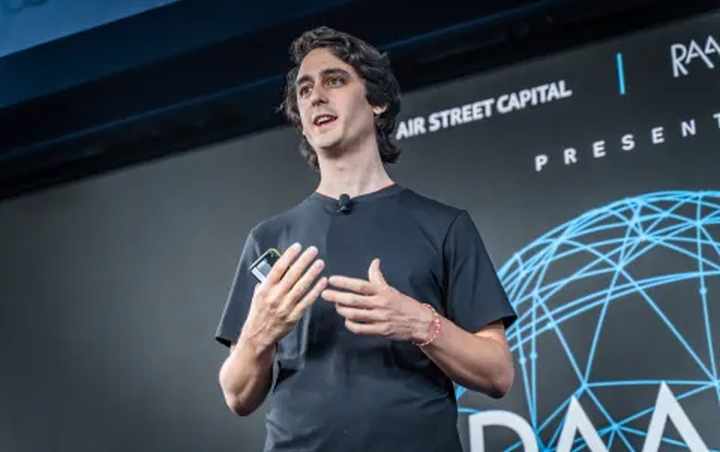
A single investor just raised one of Europe’s largest AI-focused venture funds—and it’s forcing a rethink of how venture capital works. On Monday, Air Street Capital announced the close of its third fund at $232 million, making it the largest solo GP venture fund ever raised in Europe, according to The Financial Times. The milestone says as much about where venture capital is headed as it does about one firm’s momentum.
For years, the dominant view in European venture circles leaned heavily on partnership structures. Large teams, investment committees, and shared decision-making were seen as signals of credibility. Nathan Benaich has spent the past several years pushing against that model, building Air Street Capital around a single decision-maker with a focused thesis.
Speed over size: how a $232M solo AI fund is rewriting venture capital strategy
That thesis is straightforward: back AI-first companies at the earliest stages, stay close to product and technical direction from day one, and give those bets enough time to mature. Air Street describes its approach clearly: it invests early and works closely with founders on product, market, and technology strategy, aiming to build companies that can endure and shape their markets.
The new fund plans to write initial checks ranging from $500,000 to $15 million across North America and Europe, with a smaller allocation for later-stage investments, up to $25 million, the Financial Times reported. The structure reflects a willingness to stay involved as companies grow, rather than stepping back after early rounds.
Air Street’s portfolio offers a window into how Benaich defines “AI-first.” Synthesia, an AI video platform, has crossed $150 million in annual recurring revenue and serves customers across more than 90% of the Fortune 100. Black Forest Labs has gained traction with its FLUX models among developers and enterprises building visual applications. Poolside operates at the frontier, working with enterprise and government clients on more advanced AI systems.
There’s another signal in the portfolio that would have raised eyebrows in Europe not long ago. Defence is now an explicit part of the fund’s strategy. Air Street has backed Delian Alliance Industries, a company operating in a sector long avoided by many European investors. The shift reflects changing attitudes around security, sovereignty, and the role of technology in both.
Air Street has also built ties with major infrastructure players. The firm partnered with NVIDIA on a £2 billion commitment to the UK AI ecosystem, alongside Accel, Balderton, and Hoxton Ventures. The initiative focuses on expanding access to compute resources and strengthening talent pipelines across cities, including London, Oxford, Cambridge, and Manchester.
The rise of a fund like this points to a broader change in venture dynamics. Capital is concentrating at the top, flowing into a small number of large AI labs that raise billions at a time. That leaves less room for smaller funds to compete on size. The response has been a shift toward speed, focus, and early access.
A solo GP structure fits that shift. Without an investment committee, decisions can move faster. The strategy stays consistent across fund cycles. The tradeoff is clear: fewer internal checks and more reliance on a single investor’s judgment.
What stands out here is the level of backing behind that approach. Raising $232 million from limited partners signals strong confidence that a focused strategy and a clear track record can stand in for institutional scale.
The market itself is starting to split along those lines. Large funds dominate the biggest frontier AI companies. Smaller, specialized investors are carving out positions in vertical applications, deployment layers, and emerging infrastructure. It’s a barbell shape, with little room in the middle.
Air Street’s new fund sits squarely on the specialist side of that divide. The bet is that early conviction, paired with technical depth, can still generate outsized returns—even as capital at the top continues to grow.
One question remains open. Europe has made real progress in AI research and applied systems over the past few years. Yet the pipeline of companies capable of scaling globally at speed still trails North America. The success of funds like Air Street’s depends on that gap narrowing.
For now, the message from Fund III is clear. In AI investing, size alone is no longer the defining edge. Positioning, timing, and clarity of thesis are starting to matter more.