Elon Musk launches Terafab, a $25 billion Austin chip megafactory to power Tesla, xAI, and SpaceX AI and robotics ambitions
 Daniel Levi
Posted On March 23, 2026
Daniel Levi
Posted On March 23, 2026
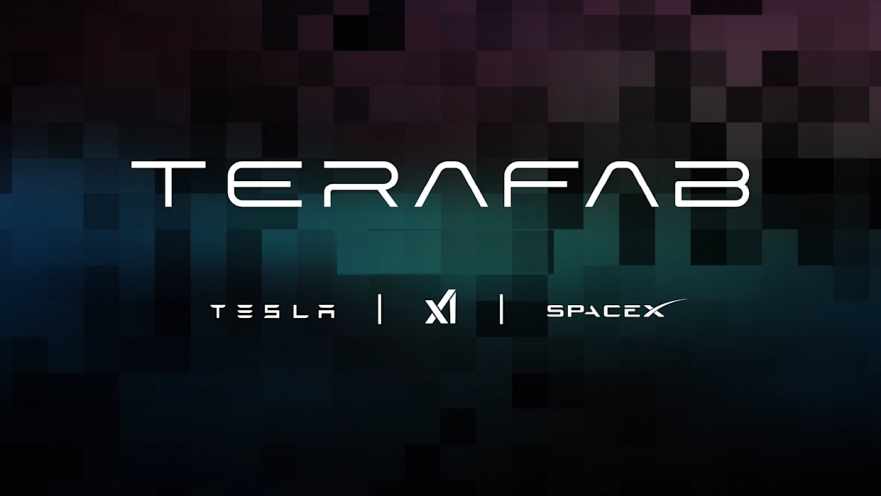
Elon Musk is going all-in on chips. On Saturday night in Austin, Musk unveiled Terafab, a planned $20 billion to $25 billion semiconductor complex that brings together Tesla, SpaceX, and xAI under one roof. The goal is simple and blunt: build the chips his companies can’t get fast enough.
Standing inside the former Seaholm Power Plant, Musk framed the project in stark terms. “We either build the Terafab or we don’t have the chips, and we need the chips.”
“Announcing TERAFAB: the next step towards becoming a galactic civilization,” SpaceX said in a video post on X.
Announcing TERAFAB: the next step towards becoming a galactic civilization https://t.co/xTA70LOU0e
— SpaceX (@SpaceX) March 22, 2026
The site will rise next to Tesla’s Giga Texas campus in eastern Travis County. What Musk is proposing isn’t just another fab. It’s a vertically integrated system where chip design, manufacturing, packaging, and testing all happen in a single facility. The pitch is speed. Shorten iteration cycles. Build exactly what each company needs. Cut reliance on outside suppliers.
Inside Terafab: Elon Musk’s $25B AI Chip Megafactory and Its Impact on the Future of Compute
At full scale, Terafab is targeting something that sounds closer to a power plant than a factory: roughly one terawatt of annual compute capacity. Musk said that it breaks down into a mix of terrestrial and space-bound infrastructure, with the bulk feeding future orbital data centers.
The output goals are just as ambitious. The facility is expected to produce tens of billions of AI inference and memory chips every year, starting with around 100,000 wafer starts per month and ramping toward one million. Early production will focus on Tesla’s next-generation AI5 chips and processors, which are tied to xAI’s Grok models. SpaceX is expected to receive hardened variants built for low-Earth orbit, where solar power and vacuum cooling offer advantages that don’t exist on the ground.
Musk didn’t dismiss existing suppliers. He acknowledged companies like TSMC, Samsung, and Micron Technology. But his view is that the current supply curve isn’t even close to what his companies will need. Internal projections, he said, show that today’s global output covers only a small slice of future demand for autonomous vehicles, humanoid robots, training clusters, and space-based compute systems.
That gap is what Terafab is meant to close.
The timing reflects a broader shift across the tech industry. Control over silicon is becoming a strategic advantage. Companies that depend on third-party foundries are competing for limited capacity, often years in advance. For Musk’s ecosystem, delays in chip supply have already slowed timelines. Terafab is an attempt to remove that bottleneck entirely.
The project won’t come cheap, and it won’t be quick. Building a leading-edge fab typically takes years, and Musk’s timeline lands in that same range. Full production is expected somewhere in the next three to five years. The facility is expected to target 2-nanometer-class manufacturing, placing it at the leading edge of current semiconductor technology.
Power is another piece of the equation. Advanced fabs consume enormous amounts of energy, and Musk has hinted at pairing the site with dedicated solar generation and battery storage. That would align with Tesla’s broader push into energy infrastructure, while supporting the compute-heavy workloads the fab is meant to serve.
Funding is expected to come largely from Tesla, with potential contributions from SpaceX and xAI. The scale of the investment puts it among Musk’s largest capital bets, on par with earlier Gigafactory expansions.
There are real risks here. Tesla doesn’t have a long track record of running full-scale semiconductor fabs. Yield challenges have derailed many new facilities, even for experienced players. Musk’s own history shows a pattern of ambitious timelines followed by uneven ramps before things stabilize.
Still, the direction is clear. Compute is becoming a core resource, and companies are moving to secure it directly. Terafab is Musk’s answer to that shift.
If it works, Tesla could lower the cost of autonomy and robotics at scale. xAI could train models without fighting for capacity. SpaceX could extend its ambitions into orbit-based compute infrastructure. If it stumbles, it will be a very public test of how far vertical integration can go in one of the most capital-intensive industries on the planet.
For startups and smaller players, the signal is hard to miss. Access to chips may define who can compete and who gets left waiting.
Terafab is still early. Construction is underway. The real test comes when silicon starts coming off the line.
Trending Now
Top Tech News Today, May 5, 2026