It’s Thursday, March 19, 2026, and here are the top tech stories making waves today — from AI and startups to regulation and Big Tech. Today’s headlines reveal a tech landscape moving beyond hype and into consequences. Governments are scrambling to make it easier to build startups, even as cyber threats grow more aggressive and harder to contain. Big Tech is shifting strategies, with Apple quietly turning AI into revenue while others pour billions into infrastructure that’s getting more expensive by the day. Meanwhile, a new front is opening in the AI race — from autonomous labs trying to accelerate scientific discovery to AI agents pushing deeper into messaging, commerce, and everyday life.
But beneath the momentum, cracks are starting to show. Rising chip emissions, investor concerns about infrastructure costs, labor pushback in healthcare, and growing privacy tensions all point to a more complex phase of the AI era. This is no longer just about who builds the smartest model — it’s about who can scale, monetize, regulate, and survive what comes next.
Here are today’s 15 top technology news stories shaping that shift.
Technology News Today
EU Inc plan aims to make Europe a faster home for startups
The European Commission has unveiled a proposal called “EU Inc,” a new optional company structure designed to make it easier for startups to launch, operate, and scale across the bloc. The plan would create a single digital framework for company formation, with registration targeted at 48 hours and costs around €100, borrowing some of the appeal that Delaware-style incorporation has long held for founders in the United States. Brussels is pitching it as part of a broader effort to stop ambitious European startups from moving abroad as they grow.
Why this matters goes beyond paperwork. Europe has produced plenty of startups, but it still trails the U.S. and China in turning them into global winners. If EU Inc survives political negotiations and actually standardizes parts of stock options, expansion rules, and cross-border operations, it could lower one of the biggest hidden taxes on European innovation: fragmentation. For founders, investors, and startup employees, a simpler legal path could make Europe more competitive at a moment when AI, defense tech, and climate tech are becoming more capital-intensive and global by default.
Why It Matters: Europe is trying to fix one of its oldest startup problems: great ideas that struggle to scale across 27 markets.
Source: Reuters.
New iPhone spyware campaign exposes millions of devices to attack
Researchers from Lookout, iVerify, and Google say a powerful spyware platform dubbed “DarkSword” has been discovered in the wild, embedded across dozens of Ukrainian websites and capable of compromising large numbers of iPhones. Reuters reported that the tool targeted Apple devices running vulnerable versions of iOS 18, while researchers said the broader campaign stretched beyond Ukraine into countries including Saudi Arabia, Turkey, and Malaysia. Apple has already patched the flaws and blocked malicious domains, but a huge installed base of unpatched phones may still be exposed.
What makes this stand out is not just the technical sophistication, but the scale and looseness of deployment. Security researchers said the spyware reflects a shift from narrowly targeted, highly secretive surveillance toward a more widely distributed cyberweapon ecosystem where state-linked and commercial actors blur together. For Apple, it is another reminder that mobile security is increasingly geopolitical. For users, it is a blunt warning that delayed software updates are no longer a minor hygiene issue but a direct security risk, especially when spyware can steal messages, credentials, health data, and crypto wallet information.
Why It Matters: Mobile cyberweapons are becoming broader, cheaper to deploy, and more dangerous for everyday users.
Source: Reuters.
AI memory chip boom is colliding with climate reality
Bloomberg reports that the rush to produce more memory chips for AI is set to sharply raise the semiconductor industry’s emissions footprint. The piece says emissions from semiconductor manufacturing could rise by roughly a third to 247 million metric tons of CO2 equivalent by 2030 as demand for high-bandwidth memory and related AI infrastructure accelerates. That puts a less-discussed cost at the center of the AI race: the environmental burden of making the chips needed to train and run the next generation of models.
This matters because AI’s energy conversation often stops at data centers and electricity grids, while the manufacturing chain behind AI hardware gets less attention. If emissions and compliance costs rise across fabs and suppliers, the economics of AI hardware could shift too, especially in regions with tighter climate rules. For cloud giants, chipmakers, and governments subsidizing domestic semiconductor capacity, the message is clear: AI scale is not just a computing problem; it is an industrial policy and emissions problem. The companies best positioned may be the ones that can expand supply without turning climate obligations into a cost shock.
Why It Matters: The AI boom is creating a new carbon challenge inside the chip supply chain itself.
Source: Bloomberg.
NTT Global Data Centers plans to double capacity in the AI buildout
NTT Global Data Centers is working to double its capacity to 4 gigawatts to keep up with surging global demand for AI infrastructure, according to Bloomberg. That is a massive expansion for one of the world’s biggest data center operators outside China and another sign that the AI race is moving deeper into physical infrastructure: power, land, cooling, networking, and long-term capital commitments. The buildout reflects how quickly cloud and enterprise demand is translating into bets on real-world industrial assets.
This is one of the clearest signals yet that AI infrastructure is no longer just a hyperscaler story. More operators are trying to position themselves as neutral capacity providers for a market where compute shortages, power bottlenecks, and geography matter. If NTT executes, it could benefit from demand across model training, inference, and enterprise AI hosting. More broadly, the story reinforces that the winners in AI may include not just model builders and chipmakers, but also landlords, utilities, and infrastructure companies that build the backbone beneath them.
Why It Matters: The AI race is becoming a global infrastructure race, not just a software race.
Source: Bloomberg.
Apple’s AI strategy looks slow, but Wall Street sees money coming
The Wall Street Journal reports that Apple remains behind key rivals in generative AI product momentum, yet is still on track to generate more than $1 billion in AI-related revenue this year. That tension is classic Apple: it may not be first to market, but investors increasingly care less about demo-day theatrics and more about monetization. The Journal’s framing suggests Apple is using its installed base, services engine, and premium hardware ecosystem to turn a late AI push into a paid business rather than a pure spending contest.
The broader significance is that Apple may be offering a different AI model than the one dominating the market narrative. While Microsoft, Google, Amazon, Meta, and startups are pouring tens of billions into data centers and foundation models, Apple appears to be focusing on higher-margin AI features, subscriptions, and device pull-through. That does not solve its product gap overnight, but it does show investors another path: AI as a monetized ecosystem enhancement rather than an infrastructure arms race. If that strategy holds, it could reshape how consumer AI is valued.
Why It Matters: Apple may prove that in consumer AI, distribution and monetization can matter as much as model bragging rights.
Source: The Wall Street Journal.
Micron’s AI memory surge sends revenue soaring, but spending jumps too
Micron forecast stronger-than-expected third-quarter revenue after reporting a sharp jump in second-quarter sales, fueled by booming demand for memory used in AI systems. Reuters reported that revenue hit $23.86 billion, beating expectations, while the company said it would increase 2026 capital spending by $5 billion to more than $25 billion to keep up. The company is one of only three major global suppliers of high-bandwidth memory, making it a critical part of the AI supply chain.
The twist is that Micron’s stock still fell in extended trading after the results, as investors focused on the scale of the spending ramp. That captures a central tension in the AI market right now: demand looks real, but the cost of meeting it is getting enormous. Micron’s expansion plans underscore how AI is pushing hardware makers into a new cycle of heavy industrial investment. The companies supplying the picks and shovels of AI are winning, but they are also being forced to spend at a pace that keeps markets on edge.
Why It Matters: AI demand is driving huge gains for chip suppliers, but it is also forcing them into a much more expensive expansion cycle.
Source: The Wall Street Journal.
AI infrastructure costs are starting to shake investor confidence
The Information reports that the enormous buildout required to support next-generation AI is proving more complex and expensive than many expected, with power, financing, and data center execution becoming central concerns for investors. That matters because for much of the last year, the AI trade was fueled by growth expectations and fear of missing out. Now, some investors are taking a harder look at what it actually costs to sustain frontier-model ambition at scale.
This is an important shift in tone. Markets are not just asking who has the best model anymore; they are asking who can afford the infrastructure stack behind it and still produce defensible returns. As power availability, financing conditions, and construction complexity become more visible, AI valuation narratives may begin to separate companies with credible economics from those still selling possibilities. That does not mean the boom is over. It means capital is starting to care more about physics, financing, and utilization rates than slogans about exponential progress.
Why It Matters: AI’s next phase may be decided as much by infrastructure economics as by model performance.
Source: The Information.
Tencent confirms a WeChat AI agent push for practical tasks
Tencent President Martin Lau said the company wants to build an AI agent into WeChat that can handle “practical tasks,” according to The Information. That puts China’s largest consumer internet platform squarely in the race to move AI from chatbot novelty to everyday utility. Because WeChat already sits at the center of payments, messaging, services, and mini-programs, an agent layer there could quickly become one of the most consequential consumer AI deployments anywhere.
The strategic importance is obvious. The next battle in AI is not just about who has the smartest model, but about who can place an agent inside a super app people already use for their lives and commerce. Tencent’s move also shows how China’s AI competition is tightening around applications and productization, not just model benchmarks. If WeChat successfully turns AI into a task-performing interface, it could influence how platforms in the West approach messaging, shopping, customer service, and payments within conversational systems.
Why It Matters: Tencent is signaling that the real AI opportunity may lie in embedded agents within dominant everyday platforms.
Source: The Information.
Kaiser mental health workers strike over fears of AI replacing therapists
About 2,400 Kaiser Permanente mental health professionals in Northern California went on strike over concerns that the company could use AI in ways that displace therapists or weaken care, according to AP. Kaiser rejected the claim and said AI would not replace human assessment or make patient care decisions, but the dispute shows how quickly AI anxiety is moving from abstract labor debate into live workplace conflict inside sensitive fields like mental health.
This story matters because healthcare has become one of the biggest real-world tests for how far AI should go in decision support, triage, documentation, and patient interaction. Workers are not just worried about job loss; they are also worried about what happens when cost pressures meet clinical judgment. Even when companies insist AI is assistive, mistrust can build quickly if employees believe automation is being used as leverage in negotiations or staffing decisions. The strike is an early signal that AI adoption in care settings will face not just technical and regulatory scrutiny but also organized labor resistance.
Why It Matters: AI’s future in healthcare may depend as much on trust and labor politics as on model quality.
Source: AP.
FBI location-data buying raises fresh privacy alarms for the tech sector
The Verge reports that FBI director Kash Patel acknowledged the bureau buys location data that can be used to track people’s movements, and that this data can be obtained without a warrant because it is not coming directly from a carrier. The disclosure adds fuel to one of the most important unresolved questions in the digital economy: whether commercially collected data can quietly become a surveillance backdoor once it is resold into government hands.
For tech platforms, ad-tech firms, data brokers, and privacy regulators, this is bigger than a single FBI statement. It highlights how much sensitive behavioral data can still circulate in legal gray areas even as public scrutiny of privacy has intensified. The issue also lands at a moment when AI makes location histories more valuable, easier to analyze, and potentially more intrusive. The core tension is getting harder to ignore: consumers are told they are clicking through commercial terms, but the downstream use of that data may look a lot like state surveillance.
Why It Matters: The line between commercial data collection and government surveillance keeps getting thinner.
Source: The Verge.
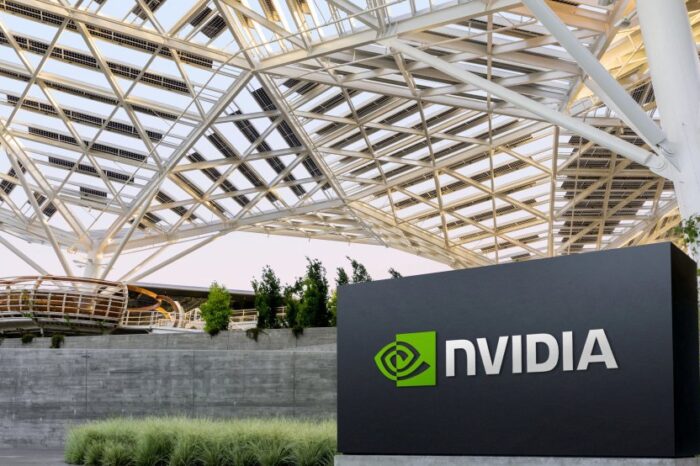
Nvidia’s DLSS 5 sparks backlash over AI-altered game visuals
Nvidia’s new DLSS 5 neural rendering system is drawing criticism from gamers who say it makes familiar game characters and scenes look distorted, overly polished, or disconnected from original artistic intent, according to The Verge. Nvidia has pitched DLSS 5 as a major leap in graphics, capable of changing lighting and materials in real time, but early reaction online has been rough, with memes and side-by-side examples spreading quickly after the reveal.
This is more than a gaming culture flare-up. It points to a broader issue facing AI-generated or AI-modified media across industries: technical improvements do not automatically lead to creative acceptance. As generative systems start touching more of the visual pipeline, users are increasingly pushing back when AI changes the feel of something they already know and love. For Nvidia and the wider gaming ecosystem, the lesson is that AI graphics tools will need not just performance gains but also artistic credibility and developer control to achieve broad adoption without backlash.
Why It Matters: AI in entertainment wins only if users feel it improves the experience rather than rewriting it.
Source: The Verge.
Autonomous labs are trying to turn AI into a scientific co-researcher
Semafor reports that startups such as Autoscience are building “autonomous labs” where AI agents read research papers, connect to machine learning tools, and run experiments to improve models. The pitch is simple: there is too much scientific information for humans alone to process, so AI should help triage, test, and accelerate discovery. In a world flooded with papers, code, and competing hypotheses, that kind of system could become attractive to both startups and large research organizations.
The bigger story is that AI-for-science is moving from promise to workflow design. If autonomous lab systems become reliable, they could compress early-stage research cycles in materials, biotech, chemistry, and AI itself. But they also raise new questions about reproducibility, oversight, and whether optimization engines can distort scientific priorities toward what is easiest to measure. For now, the idea remains in its early stages. Still, it captures one of the strongest frontier-tech themes of the year: using AI not just to generate content, but to generate and test knowledge.
Why It Matters: AI’s next high-value use case may be speeding up science itself.
Source: Semafor.
Marquis ransomware breach exposed data from more than 672,000 banking customers
TechCrunch reports that Marquis, a data analytics company used by hundreds of banks, said more than 672,000 people had personal and financial information stolen in a ransomware attack last year. That makes it another reminder that cyber risk in financial services often rests with vendors and intermediaries rather than with the banks’ customers, who are named. When a company plugged into many institutions gets hit, the blast radius can spread widely and quietly.
The breach also underscores how the attack surface in finance continues to widen as banks outsource analytics, marketing, compliance, and data processing to specialized software providers. For regulators and boards, this keeps pushing vendor-risk management higher up the agenda. For customers, it is another case where sensitive data can be exposed even if they have never heard of the company that lost it. In practical terms, this kind of attack erodes trust in the invisible infrastructure beneath digital finance, which is exactly where a lot of cyber danger now lives.
Why It Matters: Financial-sector cyber risk increasingly comes through third-party software and data firms, not just banks themselves.
Source: TechCrunch.
Walmart and OpenAI are reworking agentic commerce after checkout stumbled
WIRED reports that Walmart is moving away from OpenAI’s Instant Checkout approach and instead embedding its Sparky chatbot into ChatGPT and Google Gemini. That is a meaningful shift in how retailers are thinking about AI-assisted commerce. Rather than letting an external model fully own the transaction layer, Walmart appears to be steering toward a setup in which its own retail intelligence sits within third-party AI interfaces.
This matters because agentic shopping is one of the most closely watched commercial uses of AI. The question is not whether people will eventually shop through assistants, but who will control discovery, recommendations, payment, and customer data when they do. Walmart’s move suggests major retailers are not eager to hand the full funnel to model providers. Instead, they want distribution through AI platforms without losing brand control or merchant economics. That makes this less about one retailer and one partnership, and more about the shape of a coming battle over who owns the AI shopping interface.
Why It Matters: Agentic commerce is beginning to shift from a demo to a power struggle over who controls the transaction.
Source: WIRED.
China is mobilizing thousands of one-person AI startups
The rest of the world reports that local governments across China are helping to create a wave of one-person AI companies by turning coworking spaces and data centers into incubators as part of a broader national push. The story shows how China’s AI strategy is not just about flagship labs and giant tech firms; it is also about widening participation and lowering the barrier for small operators to build AI products quickly.
That has real global implications. A fast-growing base of tiny, AI-native firms could mean more experimentation, faster product iteration, and a broader talent funnel than many Western observers assume. It could also intensify price competition in software and agents if thousands of small builders begin shipping narrow but useful products. Whether all of those companies survive is beside the point. The key takeaway is that China appears to be treating AI entrepreneurship as both a numbers game and a national priority, and that scale itself may become a strategic advantage.
Why It Matters: China is expanding the AI race beyond giants, using scale and policy support to widen the startup pipeline.
Source: Rest of World.
That’s your quick tech briefing for today. Follow us on X @TheTechStartups for more real-time updates.
Trending Now

Top Tech News Today, May 5, 2026