Uber to invest $1.25 billion in Rivian to launch 50,000 robotaxis across global markets
 Nickie Louise
Posted On March 19, 2026
Nickie Louise
Posted On March 19, 2026
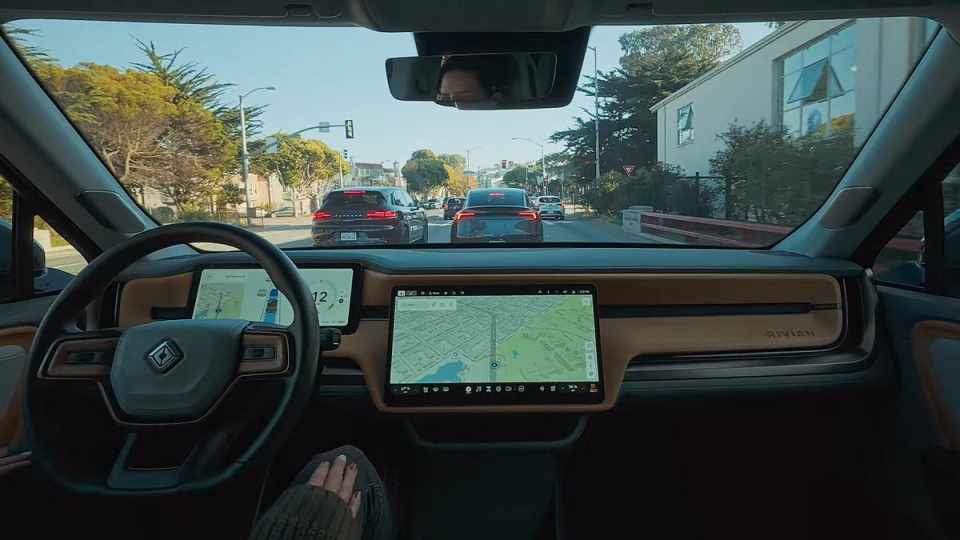
Uber is making one of its boldest moves yet in autonomous driving, backing Rivian with a multibillion-dollar bet to bring robotaxis to the streets at scale.
The ride-hailing giant said it plans to invest up to $1.25 billion in electric vehicle maker Rivian as part of a long-term partnership to deploy as many as 50,000 robotaxis across global markets by 2031. The deal ties Uber’s future growth to Rivian’s next-generation EV platform and signals a renewed push into autonomy after earlier setbacks.
Under the agreement, Uber or its fleet partners expect to purchase at least 10,000 autonomous versions of Rivian’s upcoming R2 vehicle. That number could grow by another 40,000 units starting in 2030, depending on how the rollout progresses. The companies plan to introduce the vehicles in up to 25 cities across the U.S., Canada, and Europe, with San Francisco and Miami among the first launch markets targeted for 2028.
An initial $300 million investment is expected after the deal is finalized, pending regulatory approval. Additional funding will be released in stages as both sides meet performance and deployment milestones through the end of the decade.
Uber doubles down on robotaxis with $1.25B Rivian investment and 50,000 EV rollout
The partnership arrives at a time when interest in robotaxis is picking up again. Investors have long pointed to autonomous ride-hailing as a massive market opportunity, yet progress has been uneven. Several early efforts struggled to move beyond pilot programs, and timelines have slipped across the industry. This new agreement suggests both companies believe the timing may finally be right.
Uber CEO Dara Khosrowshahi pointed to Rivian’s vertically integrated approach as a key reason for the investment. “We’re big believers in Rivian’s approach—designing the vehicle, compute platform, and software stack together, while maintaining end-to-end control of scaled manufacturing and supply in the U.S.,” he said. “That vertical integration, combined with data from their growing consumer vehicle base and experience managing the complexities of commercial fleets, gives us conviction to set these ambitious but achievable targets.”
For Rivian, the deal adds to a growing list of high-profile partnerships as it looks beyond consumer EV sales. The company has been laying the groundwork for autonomy over the past year, including discussions during its third-quarter earnings call and a dedicated “Autonomy and AI Day.” Its upcoming R2 platform sits at the center of that strategy, built with the hardware and software needed to support self-driving systems.
Rivian CEO RJ Scaringe has been increasingly vocal about the company’s plans in robotaxis, pointing to advances in artificial intelligence and semiconductor performance as factors that could push the industry forward.
“We couldn’t be more excited about this partnership with Uber,” Rivian CEO RJ Scaringe said in a statement. “The scale of Rivian’s growing data flywheel coupled with RAP1, our state of the art in-house inference platform, and our multi-modal perception platform make us incredibly excited for the rapid advancement of Rivian autonomy over the next couple of years.”
The agreement builds on Rivian’s recent $5.8 billion software partnership with Volkswagen and adds another layer to Uber’s growing network of autonomous collaborations. Uber has already announced deals with companies such as Lucid, Amazon’s Zoox, Stellantis, and Nvidia, as it works to position itself as the platform of choice for autonomous fleets rather than building the vehicles itself.
The competitive pressure is real. Alphabet-backed Waymo remains the most established player in the U.S., with active robotaxi services already operating in select cities. Uber and Rivian are betting that a combination of scale, integrated hardware, and a global platform can help them close that gap over the next several years.
This deal does not guarantee success. The industry has seen bold timelines before. Yet the size of the commitment and the scope of the rollout make one thing clear: the race to put autonomous vehicles into everyday use is far from over, and Uber is stepping back into it with fresh urgency.
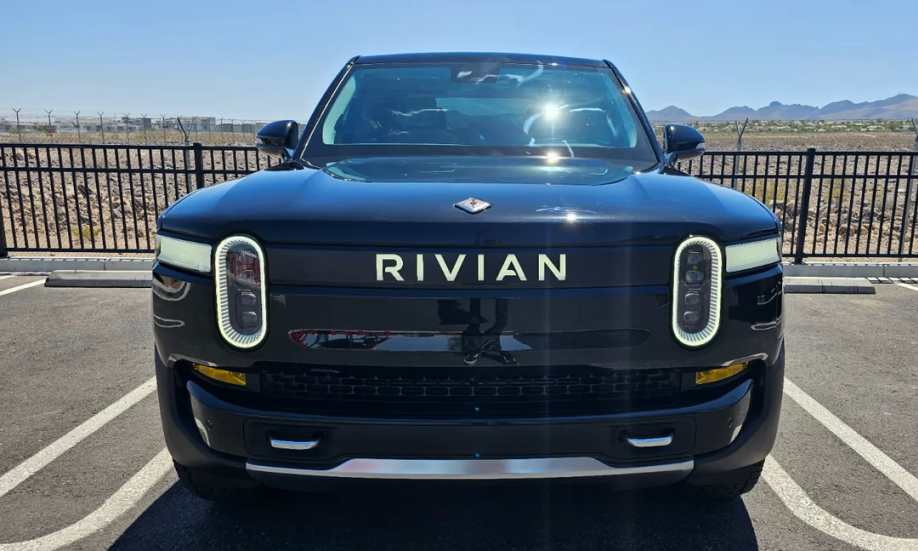
Rivian