Atlassian lays off 10% of staff, or 1,600 employees, as AI reshapes software Work
 Daniel Levi
Posted On March 12, 2026
Daniel Levi
Posted On March 12, 2026

The shift AI is bringing to the tech industry is starting to show up in payroll. Enterprise software giant Atlassian announced it will cut about 1,600 jobs, roughly 10% of its global workforce, as the company redirects resources into artificial intelligence and enterprise sales.
The decision places one of the world’s most recognizable collaboration software companies squarely inside a trend spreading across the tech sector. AI is moving beyond product experiments and research labs. It is starting to reshape how software companies structure teams and decide where to spend money.
In a message to employees, Atlassian CEO and co-founder Mike Cannon-Brookes addressed the layoffs directly.
“I’m sharing some important news today. I have made the incredibly difficult decision to reduce the size of our team by ~10% (or ~1,600 employees). Every Atlassian will receive an email within the next 20 minutes letting you know if you are impacted, or if we’re starting consultation in your region,” Cannon-Brookes wrote in a blog post.
The announcement marks one of the clearest acknowledgments from a large software company that AI is changing the economics of building software.
Atlassian, the company behind widely used tools like Jira and Confluence, grew quickly during the cloud software boom. Thousands of companies rely on its products to manage engineering work, internal documentation, and collaboration. That growth built a workforce spanning engineering, support, marketing, and enterprise sales.
AI now sits at the center of Atlassian’s next chapter. The company says the layoffs will help finance deeper investment in AI capabilities across its products and internal systems.
Cannon-Brookes addressed the shift in the same message to staff.
“I believe this is the right decision for Atlassian. But that doesn’t mean it’s easy. Far from it. I know this has a huge impact on each of you, and it weighs heavily on me and Atlassian today. We are doing this to self-fund further investment in AI and enterprise sales, while strengthening our financial profile. We’re also changing the way we work and reorganising around our System of Work to move faster.”
The restructuring reflects pressure across the software industry. Investors expect companies to show stronger margins and productivity gains as AI becomes part of coding, support systems, and knowledge work. That pressure has pushed many tech companies to reassess hiring plans and operating costs.
Layoffs have spread across the industry this year. Data from Layoffs.fyi shows that around 60 technology companies have cut more than 38,000 jobs so far in 2026. Big tech names such as Amazon, Google, Microsoft, and Meta have all trimmed teams as spending shifts toward AI infrastructure and new product development.
Atlassian’s move stands out for the direct way the company links its workforce changes to its AI strategy. Leaders across Silicon Valley have talked about the productivity impact of generative AI for months. Fewer companies have openly tied job reductions to that transition.
The broader signal reaches beyond Atlassian itself. Software companies are starting to assume that AI will allow smaller teams to build and operate large platforms. Coding assistants, automated testing, AI-driven customer support, and internal knowledge tools promise higher output per employee.
For startups, that change cuts two ways. Smaller teams can ship products with fewer engineers. Pressure to prove strong AI integration grows.
Atlassian’s layoffs capture the moment the tech industry is entering. AI began as a product story. It is now becoming a story about the workforce.
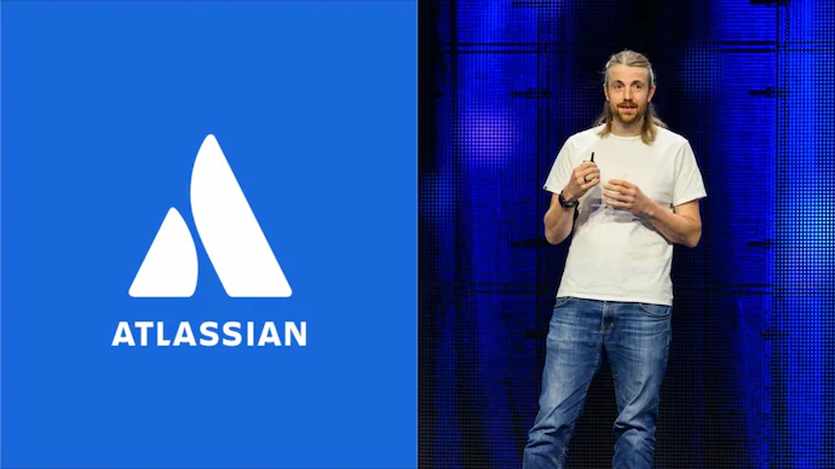
Atlassian CEO and co-founder Mike Cannon-Brookes
Trending Now
Top Tech News Today, April 2, 2026