Nvidia plans to launch ‘NemoClaw,’ an open-source platform for AI agents that can plan and act
 Daniel Levi
Posted On March 11, 2026
Daniel Levi
Posted On March 11, 2026
NVIDIA is preparing a new move in the race to build smarter AI systems. The chip giant is reportedly working on an open-source platform for artificial intelligence agents called “NemoClaw,” a system meant to let software perform tasks, make decisions, and execute multi-step workflows with minimal human input
A report from Wired said Nvidia has started pitching the project to major enterprise software companies, including Salesforce, Cisco, Google, Adobe, and CrowdStrike. The goal appears straightforward: build an ecosystem in which enterprise tools can deploy AI agents to complete tasks for employees across software environments.
“Nvidia is planning to launch an open-source platform for AI agents, people familiar with the company’s plans tell WIRED. The chipmaker has been pitching the product, referred to as NemoClaw, to enterprise software companies. The platform will allow these companies to dispatch AI agents to perform tasks for their own workforces,” Wired reported.
NVIDIA and the companies named in the report did not respond to requests for comment.
Nvidia moves beyond LLMs with ‘NemoClaw,’ an open-source platform for AI agents
The report surfaced hours after Meta acquired Moltbook, a Reddit-like social network for AI agents where bots chat, write code, and trade observations about humans. The deal highlights how quickly interest in autonomous agents is spreading across the tech industry.
The report surfaced hours after Meta acquired Moltbook, a Reddit-like social network for AI agents where bots chat, write code, and trade observations about humans. The deal highlights how quickly interest in autonomous agents is spreading across the tech industry.
Details about formal partnerships remain unclear. Sources familiar with the effort told Wired that the platform is expected to be open source, which would give partners free access. Early collaborators could receive advance access in exchange for helping develop the project.
If the plans move forward, NemoClaw would allow companies to deploy AI agents to handle workflows such as data retrieval, system monitoring, or automated decision-making within enterprise software. The platform is expected to include built-in privacy and security capabilities, which are important factors for corporate adoption.
One notable aspect of the proposal: companies could run NemoClaw regardless of whether their software relies on Nvidia chips. That approach would widen adoption and position the platform as infrastructure rather than a hardware-locked product.
The effort arrives at a moment when the AI industry is shifting focus. Large language models still dominate headlines. Interest is now moving toward systems that perform actions rather than simply generate text. AI agents can reason through problems, plan sequences of steps, and carry out tasks across multiple applications.
NVIDIA has already laid the groundwork for that shift. The company recently introduced foundation models such as Nemotron and Cosmos, both built with agent systems in mind. NVIDIA has also expanded its NeMo framework, which helps developers manage the AI agent lifecycle from data preparation and customization to monitoring and optimization.
The NemoClaw effort draws inspiration from a new class of open-source tools often referred to as “claws.” These programs run locally on a user’s machine and carry out sequential tasks on the user’s behalf.
Interest in this idea surged earlier this year after the debut of OpenClaw, a project that gained attention across developer communities. The tool was previously known as Clawdbot and later Moltbot before gaining traction under its current name. OpenAI eventually acquired the project and hired its creator.
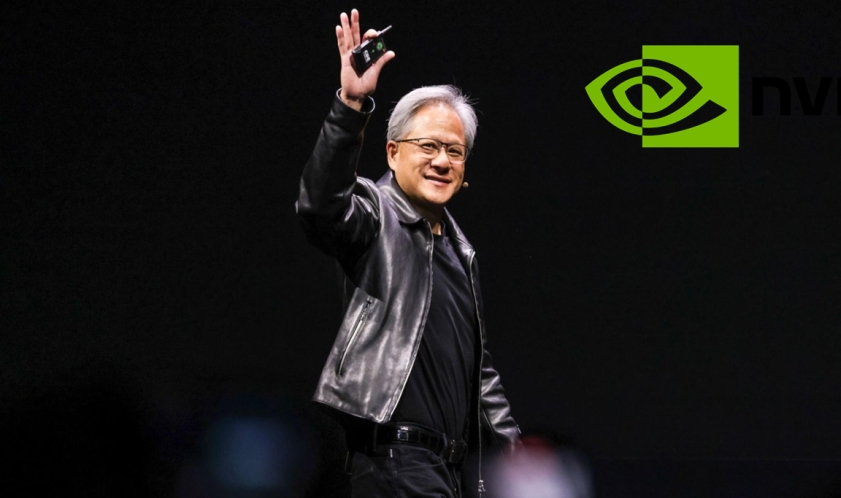
In recent remarks, Jensen Huang, CEO of Nvidia, called OpenClaw “the most important software release probably ever.”
Interest in agent systems has surged across the technology industry. Many developers see them as a step beyond chatbots and language models. These systems can break down goals into actions and carry out complex workflows.
Security researchers have raised concerns. Early versions of agent tools can expose companies to new risks, especially when software gains the ability to perform actions inside enterprise systems. That challenge may explain why Nvidia is reportedly placing heavy focus on security features within NemoClaw.
The timing of the report adds another layer of interest. Nvidia’s annual developer conference in San Jose is scheduled for next week, where the company is expected to outline upcoming plans across hardware and software. Observers will be watching closely to see whether NemoClaw becomes part of Nvidia’s broader roadmap for AI agents.
If the platform launches as described, Nvidia could place itself at the center of a growing ecosystem of AI agents operating across enterprise software. The move signals a shift from models that generate answers to systems that carry out work.