This Week in AI: The Biggest AI News, Breakthroughs, and Power Moves
 Daniel Levi
Posted On March 6, 2026
Daniel Levi
Posted On March 6, 2026

From OpenAI’s GPT-5.4 breakthrough to Pentagon AI tensions and a $25B revenue milestone, here are the developments shaping the global AI race.
Happy weekend! Welcome to This Week in AI, your weekly briefing on the biggest developments shaping artificial intelligence. It was a busy week in the world of artificial intelligence, with groundbreaking developments, high-stakes investments, and global collaboration.
The AI industry moved at full throttle this week. Leading labs released more powerful models, governments weighed new restrictions on AI chips, and tensions between AI companies and the Pentagon highlighted the growing role of AI in national security. At the same time, massive infrastructure investments and breakthrough model capabilities suggest the industry is entering a new phase in which AI is shifting from experimental tools to a foundational technology powering businesses, governments, and entire industries.
From frontier model breakthroughs and geopolitical tensions to infrastructure spending and the rise of autonomous AI agents, here are the biggest AI stories of the week.
Top AI News This Week
1. Anthropic clashes with the Pentagon as AI’s role in national security grows

Reports surfaced this week that Anthropic may have clashed with the U.S. Department of Defense over the use of its AI models within classified environments. According to multiple reports and company statements, the dispute centers on how AI systems like Anthropic’s Claude could be deployed on government and military networks.
Anthropic has publicly emphasized strict guardrails around certain high-risk uses of AI, including fully autonomous weapons and mass surveillance systems. The reported disagreement highlights the tension that can arise when companies promoting responsible AI development encounter national security demands that require broader operational flexibility.
In the aftermath, competitors, including OpenAI and xAI, reportedly moved quickly to secure agreements to deploy their AI systems within classified government environments. The situation illustrates how rapidly AI companies are becoming part of the global defense technology ecosystem.
Why it matters
Artificial intelligence is increasingly being treated as strategic national infrastructure, similar to nuclear technology, advanced semiconductors, and cybersecurity capabilities. As governments integrate AI into defense systems, tensions between AI safety commitments and national security priorities are likely to become more frequent.
2. OpenAI launches GPT-5.4 with major reasoning and workflow upgrades
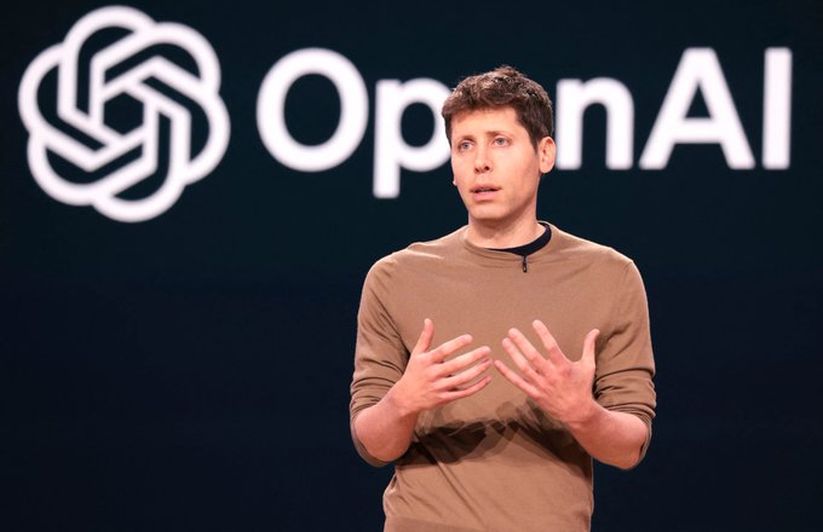
This week, OpenAI unveiled GPT-5.4, the latest generation of its frontier AI models designed to handle complex reasoning, professional workflows, and long-context tasks. The release includes multiple variants—including a specialized “Thinking” version optimized for deeper reasoning and multi-step problem solving.
One of the most notable upgrades is the model’s 1-million-token context window, which allows GPT-5.4 to analyze extremely long documents, codebases, and research materials in a single session. The model also introduces improved tool usage and the ability to interact with software environments, allowing it to execute workflows across multiple applications.
These capabilities position GPT-5.4 less as a conversational assistant and more as a digital coworker capable of performing extended tasks, from analyzing legal documents and financial models to assisting developers with complex codebases.
Why it matters
The release reflects a broader shift in the AI industry. Frontier models are no longer being optimized solely for chat interactions. Instead, companies are racing to build systems capable of planning, reasoning, and autonomously completing complex tasks, a key step toward the emerging world of AI agents.
3. GPT-5.4 surpasses humans on desktop task benchmarks

Alongside the launch of GPT-5.4, OpenAI revealed benchmark results suggesting that the model is beginning to outperform humans on certain real-world computer tasks. On the OSWorld-V benchmark, which evaluates how effectively an AI system can navigate desktop environments and interact with software tools, GPT-5.4 reportedly achieved a score of 75%, slightly above the human baseline of 72.4%.
The benchmark is designed to simulate real productivity workflows, requiring models to complete tasks such as navigating files, editing documents, interacting with applications, and executing multi-step actions across software environments. GPT-5.4’s performance represents a significant jump from earlier models like GPT-5.2, which achieved roughly half that score on the same benchmark.
The model also showed strong performance across GDPval, a benchmark measuring knowledge-work tasks across dozens of professions. According to OpenAI, GPT-5.4 matched or exceeded professional performance in a majority of test scenarios, suggesting the model may be capable of assisting with complex analytical work across industries such as law, finance, research, and engineering.
Why it matters
Benchmarks like OSWorld represent an important shift in how AI progress is measured. Instead of focusing purely on language tasks, researchers are now evaluating whether AI systems can operate in real software environments and complete workflows autonomously. If these capabilities continue to improve, they could accelerate the development of AI agents capable of performing many routine digital tasks currently handled by humans.
4. OpenAI surpasses $25 billion in revenue as IPO speculation grows
The business side of artificial intelligence is expanding just as rapidly as the technology itself. According to a report from The Information, OpenAI has surpassed $25 billion in annualized revenue, reflecting explosive demand for AI tools across both consumer and enterprise markets.
The report also suggests the company has begun taking early steps toward a potential initial public offering (IPO), including hiring major law firms to explore preparations for a public listing that could come as soon as late 2026. If it happens, an OpenAI IPO would likely rank among the most anticipated technology listings in recent history.
Competition in the AI sector is also intensifying. Rival lab Anthropic is reportedly approaching $19 billion in annualized revenue, signaling that the market for advanced AI models is quickly becoming one of the fastest-growing sectors in the technology industry.
Why it matters
The scale of OpenAI’s revenue growth highlights how quickly AI has evolved from a research field into a multi-billion-dollar commercial industry. A future OpenAI IPO could mark a turning point where artificial intelligence becomes a major category in public markets, attracting significant new investment and accelerating competition among global AI companies.
5. OpenAI develops internal GitHub alternative as it expands its developer ecosystem

As OpenAI continues to expand its influence across the AI ecosystem, the company is reportedly developing its own internal alternative to GitHub, the widely used developer collaboration platform owned by Microsoft.
The move reportedly began as a response to repeated service disruptions that affected internal engineering workflows. OpenAI engineers rely heavily on collaborative coding tools to manage large codebases used to train and deploy AI models. By building its own platform, the company aims to reduce reliance on external infrastructure and gain tighter control over how its development environment operates.
The project could also signal a broader strategic shift. Internal discussions reportedly include the possibility of eventually offering the platform to external developers, potentially positioning OpenAI as a direct competitor to GitHub in the long term. Given OpenAI’s growing influence among developers building AI-powered applications, such a platform could attract significant adoption if released publicly.
Why it matters
Developer platforms often become the foundation of powerful technology ecosystems. If OpenAI expands its developer tools, it could evolve from a model provider into a full-stack AI platform, much like Microsoft and Google built developer ecosystems around their technologies. That shift could reshape how developers build and deploy AI-powered applications.
6. Google unveils Gemini 3.1 Flash Lite model with lower pricing

While frontier models continue to grow more powerful, the industry is increasingly focused on making AI cheaper and more accessible. This week, Google introduced Gemini 3.1 Flash-Lite, a new lower-cost version of its Gemini model family designed to deliver strong performance while significantly reducing inference costs.
The model delivers 2.5× faster response times and 45% faster output generation compared with earlier Gemini versions. Pricing starts at $0.25 per million input tokens and $1.50 per million output tokens.
The strategy reflects a growing trend among AI companies: optimizing models not only for performance but also for efficiency. Lower-cost models make it easier for startups, developers, and enterprises to deploy AI tools at scale without incurring massive computing expenses. In many cases, companies don’t need the most powerful model available—they need a system that can deliver reliable performance at an affordable cost.
Google’s move also highlights the increasingly competitive landscape among AI providers. With companies such as OpenAI and Anthropic releasing powerful models, reducing costs has become one of the most effective ways to attract developers and enterprise customers.
Why it matters
The next phase of the AI race may be driven less by raw model size and more by efficiency and affordability. Lower-cost models could dramatically expand the number of businesses able to adopt AI, accelerating its spread across industries and making artificial intelligence a standard component of everyday software.
7. Alibaba releases the Qwen3.5 model to accelerate its push to expand AI capabilities and compete with global AI leaders

China’s AI race continued to heat up this week as Alibaba doubled down on its Qwen family of large language models with the release of Qwen3.5, signaling its ambition to compete with leading Western AI labs. Over the past year, Alibaba has steadily expanded the Qwen ecosystem, releasing multiple models optimized for coding, reasoning, and enterprise applications.
The company has increasingly focused on model efficiency, developing systems that deliver strong performance while requiring significantly less computing power than earlier large-scale models. Some of the newer Qwen variants are designed to run on smaller clusters or even high-end consumer hardware, making them more accessible to developers and businesses that cannot afford massive GPU infrastructure.
Alibaba has also adopted a more open strategy than some Western competitors, releasing several models with open weights to encourage adoption across the global developer community. This approach mirrors strategies previously used by companies like Meta, which released open-source models to accelerate ecosystem growth.
Why it matters
The expansion of Qwen highlights how the global AI race is no longer limited to a handful of U.S. companies. Chinese technology giants are investing heavily in their own AI ecosystems, creating an increasingly competitive landscape where multiple regional AI platforms may emerge, each with its own developer communities, infrastructure, and regulatory frameworks.
8. Nvidia invests billions to strengthen AI infrastructure
While much of the attention in AI focuses on software breakthroughs, the infrastructure powering these systems is becoming just as critical. This week, Nvidia made significant investments to improve how AI data centers move information between processors.
The company is investing billions in companies developing optical networking and photonics technologies, which allow data to travel between chips using light rather than traditional electrical connections. These technologies are designed to dramatically increase the speed and efficiency of data transfer within massive AI clusters used to train and run advanced models.
As AI models grow larger and require more computing resources, the ability to move data quickly between thousands of processors has become one of the biggest bottlenecks in modern data centers. Nvidia’s investments aim to address this challenge by building the next generation of infrastructure required to support future AI systems.
Why it matters
The AI boom isn’t just about smarter algorithms—it’s also driving a massive expansion of physical infrastructure, including chips, data centers, power systems, and networking technologies. Companies that control this infrastructure layer could play an outsized role in shaping the future of artificial intelligence.
9. AI chip demand surges as infrastructure spending accelerates
The explosive growth of artificial intelligence is driving unprecedented demand for specialized semiconductors. Across the industry, technology companies are racing to build massive data centers filled with processors designed specifically for training and running AI models.
Major cloud providers—including Amazon, Microsoft, Alphabet, and Meta—have dramatically increased spending on AI infrastructure over the past year. These companies operate some of the world’s largest cloud platforms, and the rapid adoption of generative AI tools has created intense demand for computing capacity.
Semiconductor firms are responding with aggressive expansion plans. Industry forecasts now suggest that global sales of AI-related chips could surpass $100 billion annually within the next few years, driven by the need to support increasingly powerful models and the massive computing clusters required to train them.
Why it matters
Artificial intelligence is becoming one of the biggest drivers of growth in the semiconductor industry. As companies compete to build larger and more capable AI systems, the demand for specialized processors—and the infrastructure that supports them—is expected to remain a central force shaping the technology economy for years to come.
10. Governments tighten control over advanced AI chips
As AI capabilities advance, governments are increasingly treating high-end AI processors as strategic technologies. U.S. officials are reportedly considering new rules that could further restrict the export of advanced AI chips to certain countries.
The proposed measures would expand existing restrictions designed to prevent geopolitical rivals from using sensitive technologies to develop military systems or strategic AI capabilities. Companies that manufacture cutting-edge chips—such as Nvidia and AMD—could face tighter oversight on where their most advanced processors are sold.
These export controls reflect growing concern among policymakers that advanced computing hardware plays a crucial role in the development of powerful AI systems. Limiting access to that hardware has become one of the primary tools that governments use to influence the global balance of power in AI.
Why it matters
Advanced semiconductors are now widely viewed as the strategic backbone of artificial intelligence. As governments compete for technological leadership, control over the production and distribution of AI chips may become as geopolitically important as control over energy resources or rare minerals.
11. AI agents move from assistants to autonomous workers
One of the most important trends emerging across the AI industry is the rapid evolution of AI agents—systems capable of performing complex tasks across software environments with minimal human supervision. Instead of simply responding to prompts, these systems are increasingly designed to plan, execute, and complete multi-step workflows.
New capabilities introduced by companies such as OpenAI, Anthropic, and Google are pushing AI beyond chat interfaces and toward systems that can operate software directly. These models can analyze data, generate reports, interact with applications, and carry out extended tasks that previously required human involvement.
Some startups and researchers are already experimenting with AI-driven systems capable of launching and operating small digital businesses, automating marketing campaigns, or managing online workflows. While these experiments remain early, they suggest that future AI systems may function less like assistants and more like autonomous digital coworkers capable of handling routine knowledge work.
Some early experiments already hint at how far this trend could go. In one widely discussed internal experiment, employees at Uber reportedly created an AI simulation of CEO Dara Khosrowshahi to help teams practice pitching ideas before presenting them to leadership. The system was designed to mimic the executive’s feedback style and decision-making patterns, allowing employees to refine proposals before meeting with the real leadership team.
Meanwhile, futurist and technology investor Peter Diamandis has highlighted emerging experiments in which AI systems launch and operate small online businesses with minimal human involvement. These systems can generate websites, run marketing campaigns, and automate customer interactions, pointing toward a future where individuals could oversee entire portfolios of AI-driven digital ventures.
While these examples remain early experiments, they illustrate how quickly AI systems are evolving—from tools that assist workers to platforms that may eventually perform complex digital tasks independently.
Why it matters
The transition from AI assistants to AI agents could represent one of the most significant shifts in computing since the rise of the internet. If AI systems become capable of independently executing tasks across software platforms, they could transform how businesses operate—automating workflows, increasing productivity, and reshaping the nature of digital work.
What This Week in AI Reveals About the Industry’s Direction
Taken together, this week’s developments reveal several powerful trends shaping the next phase of the AI race.
AI is becoming geopolitical infrastructure.
The tensions between Anthropic and the U.S. Department of Defense, along with the expansion of export controls on advanced semiconductors, highlight how governments increasingly view artificial intelligence as a strategic asset. Control over AI models, computing power, and chips is rapidly becoming a matter of national security.
The frontier model race is accelerating.
With the release of GPT-5.4 by OpenAI, alongside advances from competitors such as Google and Alibaba, the competition to build more capable AI systems continues to intensify. Each new generation of models is expanding the range of tasks AI can perform.
Infrastructure spending is exploding.
From investments by Nvidia to massive data center expansions by cloud providers, the physical backbone of AI—chips, networking, and power—has become one of the most important battlegrounds in technology.
AI is moving from tools to workers.
Perhaps the most important shift is the emergence of AI agents capable of planning and executing tasks across software systems. Instead of simply assisting users, future AI systems may operate more like autonomous digital coworkers, helping organizations automate complex workflows.
Together, these trends point toward a future in which artificial intelligence becomes deeply embedded across every layer of the global economy—from national security and infrastructure to enterprise software and everyday work.
The Big Picture
This week’s developments illustrate just how quickly the artificial intelligence landscape is evolving. From the launch of more powerful models like GPT-5.4 to escalating competition among AI labs and growing geopolitical tensions over advanced chips, the industry is moving at extraordinary speed.
At the same time, the infrastructure supporting AI—from specialized semiconductors to massive data centers—is expanding at an unprecedented scale. Meanwhile, the rise of autonomous AI agents suggests that the technology is moving beyond experimentation and toward real-world deployment across industries.
Taken together, these developments point to a simple conclusion: artificial intelligence is no longer just a research frontier. It is rapidly becoming one of the defining technologies shaping the global economy—and the race to build it is only accelerating.
Trending Now

Top Tech News Today, April 2, 2026