Can Robot Vacuum Cameras Be Hacked? How to Protect Your Privacy
 Daniel Levi
Posted On March 5, 2026
Daniel Levi
Posted On March 5, 2026
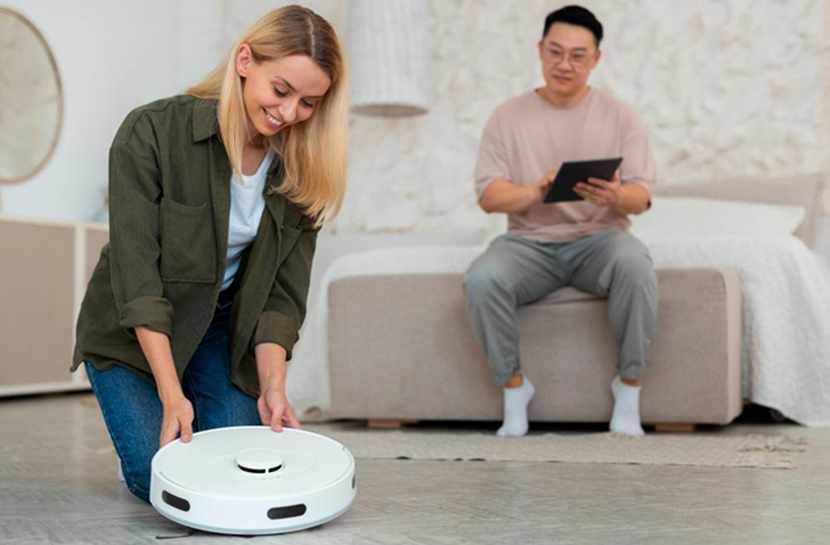
Smart devices have become a regular part of life in many U.S. homes, from smart speakers and thermostats to automated floor cleaners. As newer cleaning robots increasingly rely on built-in cameras to navigate more efficiently, questions about privacy and data security have grown among consumers.
Recent U.S. surveys show that over 90% of households now use at least one smart home device, making digital privacy a mainstream concern rather than a niche issue. Understanding how camera-equipped cleaners handle data is now part of making informed smart-home choices.
Why Do Smart Vacuums Have Cameras?
Modern autonomous cleaners use cameras to improve navigation and cleaning efficiency. Instead of moving randomly, visual sensors help these devices understand their surroundings and plan better routes.
Camera-assisted navigation allows a robotic cleaner to:
- Map rooms accurately and track cleaned areas
- Detect obstacles like furniture legs, pet bowls, or shoes
- Adapt to layout changes common in U.S. homes, such as open-plan living spaces
- Move smoothly between carpet and hardwood floors
In a robot vacuum with AI like Deebot from Ecovacs, camera data is processed in real time to improve spatial awareness and movement decisions. The camera is used to understand the surrounding environment, such as identifying walls, chair legs, or transitions between carpet and hardwood.
Compared with older bump-and-turn machines, this approach improves coverage and shortens cleaning time.
That said, having a camera inside the home naturally raises privacy concerns. In most cases, these concerns are tied to how data is stored, transmitted, and protected, rather than to the camera’s core role in navigation itself.
Can Robot Vacuum Cameras Be Hacked?
Yes, a robotic vacuum with a camera can be hacked in theory, but real-world risk depends heavily on security practices. Like other connected home devices, these cleaners rely on Wi-Fi access, cloud services, and user accounts. The camera itself is rarely the weak point.
Most security issues come from:
- Weak or reused account passwords
- Outdated firmware or mobile apps
- Poorly secured home routers
In the U.S., the average household owns around 17 connected devices. Each additional smart product increases exposure if basic security steps are ignored. Well-designed cleaning robots with encryption and regular updates are far less vulnerable, but user behavior still matters most.
How Do Hackers Gain Access?
Attackers typically do not target the camera hardware directly. Instead, they look for easy entry points across the broader smart home setup.
Common attack paths include:
- Unpatched software vulnerabilities in apps or firmware
- Weak Wi-Fi passwords or outdated router encryption
- Phishing emails or fake app login pages
Most incidents are opportunistic. Hackers scan widely for unsecured accounts rather than targeting individual households. Access usually happens through compromised credentials or networks, not through the device itself.
How Can You Protect Your Robot Vacuum?
Protecting your automated cleaner and personal privacy starts with proper setup and regular maintenance.
Key steps to reduce risk:
- Choose devices from manufacturers that support encryption and frequent updates
- Use strong, unique passwords for smart home accounts
- Enable two-factor authentication when available
- Keep device firmware and apps up to date
- Secure your home router with modern encryption standards
For homes with many connected products, creating a separate Wi-Fi network for smart devices can add another layer of protection. It also helps to review connected devices regularly and remove those no longer in use.
With basic security habits in place, camera-equipped floor cleaners can remain a convenient and low-risk part of a modern U.S. home.