Nvidia may be done investing in OpenAI as IPO looms, Huang says $30B bet ‘might be the last’
 Daniel Levi
Posted On March 4, 2026
Daniel Levi
Posted On March 4, 2026
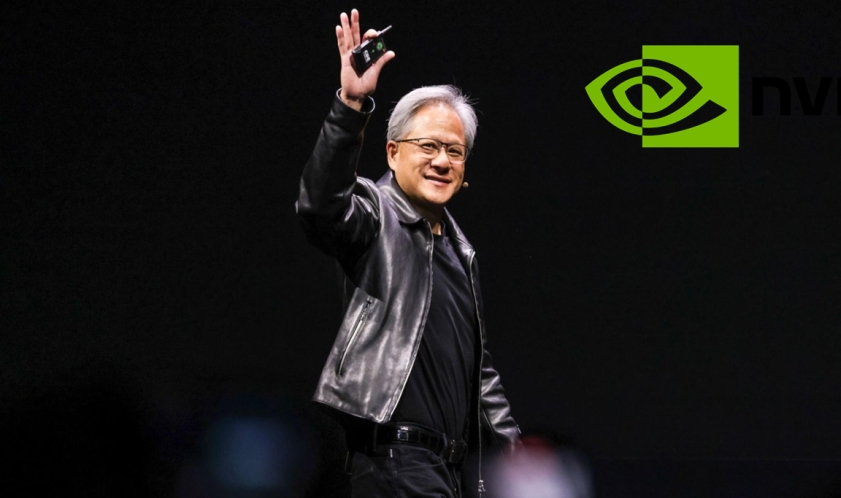
NVIDIA’s relationship with OpenAI has been one of the defining partnerships of the AI boom. Billions of dollars have flowed into building the computing backbone that powers large language models. Now, Nvidia CEO Jensen Huang says the chipmaker may already have made its final big investment in the company.
Speaking Wednesday at the Morgan Stanley Technology, Media & Telecom Conference, Huang said Nvidia’s recent $30 billion investment in OpenAI could mark the end of the company’s direct financial backing of the startup. The reason is simple: OpenAI is expected to go public.
“Nvidia CEO Jensen Huang said the company’s recent $30 billion investment in OpenAI “might be the last time” it invests in the AI startup as it gears up to go public,” CNBC reported.
“The reason for that is because they’re going to go public,” Huang said during the conference.
Huang’s remarks came less than a week after OpenAI closed a $110 billion funding round backed by Amazon, Nvidia, and SoftBank, valuing the company at roughly $730 billion.
Jensen Huang: Nvidia’s $30B OpenAI Investment ‘Might Be the Last’
That comment lands at a moment when investors and industry observers have spent months trying to decode the scale of Nvidia’s relationship with OpenAI. Last year, the companies floated the idea of a far larger commitment tied to building massive AI infrastructure. That vision included a potential $100 billion investment over several years as new supercomputing facilities came online.
Huang made it clear that the scenario is no longer likely. The chance for Nvidia to invest $100 billion in OpenAI, he said, is “probably not in the cards.”
Regulatory filings had already hinted that the ambitious plan might stall. In a quarterly filing released in November, Nvidia disclosed that the previously announced $100 billion agreement might never materialize. The company repeated similar language in a February filing, warning there was “no assurance” that an investment and partnership agreement with OpenAI would ever be completed.
Reporting from The Wall Street Journal in January added more uncertainty, describing the proposed deal as “on ice.”
The $30 billion commitment revealed last week arrived as part of OpenAI’s enormous $110 billion funding round. That round included a $50 billion commitment from Amazon and another $30 billion from SoftBank, making it one of the largest private capital raises in technology history.
The deal carries a massive infrastructure component. OpenAI said it secured 3 gigawatts of dedicated inference capacity and 2 gigawatts of training capacity on Nvidia’s Vera Rubin systems built for AI data centers. The scale reflects the growing demand for compute as companies race to deploy advanced AI models.
Nvidia has emerged as one of the biggest winners of the AI surge. Its GPUs sit at the center of the modern AI stack, handling the heavy workloads required to train models and run them at scale.
The nature of that demand has begun to shift. Training large models once dominated AI spending. Today, inference—the process that lets models respond to user prompts in real time—has become a major focus.
That shift has pushed chipmakers to rethink their hardware roadmaps. Nvidia is working on a processor built specifically for inference workloads, and OpenAI is expected to be among its largest customers.
OpenAI has already committed to buying large amounts of dedicated inference capacity from Nvidia. The company has spread its bets across multiple cloud providers and chip platforms. It purchases inference-optimized chips from Amazon and relies on Google’s Tensor Processing Units in some of its systems.
Huang indicated Nvidia’s investment strategy around frontier AI labs may be nearing a natural stopping point. He said the company’s $10 billion investment in Anthropic, another leading OpenAI rival, will likely be its last stake in that company.
That investment was previously announced in November alongside Microsoft.
OpenAI CEO Sam Altman is expected to speak at the same Morgan Stanley conference on Thursday, according to a person familiar with the event schedule who requested anonymity since the details are private.
His remarks will likely draw close attention across Silicon Valley. Investors, cloud providers, and AI developers all want clarity on one question that hangs over the industry: what OpenAI’s path to the public markets will look like—and how its powerful partners will fit into that future.