OpenAI raises $110B funding round led by Amazon, Nvidia, SoftBank, hits $730B valuation
 Nickie Louise
Posted On February 27, 2026
Nickie Louise
Posted On February 27, 2026
OpenAI has pulled off another record-smashing raise, locking in $110 billion in fresh capital and pushing its pre-money valuation to $730 billion. The scale of the round makes one thing clear: the race to build the infrastructure behind advanced AI is entering a far more expensive phase.
The funding came from a trio of heavyweight backers. Amazon committed $50 billion, Nvidia put in $30 billion, and SoftBank matched that with another $30 billion, according to the company’s announcement on Friday. More investors could join as the round continues to take shape.
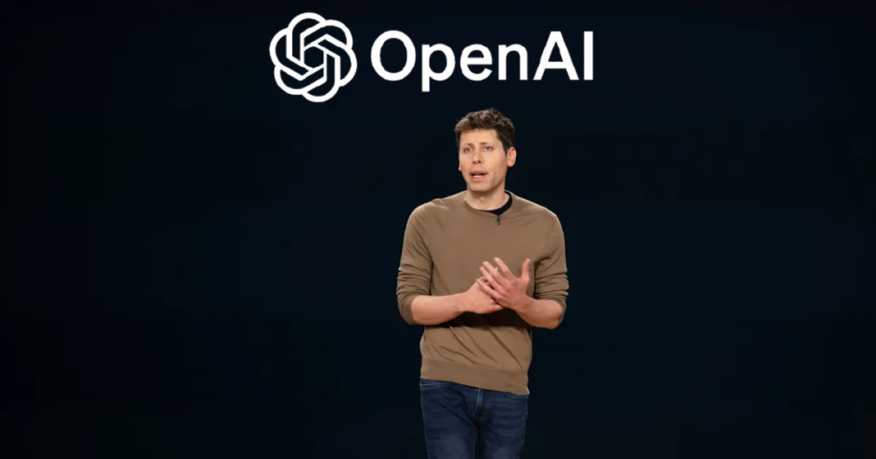
“We’re super excited about this deal,” OpenAI CEO Sam Altman told CNBC’s “Squawk Box” on Friday. “AI is going to happen everywhere. It’s transforming the whole economy, and the world needs a lot of collective computing power to meet the demand.”
The latest financing more than doubles OpenAI’s previous record raise last year and comes just a week after CNBC reported that Nvidia was in talks to invest up to $30 billion in the company.
Amazon, Nvidia, SoftBank pour $110B into OpenAI in the largest private tech funding ever
The new capital more than doubles OpenAI’s previous record raise from last year and marks a sharp jump from the company’s $500 billion valuation recorded during a secondary financing in October. It cements OpenAI’s position at the center of the current AI spending surge, where compute capacity has become the main bottleneck.
Amazon’s role goes far beyond writing a large check. The two companies announced a multiyear strategic partnership to build customized AI models for Amazon’s customer-facing products. The deal deepens OpenAI’s ties to Amazon Web Services at a moment when cloud alliances are becoming a defining battleground in enterprise AI.
OpenAI said it will expand its existing $38 billion agreement with AWS by an additional $100 billion over the next eight years. AWS is set to become the exclusive third-party cloud distribution provider for OpenAI’s enterprise platform Frontier, which the company introduced earlier this month.
Amazon’s $50 billion investment will roll out in phases. The company plans to begin with an initial $15 billion commitment, followed by another $35 billion once certain conditions are met.
“It’s so early right now in the AI space, and OpenAI is off to an amazing start,” Amazon CEO Andy Jassy told “Squawk Box” on Friday. “They’re going to be one of the very big winners, we believe, long term. I think we can help them quite a bit as part of this partnership.”
OpenAI moved quickly to calm any concerns about its long-standing relationship with Microsoft, which has backed the company since 2019. The startup said nothing about the new financing changing the terms of that partnership. In a joint statement, the companies described their relationship as remaining “strong and central.” Microsoft still holds an option to participate in the round, according to a person familiar with the matter.
The massive raise highlights the financial reality behind modern AI systems. Training and running large models require substantial investment in graphics processors and data center capacity. OpenAI said it is deepening its collaboration with Nvidia, the dominant supplier of AI chips.
Under the expanded arrangement, OpenAI will tap 3 gigawatts of dedicated inference capacity and 2 gigawatts of training capacity built on Nvidia’s Vera Rubin systems. That level of compute signals how aggressively the company is scaling its infrastructure footprint.
OpenAI has told investors it is now targeting roughly $600 billion in total compute spending by 2030. The figure is lower and more defined than earlier projections, arriving at a time when some observers questioned whether the company’s earlier infrastructure ambitions were too aggressive relative to future revenue.
Competition is heating up. OpenAI still leads the consumer AI market, yet pressure is rising from Google’s Gemini models. In enterprise AI, Anthropic has gained early traction with large corporate customers, pushing OpenAI to strengthen its own business offerings.
Financially, the company is projecting more than $280 billion in total revenue by 2030, split roughly evenly between consumer and enterprise segments, according to people familiar with the internal forecasts.
For now, the message from investors is unmistakable. Capital continues to pour into the companies building the foundation of the AI economy, and OpenAI just raised the bar again.
Trending Now