It’s Thursday, February 26, 2026, and here are the top tech stories making waves today. AI’s infrastructure boom is colliding with real-world limits — from power grids and enterprise budgets to tightening regulation and rising cyber risk. Over the past 24 hours, the tech landscape delivered a clear signal: the AI race is entering a more consequential phase where electricity, governance, security, and monetization matter just as much as model breakthroughs.
Today’s stories capture that shift in motion. NVIDIA’s record results underscore the scale of AI demand, while Washington moves to confront the energy costs behind the compute surge. Samsung is betting the next smartphone upgrade cycle will be AI-driven, enterprises are rethinking control and sovereignty, and regulators are turning up the pressure on platforms. Meanwhile, fresh cyber incidents and infrastructure vulnerabilities serve as a reminder that the digital backbone remains under constant stress.
Here are today’s 15 top technology news stories you need to know.
Technology News Today
White House pulls Big Tech into an AI power-cost pledge as data centers strain the grid
The White House says it will host leading data center and AI companies on March 4, 2026, to formalize a “Rate Payer Protection Pledge,” a political and economic response to the rapid rise in electricity demand tied to AI infrastructure. The administration is framing the AI race as a strategic priority, but local backlash is building in regions where new data centers are colliding with utility constraints and voter anger over higher bills. The pledge’s core idea is blunt: tech companies expanding compute should shoulder more of the incremental power costs, rather than passing them on to households and small businesses through utility rate structures.
Why this matters is bigger than one meeting. AI’s infrastructure buildout is entering a phase where energy procurement, grid interconnection queues, and power-price volatility become gating factors alongside chips and talent. If governments start treating AI power demand like a public-interest issue, hyperscalers could face tighter rules on siting, contracting, and cost allocation. That reshapes where data centers get built, which startups win the next wave of “AI infrastructure,” and how quickly new model capacity can come online. It also raises a deeper question: whether the US grid can scale fast enough without forcing a policy reset on who pays for upgrades.
Why It Matters: AI’s next bottleneck isn’t just GPUs — it’s electricity, and Washington is moving to make that a Big Tech accountability issue.
Source: Reuters.
Nvidia posts record Q4 revenue as AI infrastructure spending stays on the gas
NVIDIA reported record quarterly revenue of $68.1B for the quarter ended January 25, 2026, underscoring that demand for AI compute remains intense even as investors debate whether the market is overheating. The company framed results around a continued shift toward accelerated computing and AI workloads in data centers, where hyperscalers and enterprises are buying both training capacity and inference capacity. The numbers matter not only for Nvidia but for the entire supply chain that surrounds it: memory vendors, networking silicon vendors, server makers, and data center builders racing to keep up.
The broader tech implication is that Nvidia’s results are effectively a readout on the health of the AI buildout cycle. If revenue and guidance keep climbing, it validates ongoing capex by cloud giants and reinforces the momentum behind “AI factories” — large clusters optimized to turn electricity into model output. It also pressures rivals and partners alike: competitors need credible alternatives, while customers look for leverage to avoid single-vendor dependency. For startups, it’s a reminder that the “picks-and-shovels” layer — infrastructure software, networking optimization, power management, and model efficiency — remains a rich battlefield.
Why It Matters: Nvidia’s numbers are the clearest signal that AI infrastructure spending is still expanding at scale.
Source: Nvidia Newsroom.
AI coding agents fuel a productivity panic inside tech teams
A new wave of AI coding agents is pushing software teams into a high-pressure sprint: ship faster, refactor less, and let tools do more of the work. Bloomberg frames this as a “productivity panic,” where the promise of easier development becomes a mandate to accelerate release cycles. In practice, organizations are discovering the messy middle: AI can generate code quickly, but governance, testing, security review, and maintainability don’t disappear. That creates tension between leadership expectations and engineering realities, especially when product roadmaps get rewritten around what AI “should” enable.
The stakes extend beyond developer culture. If companies treat AI-assisted coding as a shortcut, the industry could see more reliability regressions, security flaws, and operational incidents, especially in regulated environments. Meanwhile, startups building agentic developer tools face a credibility test: they need to prove their systems reduce the total cost of delivery, not just time-to-first-draft. The winners will likely be vendors that integrate tightly with compliance, audit trails, code review workflows, and policy enforcement — the less glamorous parts of shipping software at enterprise scale.
Why It Matters: AI coding agents are changing how software gets built — and may increase risk if speed outpaces governance.
Source: Bloomberg.
Samsung’s new flagship phones push “easy AI” as the next consumer upgrade cycle
Samsung unveiled new flagship Galaxy phones with AI features designed to feel effortless rather than experimental. The company’s pitch is that AI should operate as an everyday utility: helping with communication, photos, search-like tasks, and on-device assistance without requiring users to learn new habits. That strategy reflects a growing industry reality: consumers have heard the AI hype, but adoption depends on whether features are intuitive, reliable, and clearly beneficial. Samsung is trying to anchor AI in practical use cases that can differentiate premium hardware in a mature smartphone market.
This matters because smartphones are becoming a major distribution channel for AI. If handset makers can make AI feel native — and keep enough processing on-device to manage latency and privacy — they can reshape power dynamics with cloud providers and app platforms. It also raises new competition in silicon and memory: on-device AI workloads can drive demand for faster NPUs, more RAM, and better energy efficiency. For the broader ecosystem, Samsung’s approach is a bet that “consumer AI” will be won by integration and user experience, not by raw model benchmarks.
Why It Matters: The next phase of AI adoption may be driven by phones that make AI invisible and usable, not flashy demos.
Source: The Wall Street Journal.
Samsung Unpacked adds more AI hardware pressure across the mobile supply chain
The Verge’s wrap of Samsung Unpacked highlights a clear theme: Samsung is turning AI into a product pillar across the Galaxy lineup, not just a feature checklist. Beyond the headline phone announcements, the event underscores how AI is now a forcing function for design tradeoffs — display choices, thermals, battery management, camera pipelines, and the balance between cloud AI and on-device processing. Samsung is effectively telling the market that premium phones will increasingly be judged by how well they run AI tasks in daily life.
The ripple effects are significant. AI-driven user expectations can accelerate upgrades, but they also increase component strain: higher memory requirements, faster storage, and more advanced chip packaging. That can push costs up, which may widen the gap between flagship and budget devices. It also forces platform questions: which assistant experiences users see by default, how data is handled, and whether AI features become subscription-like services later. For startups, it opens opportunities in mobile AI optimization, privacy-preserving inference, and vertical apps that leverage more capable devices — but only if they can deliver value without draining the battery or requiring constant connectivity.
Why It Matters: Samsung is pushing AI to the core of the smartphone experience, which changes hardware economics and platform competition.
Source: The Verge.
Investors rotate toward utilities and “asset-heavy” sectors as AI’s winners narrow
The Financial Times reports that investors are looking for shelter from an AI-driven tech rout by moving into sectors like energy and utilities — areas positioned to benefit from surging electricity demand and data center expansion. The idea is straightforward: even if AI software valuations wobble, the physical infrastructure needed to power AI continues to gain strategic value. Utilities, grid equipment providers, and energy suppliers can look like “picks-and-shovels” plays when capital is unsure which AI apps will dominate.
This matters for tech because it reflects a shift in how markets price the AI era. If the narrative moves from “AI will eat software” to “AI will consume power,” capital flows may increasingly reward the companies that build and operate the physical backbone: generation, transmission, cooling, and high-density data center development. For startups, it can change fundraising dynamics. Infrastructure-adjacent ventures — energy storage, grid analytics, demand-response software, and data center efficiency — may find stronger tailwinds than pure application companies. It also signals a tougher environment for AI firms that can’t demonstrate durable economics beyond growth.
Why It Matters: AI’s buildout is turning electricity and infrastructure into core tech-market drivers — not just software narratives.
Source: Financial Times.
Accenture and Mistral AI team up to sell “sovereign” enterprise AI options
Accenture and Mistral AI announced a multi-year partnership aimed at helping enterprises adopt AI with a focus on autonomy and scalability. The positioning clearly targets a rising enterprise priority: keeping more control over models, deployments, and data governance — especially in Europe, where regulatory and sovereignty concerns are sharper. The collaboration suggests a go-to-market strategy that blends consulting-heavy transformation work with a model provider that can be packaged as an alternative to US hyperscaler-centric stacks.
The broader implication is that “AI sovereignty” is becoming a commercial category, not just a policy debate. Large enterprises increasingly want optionality: multiple models, deployment flexibility, and clearer assurances about where data and inference live. Accenture’s involvement matters because services firms often determine what gets deployed in large organizations. For startups, this is both a warning and an opportunity: distribution may consolidate through integrators, but specialized tools that solve governance, evaluation, and compliance for multi-model stacks can become essential. It also adds pressure on major AI labs to offer more transparent enterprise controls.
Why It Matters: Enterprise AI buying is shifting toward control, governance, and sovereignty — and partnerships like this can steer huge budgets.
Source: Accenture Newsroom.
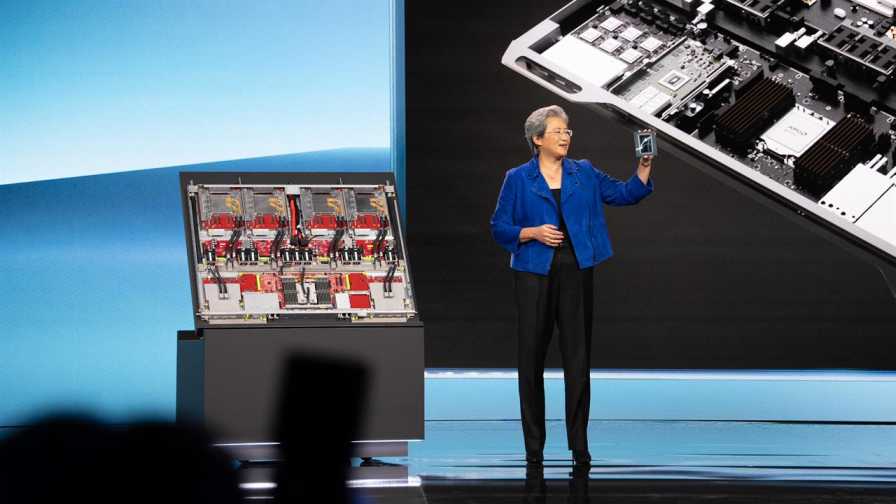
AMD puts $250M into Nutanix in a chips-to-platform push for enterprise AI
AMD is investing $250 million into Nutanix, signaling a tighter alignment between silicon providers and the software-defined data center platforms enterprises already use. The logic is pragmatic: many companies want AI adoption without ripping and replacing their infrastructure, and Nutanix sits in the layer that can abstract compute resources, manage workloads, and integrate with hybrid environments. For AMD, this is a way to pull enterprise AI demand toward its ecosystem and compete more effectively in deployments where Nvidia has strong mindshare.
The deal matters because the enterprise AI race won’t be won only in hyperscale clouds. A large portion of AI spending will occur in private and hybrid environments, where buyers prioritize virtualization, security controls, predictable performance, and operational simplicity. Investments like this suggest that chip companies increasingly see software partnerships as a strategic moat, not a nice-to-have. For startups, it points to an evolving battleground: tools that make AI workloads manageable in real-world enterprise environments — scheduling, cost controls, observability, and policy enforcement — may become more valuable than yet another model wrapper.
Why It Matters: Enterprise AI adoption depends on platforms enterprises already trust — and AMD is deepening its investment in that layer.
Source: The Register.
Cisco issues emergency fixes for a Catalyst SD-WAN auth-bypass zero-day exploited in the wild
Cisco disclosed and patched a critical authentication-bypass vulnerability affecting Cisco Catalyst SD-WAN Controller/Manager, warning it has been exploited in the wild. In plain terms, a flaw in peering authentication can allow an unauthenticated attacker to gain administrative privileges on affected systems — a worst-case scenario for organizations running SD-WAN as part of their core network architecture. Security teams are being urged to patch immediately, reflecting how quickly exploitation can follow disclosure for high-impact network edge vulnerabilities.
Why this matters is the combination of blast radius and timing. SD-WAN is widely deployed across enterprise networks, often touching high-value connectivity pathways. When vulnerabilities like this appear, attackers don’t need to breach endpoints first; they can target infrastructure that routes traffic across the organization. The incident also reinforces a pattern: network appliances remain a high-return target because they sit at the junction of identity, connectivity, and access control. For startups and vendors selling “AI for security,” it’s another reminder that real-world defense still hinges on fundamentals — patch velocity, asset inventory, segmentation, and monitoring — not just clever detection models.
Why It Matters: Exploited zero-days in core networking gear can turn into enterprise-wide compromises fast — patching is the first line of defense.
Source: Cisco (with Rapid7 analysis).
Wynn Resorts confirms employee data stolen in ShinyHunters breach
Wynn Resorts confirmed that employee data was stolen in an incident tied to the ShinyHunters hacking group, highlighting how threat actors continue targeting large consumer-facing brands with significant operational footprints. Beyond the immediate harm to affected employees, the incident shows that “leak site” pressure tactics remain central to ransomware and extortion playbooks, even when attackers claim to have deleted the data after the fact. These scenarios often force companies to make difficult decisions about communication, remediation, credit monitoring, and how to handle attacker assurances.
The broader issue is that hospitality and entertainment firms sit on valuable personal and operational data while relying on complex, widely distributed IT environments. That makes them appealing targets: lots of endpoints, vendor relationships, and identity systems that can be abused. For the tech ecosystem, the lesson is that cybersecurity risk isn’t contained to “tech companies” — it’s systemic across industries, and breaches increasingly have downstream implications for payments, identity, and trust. For startups selling security solutions, incidents like this sharpen customer demand for identity hardening, third-party risk management, and detection capabilities that can spot credential theft and lateral movement early.
Why It Matters: Brand-name breaches keep proving that identity and data protection are now baseline business requirements, not optional IT upgrades.
Source: The Register.
Medical device maker UFP Technologies discloses cyberattack with data theft and disruption
UFP Technologies disclosed a cybersecurity incident involving stolen files and disruption to parts of its IT systems — an especially sensitive scenario given the company’s role in the medical device supply chain. Reporting indicates the event resembles ransomware-style operations where attackers both steal data and deploy file-encrypting malware. Even when patient data isn’t directly confirmed, incidents in the healthcare manufacturing ecosystem can affect operational continuity and raise questions about the exposure of employee, partner, or proprietary data.
This matters because healthcare-adjacent firms are increasingly targeted, and the impact extends beyond the breached organization. Medical manufacturing and device supply chains are intertwined with hospitals, providers, and distributors that cannot easily tolerate downtime. That raises the risk of cascading delays and service disruption, while creating regulatory and legal exposure. In the broader tech landscape, it’s another signal that cybersecurity resilience is becoming a competitive factor in regulated industries: customers will favor vendors that can demonstrate incident-response maturity, security controls, and transparency. Startups building security products for industrial and healthcare environments have an opening — but they must prove reliability, not just detection accuracy.
Why It Matters: Cyberattacks on healthcare suppliers can ripple into real-world operations — and raise the cost of doing business across the ecosystem.
Source: SecurityWeek (with disclosure details via filing).
Dutch telco Odido says it won’t pay as hackers begin publishing stolen customer data
Odido says it will not pay a ransom tied to a breach involving millions of customer records, and reports indicate that attackers have begun publishing portions of the stolen data after an ultimatum expired. The story illustrates the harsh mechanics of modern extortion: even when companies refuse to pay, attackers can still inflict damage by leaking data in stages, increasing pressure, and amplifying harm to customers. It also highlights how customer-service systems — where identity details and sensitive notes can be concentrated — can become high-value targets.
The broader implication is that “don’t pay” is not a final outcome; it’s a posture that must be paired with rapid containment, customer notification, and protective measures that reduce secondary fraud. Telecom breaches are especially dangerous because telecom accounts can be used to launch SIM-swap attacks and downstream account takeovers. For startups and regulators, the incident underscores why breach response now includes identity protection, fraud monitoring, and customer-facing remediation at scale. It also raises a strategic point: as attackers target customer-contact tools and CRM systems, security programs need to treat these as crown jewels, not low-risk back-office apps.
Why It Matters: Data-extortion attacks are evolving into public “pressure campaigns,” and telecom breaches can quickly become identity-fraud problems.
Source: IO+.
UK fines Reddit over age assurance, raising pressure on platform compliance
UK regulators fined Reddit for allegedly failing to implement sufficiently robust age-verification mechanisms, an enforcement action that highlights a tightening environment for online platforms handling youth access and safety. Even when platforms argue they are community-driven or not built around traditional social feeds, regulators increasingly expect measurable controls, not just policy statements. That means stronger verification flows, clearer moderation practices, and demonstrable risk mitigation for harmful content access.
This matters because age assurance is turning into a product and infrastructure problem as much as a policy issue. Stronger checks can increase friction, which affects growth, engagement, and anonymity — and the tradeoffs vary dramatically by platform type. For the tech ecosystem, enforcement actions accelerate demand for privacy-preserving verification tech (so platforms can check age without collecting excessive identity data), while also raising legal risk for companies that treat compliance as a reactive chore. Startups building identity, verification, and trust-and-safety tooling may benefit, but they’ll face scrutiny too: regulators and users will expect systems that protect minors without creating new privacy harms.
Why It Matters: Platform regulation is moving from guidance to penalties — and age assurance is becoming a core operating requirement.
Source: Ars Technica.
Baidu revenue falls again, highlighting pressure to convert AI into durable growth
Baidu reported another revenue decline, underscoring the challenge facing major tech firms in translating AI investment into near-term financial performance. Weakness in core advertising businesses remains a drag, while AI spending adds cost and complexity. This is part of a broader pattern: the market is rewarding AI leadership, but it’s also demanding evidence that AI products can drive revenue, protect margins, or create defensible new lines of business — not just impressive demos.
The strategic significance is global. China’s tech giants are investing heavily in AI capabilities, yet they face competitive pressure, hardware constraints, and monetization hurdles. For the broader startup ecosystem, Baidu’s results are a reminder that AI advantage isn’t only about model quality. Distribution, product integration, customer trust, and regulatory constraints determine whether AI becomes a profit engine. It also shapes the competitive landscape for smaller companies: if big incumbents struggle to monetize, they may cut deals, acquire capabilities, or partner more aggressively to accelerate adoption. Meanwhile, investors may become more selective, favoring companies with clear unit economics and enterprise-grade adoption signals.
Why It Matters: Even major tech incumbents are learning that AI leadership must translate into revenue — or markets lose patience.
Source: Bloomberg.
The push to reduce animal experiments accelerates as organ and computer models advance
Nature reports that advances in organ models and computer-based approaches are increasing momentum to reduce certain animal experiments. While biomedical research still relies on animal studies for many questions, progress in organoids, organ-on-chip systems, and computational modeling is changing what’s possible — and where the ethical and scientific lines are drawn. The shift is gradual, but it is becoming more credible as validation improves and researchers can replicate aspects of human physiology that animal models sometimes miss.
This matters for tech and startups because it sits at the intersection of AI, biotech, and regulation. If alternative models become more accepted, it can speed up drug discovery cycles, reduce costs, and reshape how preclinical testing is done — potentially altering procurement and partnership patterns across pharma and research institutions. AI has a role in simulation, hypothesis generation, and experimental design, but credibility will hinge on rigorous validation, reproducibility, and regulatory acceptance. For frontier-tech startups, the opportunity is large: tools that make non-animal testing more predictive can become essential infrastructure. But the risk is equally real: overclaiming capability in a high-stakes domain can backfire fast.
Why It Matters: Better organ and computational models could reshape biotech R&D pipelines — and create a new platform layer for AI-driven life sciences.
Source: Nature.
That’s your quick tech briefing for today. Follow us on X @TheTechStartups for more real-time updates.