Iran succeeds in partially jamming and degrading Starlink, pushing Elon Musk’s satellite network to its limits
 Daniel Levi
Posted On January 16, 2026
Daniel Levi
Posted On January 16, 2026
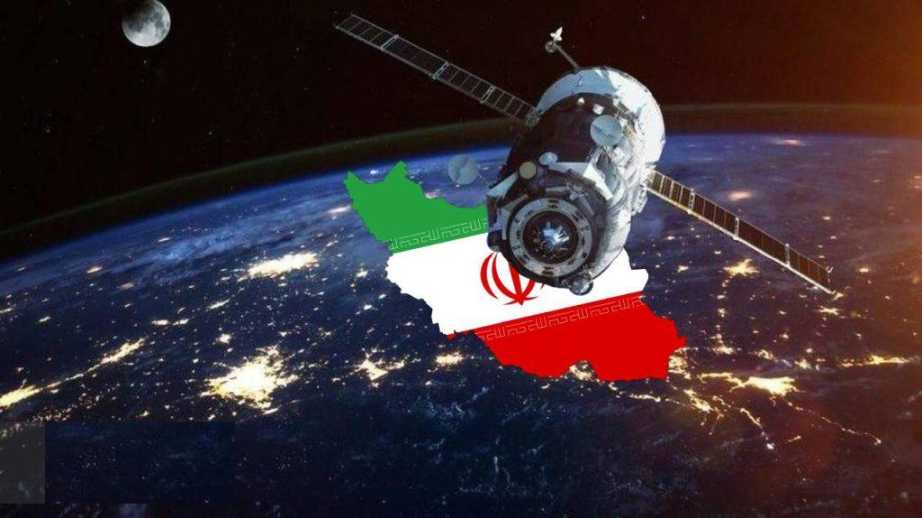
Iran’s sweeping crackdown on dissidents is turning into one of the toughest real-world stress tests yet for Elon Musk’s Starlink. The satellite internet service, which has become a lifeline during government-imposed blackouts, now finds itself locked in a high-stakes cat-and-mouse game with a regional power deploying jammers and GPS spoofing tactics to disrupt connections.
Earlier this week, SpaceX made Starlink free for users in Iran, placing Musk’s company at the center of another geopolitical flashpoint. The move pits U.S.-based engineers against Iranian security forces armed with electronic warfare tools, according to activists, analysts, and researchers tracking the situation on the ground.
What happens next matters far beyond Iran. U.S. military and intelligence agencies rely on Starlink and its defense-grade sibling, Starshield. China is building rival satellite constellations. Investors are watching closely as SpaceX weighs a potential public listing this year. The outcome in Iran could shape how governments and militaries view commercial satellite networks in conflict zones.
The news comes just a month after SpaceX’s Starlink lost communication with one of its satellites after a rare in-orbit failure, adding another real-world data point to the growing challenge of managing massive satellite fleets in low Earth orbit.
“We’re in this weird early part of the history of space-delivered communications where SpaceX is the only true provider at this scale,” John Plumb, the former Pentagon space policy chief under President Joe Biden, told Reuters.
“And these repressive regimes think they can still turn off communications, but I think the day is coming where that’s just not possible,” he said.
Starlink becomes a protest lifeline
Thousands of protesters are reported to have been killed in the past week as Tehran tightens its grip on communications. The blackout makes it difficult to verify the scale of violence. That’s where Starlink comes in.
Raha Bahreini, an Iranian researcher at Amnesty International, said her team verified dozens of videos showing protesters injured or killed by Iranian forces. Nearly all came from people with access to Starlink. She said restrictions still limit direct contact with witnesses, slowing efforts to document abuses.
Starlink remains banned in Iran, yet tens of thousands of terminals may have been smuggled into the country. Holistic Resilience, a U.S. nonprofit helping deliver the equipment, says it works with SpaceX to monitor attempts by Iran to interfere. The exact number of active terminals remains unclear.
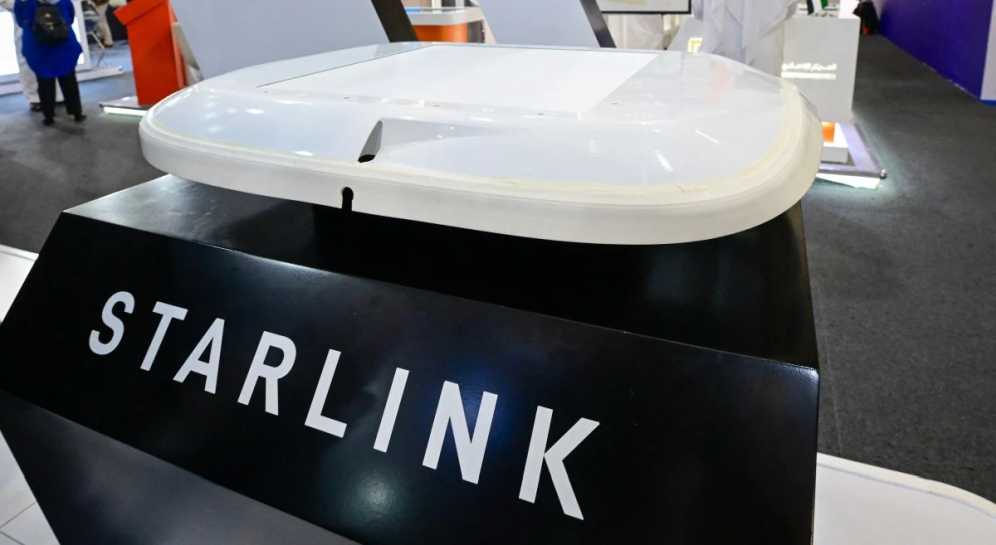
The consumer hardware is easy to hide. The larger antenna is roughly the size of a pizza box. The mobile version looks more like a laptop.
Iran’s mission to the United Nations declined to comment on Reuters’ questions. Foreign Minister Abbas Araqchi told Al Jazeera that internet access was cut after authorities claimed “terrorist operations” were being coordinated from outside the country.
Stralink Jammed: Jammers and fake GPS signals
Starlink’s scale gives it an edge. According to Reuters, roughly 10,000 low-orbit satellites streak across the sky at 17,000 miles per hour, making them harder to track than traditional geostationary systems.
That hasn’t stopped Iran from trying. Experts say Tehran has deployed satellite jammers to disrupt signals. More damaging is GPS spoofing, which can confuse Starlink terminals and knock them offline.
“Iran’s government disconnected its 90 million people from the internet on Thursday, in a drastic effort to quell massive nationwide protests against the regime. The internet blackout extended to a partial jamming of the Starlink satellite service, which people in Iran have been using to circumvent official internet censorship, organize protests and communicate with the outside world,” The Washington Post reported.
Nariman Gharib, an Iranian opposition activist and cyber investigator based in Britain, analyzed data from inside the country. He said spoofing wrecks connection stability.
“You might be able to send text messages, but forget about video calls,” he said.
This marks a shift. Iran hasn’t fully shut down Starlink, but it has degraded performance in parts of the country. Speeds drop. Connections stall. Uploading videos becomes risky. For a government trying to suppress documentation, that alone is a win.
Tehran hunts for terminals
Musk has publicly confirmed Starlink’s presence in Iran for years, fueling a long campaign by authorities to counter it. During protests following Mahsa Amini’s death in 2022, Musk said nearly 100 terminals were active.
After a brief war with Israel last June, Iran’s parliament passed a law banning Starlink outright, threatening harsh penalties for users and distributors. State media framed the move as a national security measure.
Diplomacy followed. Iran urged the International Telecommunication Union to pressure the U.S. and Norway, where Starlink is registered, to block service. At one meeting, Iranian officials accused an “invading country” of deploying terminals on drones during an attack.
By November, Iran admitted it still struggled to locate and disable many terminals.
That struggle continues.
For SpaceX, the battle in Iran now doubles as a live-fire test of its technology. Engineers push software updates to counter interference. Activists adapt their tactics. Governments study the results.
Starlink may not be unstoppable. Iran has shown it can slow it down. But the blackout wall that once silenced entire nations is cracking. And every shaky connection that still gets through tells the story Tehran wants buried.