

Technology News Today – Your Daily Briefing on the AI, Big Tech, and Startup Shifts Reshaping Markets
It’s Friday, January 16, 2026, and today’s global tech headlines reveal how deeply technology is reshaping geopolitics, infrastructure, and corporate strategy. From rising trade barriers on AI chips and mounting pressure on Big Tech’s advertising empire to power grid strain driven by data centers and growing regulatory scrutiny of deepfake content, leaders are facing a new era where technology decisions carry economic, political, and operational consequences.
Meanwhile, memory shortages are slowing AI hardware roadmaps, regulators across Europe and the U.S. are flexing their enforcement muscles, and frontier technologies like robotics and quantum computing are edging closer to enterprise reality. Here’s what CXOs and decision-makers need to know today.
Here are the top 15 technology news stories shaping the global ecosystem today.
Technology News Today
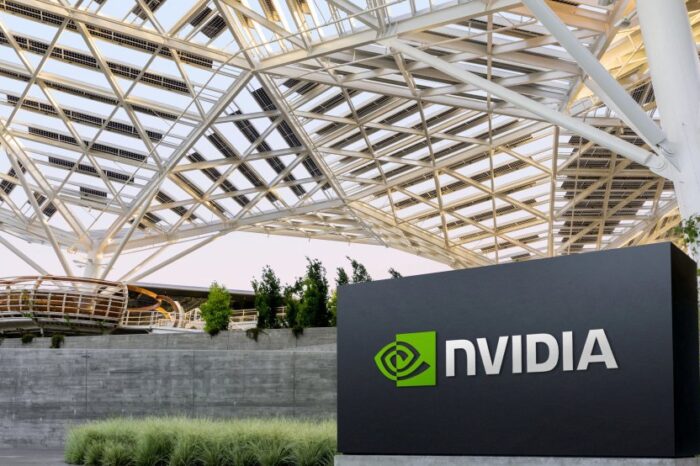
AI chip tariffs add new friction to Nvidia’s global supply chain
A fresh wave of U.S. trade action is adding cost and uncertainty to the AI hardware pipeline. The White House is moving forward with a 25% tariff on Nvidia AI chips and other advanced semiconductors, framing it as a national-security measure tied to strategic technologies. For enterprise buyers, the near-term effect is simple: higher effective prices and more complicated procurement, especially for organizations already struggling with GPU availability.
The bigger story is how quickly “AI infrastructure” is becoming a trade-policy battleground. Tariffs can ripple through cloud pricing, on-prem refresh cycles, and the economics of training and inference at scale. Even if hyperscalers absorb some costs, many enterprises will feel the downstream impact through higher service rates, longer contracts, or tighter allocation terms.
Why It Matters: AI compute is now geopolitical infrastructure; policy shocks can move budgets, timelines, and vendor strategy overnight.
Source: Reuters.
Italy’s powerful privacy watchdog faces corruption probe, raising questions for EU tech enforcement
Italy’s data protection authority — one of Europe’s most aggressive enforcers on AI and data rules — is now under a corruption and embezzlement investigation. Finance police raided the regulator’s offices as prosecutors examine alleged improper spending and decision-making involving the agency’s leadership. The individuals involved have denied wrongdoing and say they will cooperate.
For global tech leaders, the stakes go beyond Italian politics. Privacy regulators help set the tone for how Europe interprets AI governance, cross-border data transfers, and platform accountability. If a high-profile watchdog loses credibility, it can weaken enforcement consistency — or, conversely, trigger a political push for tougher oversight structures and new leadership that takes an even harder line. Either way, enterprises should expect short-term uncertainty in enforcement posture and longer-term pressure for clearer, auditable governance practices.
Why It Matters: Regulatory legitimacy is part of the operating environment; instability at a key enforcer can reshape compliance risk across Europe.
Source: Reuters.
Global memory tightness pushes AI hardware planning into 2027
AI buyers are running into a constraint that’s less visible than GPUs but just as real: memory. A shortage of high-bandwidth memory (HBM) is tightening the supply chain for high-end accelerators, complicating delivery schedules and long-range planning for enterprises and cloud providers. Even organizations with approved budgets can get stuck behind manufacturing bottlenecks that are difficult to fix quickly.
This is a classic “second-order” infrastructure problem: GPUs get the headlines, but HBM, advanced packaging, and networking gear often decide whether a data center buildout hits its timeline. For CIOs and infrastructure chiefs, that changes the playbook. Multi-vendor strategies matter more, capacity reservations become a competitive advantage, and “AI readiness” increasingly looks like supply-chain management — not just model strategy.
Why It Matters: The AI race is now gated by components; memory constraints can delay entire compute roadmaps.
Source: Bloomberg.
TSMC’s latest outlook reinforces how deeply AI demand is reshaping semiconductors
Taiwan Semiconductor Manufacturing Co. delivered results and commentary that underscore the same message enterprise buyers keep hearing from the supply chain: AI remains the dominant force shaping capacity planning. Strong demand tied to advanced computing continues to influence foundry utilization, capital investment, and the competitive dynamics among chip designers racing to secure leading-edge production.
For executives, the practical implication is that the “AI premium” is now baked into the global semiconductor stack. Even companies that aren’t directly buying AI chips feel the effects through higher costs for advanced nodes, longer lead times, and intensified competition for engineering talent. The more AI clusters scale, the more the rest of the market competes for leftovers, which can affect everything from smartphones to automotive electronics to industrial systems.
Why It Matters: When the world’s most important foundry signals sustained AI-driven demand, it effectively sets the tempo for global hardware availability.
Source: Bloomberg.
Trump to push Big Tech to fund new power plants for AI-era electricity demand
The Trump administration is preparing a proposal that would encourage — and politically pressure — large tech companies to help finance new electricity generation, responding to rising costs and grid strain tied to data centers. The plan centers on the PJM power market and would let companies bid on long-term contracts to support new plants, an approach pitched as a way to prevent AI-driven energy growth from showing up as higher household bills.
For enterprise leaders, this is a clear sign that energy is becoming a first-class constraint in AI strategy. The conversation is shifting from “how much compute can we buy?” to “where can we power it, and under what regulatory terms?” Data center siting, power purchasing agreements, and behind-the-meter generation are moving into the boardroom — especially for firms planning multi-year AI deployments.
Why It Matters: Power policy is becoming AI policy; the cost of electricity and grid access will shape where AI can scale.
Source: The Wall Street Journal.
AWS reports operational issue affecting new EC2 launches in US-EAST-1
Amazon’s AWS health dashboard flagged an operational issue impacting new EC2 instance launches in the US-EAST-1 region, with the company reporting progress toward resolution. Even when disruption is narrow — such as provisioning delays rather than widespread downtime — the enterprise impact can be meaningful: delayed deployments, slowed incident recovery, and friction for teams scaling workloads on demand.
The broader takeaway is governance, not gossip. Outages and partial impairments are unavoidable in complex clouds, but resilience depends on architecture and discipline: multi-AZ design, multi-region failover readiness, capacity planning for spikes, and a tested incident playbook. For organizations running AI workloads, the risk compounds because training and inference pipelines often chain together many managed services. A hiccup in provisioning can cascade into missed SLAs, deferred launches, or wasted reserved spend.
Why It Matters: Cloud reliability is operational risk; even limited impairments can disrupt global rollouts when the region is a critical hub.
Source: AWS Health Dashboard.
ICE raid near Meta’s Louisiana data center highlights labor tension in the AI infrastructure buildout
U.S. immigration raids near a major Meta data center project in rural Louisiana have put a spotlight on a growing conflict: aggressive enforcement priorities versus the urgent push to build AI infrastructure. Reports describe arrests tied to traffic stops involving workers heading toward the construction site, raising concerns about labor availability and project continuity.
For executives overseeing large builds, the lesson is that AI infrastructure isn’t just chips and land — it’s people. Construction labor, specialized electricians, network technicians, and operations staff are part of the critical path. Policy volatility can create delays, raise contractor costs, and complicate compliance for firms operating across states and jurisdictions. This is also reputational risk: companies can be pulled into politically charged narratives even when they aren’t the target.
Why It Matters: Labor policy can become an infrastructure bottleneck; data center timelines depend on stable workforce availability and predictable enforcement.
Source: Axios.
Asia’s AI data center boom is forcing new, riskier financing structures
Across Asia, the AI data center buildout is accelerating — but the financing is getting more complex. Rising capex, higher power costs, and tighter credit conditions are pushing developers and operators toward creative funding strategies, including structures that can shift risk in ways lenders and tenants may not fully appreciate at first.
For global enterprises, this matters because “where compute lives” affects reliability, pricing, and legal exposure. If a facility’s financing is fragile, customers could face cost volatility, delayed expansions, or operational uncertainty. It also reinforces a strategic trend: more companies will pursue hybrid footprints, balancing hyperscaler capacity with colocation and sovereign options — while scrutinizing counterparty risk the way they would in any other critical vendor relationship.
Why It Matters: Data centers are becoming financial products; enterprises need to evaluate infrastructure partners like long-term counterparties, not just landlords.
Source: Nikkei Asia (via KrASIA).
US senators demand answers from major platforms on sexualized AI deepfakes
A group of U.S. senators is pressing major tech companies for clearer policies and enforcement around non-consensual AI-generated sexual imagery, including so-called “virtual undressing.” The letter requests definitions, moderation guidance, and details on how platforms detect and respond to this content, reflecting rising political urgency and the expectation that platforms can no longer treat deepfakes as a niche abuse case.
For CXOs, this is both a governance and a brand-safety issue. Enterprises advertising on platforms, licensing models, or deploying generative tools internally face exposure if harmful content proliferates. The compliance trajectory is also clear: more jurisdictions will require faster takedowns, improved reporting channels, and measurable enforcement. Companies should assume deepfake risk will be treated like other high-severity safety domains — with audits, penalties, and executive accountability.
Why It Matters: Deepfakes are moving from “content moderation problem” to “regulatory priority,” with real compliance and reputational consequences.
Source: TechCrunch.
California scrutiny of xAI deepfakes signals expanding state-level AI enforcement
California officials are examining claims involving non-consensual deepfake imagery tied to xAI’s Grok, reflecting a broader shift: U.S. states are increasingly acting as frontline AI regulators when federal action lags or moves slowly. The focus is not just on the content itself, but also on whether platforms provide workable removal pathways and whether existing laws cover emergent abuse patterns.
For executives, the operational risk is fragmentation. If different states set different standards for notice-and-takedown, verification, and liability, compliance becomes a matrix rather than a checklist. That can drive cost, slow product releases, and force companies to adopt the strictest standard nationwide to avoid maintaining multiple regimes. It also raises vendor-risk questions for enterprises building on third-party AI: if a partner becomes legally entangled, customers may face sudden product changes or restrictions.
Why It Matters: State-level AI enforcement is accelerating, creating a patchwork that can reshape product design and enterprise risk planning.
Source: CalMatters.
EU pressure builds again on Google’s ad tech stack
European scrutiny of Google’s advertising technology business is intensifying as regulators weigh remedies that could materially change how the digital ad supply chain works. Coverage indicates the European Commission is continuing to sharpen its case, echoing parallel proceedings in the U.S. that could also lead to structural remedies.
This isn’t a niche “ad industry” story — it affects anyone who sells online, markets online, or relies on programmatic revenue. If regulators force deeper separation between buy-side and sell-side tools, or impose strict rules on how inventory is priced and auctioned, the economics of customer acquisition and publisher monetization can shift quickly. CMOs and CFOs should watch for second-order effects: changes in attribution, pricing transparency, and the bargaining power of platforms versus publishers and advertisers.
Why It Matters: Ad tech is core commercial infrastructure; major enforcement actions can change marketing economics across the enterprise.
Source: Digiday.
Belgian hospital cyberattack exposes fragility of healthcare operations
A cyberattack disrupting hospitals in Belgium is a reminder that healthcare remains one of the most operationally sensitive targets. When hospital networks go down, the impact isn’t abstract: delays in care, rerouted patients, postponed procedures, and strained staff. Even with redundancy in clinical systems, outages can cascade into logistics, scheduling, diagnostics, and billing.
For enterprise leaders across sectors, the lesson is incident readiness and segmentation. Healthcare is a high-pressure example of a broader truth: ransomware and destructive attacks are designed to hit operations, not just data. Resilience depends on offline recovery, segmented networks, privileged access controls, and crisis communications that assume prolonged disruption. Vendors, insurers, and regulators are increasingly asking for evidence — not assurances — that these controls exist and are tested.
Why It Matters: Cyber incidents are now operational crises; sectors with physical-world consequences show what’s coming for every critical enterprise.
Source: The Register.
US healthcare provider breach highlights persistent exposure in patient data systems
A reported data breach at a U.S. healthcare provider underscores how frequently patient information becomes collateral damage in security incidents. Even when attackers don’t publicly disrupt care, the leakage of sensitive identity and medical data has long-tail consequences: fraud risk, regulatory scrutiny, and trust erosion with patients and partners.
For executives, healthcare breaches are a case study in the security debt that accumulates in complex ecosystems — EHR systems, billing platforms, third-party vendors, and legacy infrastructure. The most important shift is governance: boards increasingly expect measurable controls (vendor assessments, MFA adoption, privileged access management, immutable backups) and clear accountability for incident response. With regulators and plaintiffs’ firms both moving quickly after large incidents, the cost of “we’ll improve next quarter” keeps rising.
Why It Matters: Data breaches are no longer rare events; they are recurring balance-sheet risk that demands executive-level controls and oversight.
Source: SecurityWeek.
Humanoid robotics firm 1X shifts training away from human teleoperation toward “world models”
Norwegian humanoid-robot company 1X says it is reducing its reliance on human teleoperators and moving toward training robots using AI “world models” built from video data. The pitch is that learning should scale with deployed robots rather than with the availability of humans in motion-capture suits guiding tasks.
If this works, it’s a meaningful step toward lower-cost, faster-iterating physical automation — because labor-intensive training has been a bottleneck for robotics. For enterprise leaders, the key questions are timelines and reliability: the gap between demos and reliable deployment remains wide. But the strategic direction matters. If training becomes more autonomous and data-driven, robotics could follow the same curve as software: rapid iteration, broader capability generalization, and faster rollout into warehouses, logistics, and even limited commercial service settings.
Why It Matters: Scaling robot intelligence without scaling human trainers is a prerequisite for robotics to become a mass enterprise technology.
Source: Business Insider.
Honeywell’s planned Quantinuum IPO signals a new phase for enterprise quantum
Honeywell’s plan to take Quantinuum public via an IPO points to renewed investor appetite for frontier tech — and a more mature narrative around quantum computing as a long-term enterprise capability. The move also fits a broader corporate trend: simplifying conglomerates and surfacing high-growth units with clearer financial reporting and strategic focus.
For CIOs and CISOs, the enterprise implication is twofold. First, quantum vendors moving toward public markets can increase transparency around R&D spending, customer concentration, and commercialization timelines — data that buyers and partners rarely get in private markets. Second, quantum’s near-term enterprise relevance is increasingly tied to security and migration planning, especially post-quantum cryptography readiness, rather than immediate “quantum advantage” for general workloads. Leaders should treat this as a strategic watch item: procurement will follow once standards, tooling, and integration patterns stabilize.
Why It Matters: Quantum is shifting from research branding to enterprise planning; public-market scrutiny can accelerate realism, partnerships, and adoption roadmaps.
Source: MarketWatch.
Wrap Up
Today’s developments make one thing clear: technology strategy is no longer confined to IT departments or innovation labs. From energy policy shaping where AI can scale, to regulators redefining platform accountability, to supply-chain constraints influencing hardware roadmaps, these forces are now board-level issues. Leaders who treat AI, cybersecurity, and infrastructure as core business risks — not side projects — will be better positioned to navigate what’s ahead. In a world where policy, capital, and computation increasingly intersect, staying informed is no longer optional.
That’s your tech briefing for today. We’ll be back on Monday with the stories shaping the future of the industry. Follow us on X @TheTechStartups for more real-time updates.