Meta lays off 10% of Reality Labs staff as it retreats from the metaverse to AI
 Nickie Louise
Posted On January 14, 2026
Nickie Louise
Posted On January 14, 2026
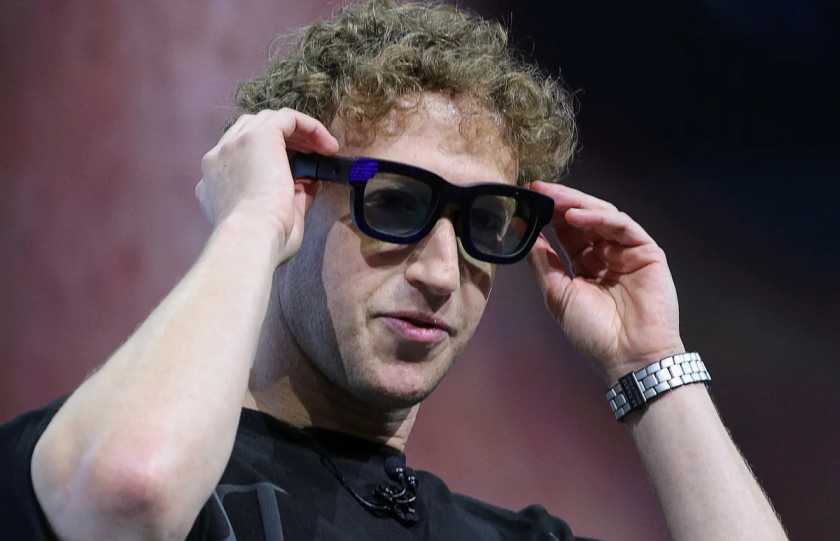
Mark Zuckerberg’s metaverse ambition appears to be winding down. Just over four years after rebranding Facebook to Meta and declaring virtual worlds the future of work, play, and social life, the company is now pulling back.
Meta has begun laying off employees across its Reality Labs division, cutting teams focused on virtual reality and shutting down multiple internal game studios, according to people familiar with the matter. The social media giant is retreating from its metaverse push as it shifts attention to artificial intelligence. The pivot comes two years after Zuckerberg vowed the company would not give up on the metaverse.
The New York Times reports that Meta plans to cut roughly 10% of Reality Labs employees working on metaverse-related products as the company reprioritizes its focus to next-generation AI.
“The cuts to Reality Labs — which has roughly 15,000 employees — could be announced as soon as Tuesday. The layoffs would be a fraction of Meta’s total work force of 78,000, but are set to disproportionately affect those in the metaverse unit who work on virtual reality headsets and a V.R.-based social network, said the people, who asked not to be named since they were not authorized to discuss confidential decisions. The cuts could end up affecting more than 10 percent of the division,” The New York Times reported, citing one of the people.
Meta Retreats From the Metaverse: 1,000+ Layoffs Signal Pivot to AI Strategy
CNBC confirmed the report, saying more than 1,000 roles are being eliminated, affecting about 10% of the hardware unit responsible for Quest VR headsets and Horizon Worlds, Meta’s flagship virtual social platform. Sources say CTO Andrew Bosworth is set to address the division in an all-hands meeting this week.
“Meta this week began laying off employees focused on virtual reality within its Reality Labs division and is shutting down a number of studios that were working on VR titles, according to people familiar with the matter who asked not to be named due to confidentiality.”
The retrenchment marks a deeper shift inside Meta. VR once sat at the center of Zuckerberg’s long-term vision. Today, artificial intelligence has taken its place.
Over the past year, Zuckerberg has poured billions into AI, including a $14.3 billion deal in June to bring Scale AI founder Alexandr Wang into Meta to lead its AI strategy. Engineers and researchers from Scale followed him over. Last fall, Vishal Shah, who spent four years running Meta’s metaverse effort, moved into a new role as vice president of AI products. Around the same time, Meta raised its 2025 capital spending forecast to as high as $72 billion and signaled even heavier investment in 2026.
Inside Reality Labs, the pullback is already visible. Meta is closing Armature Studio, Twisted Pixel, and Sanzaru, along with a technical unit called Oculus Studios Central Technology, according to people familiar with the decision. Other teams, including Ouro Interactive, are seeing headcount reductions. Ouro launched in 2023 to build first-party content for Horizon Worlds.
Even Supernatural, the VR fitness app Meta acquired for $400 million in 2023, has been moved to maintenance mode. A small team will keep it running, but new content is off the roadmap.
Meta laid the groundwork for this week’s moves in December, when it said it would reallocate Reality Labs funding from VR to AI glasses and wearables.
“This is part of that effort, and we plan to reinvest the savings to support the growth of wearables this year,” a Meta spokesperson said.
That bet is already paying off. Meta’s partnership with EssilorLuxottica has yielded one of its few hardware wins: the Ray-Ban Meta smart glasses. Demand has surged in the U.S., prompting Meta to delay the wider global launch of its new display version, priced at $799. Luxottica CFO Stefano Grassi said the company expects to reach its original 10 million-unit capacity target sooner than planned.
VR, though, is not dead inside Meta.
The company is courting Roblox developers to build experiences for Horizon Worlds, people familiar with the strategy said. Roblox boasts more than 150 million daily users. Horizon, in contrast, has never crossed a few hundred thousand monthly active users.
Meta wants to close that gap by going mobile. Last year, Bosworth pushed the team to turn Horizon Worlds into a smartphone app following early 2023 testing. Staff from other Reality Labs teams were reassigned to Horizon in 2025. Ouro is now part of the group building mobile-first content.
CCS Insight analyst Ben Hatton says the shift reflects market reality.
“It kind of follows that Meta will be moving it towards mobile as mobile gaming has become very popular over the last five years or so,” Hatton said.
Meta entered VR in 2014 with its $2 billion acquisition of Oculus. The gamble has been costly. Reality Labs has posted more than $70 billion in cumulative losses since late 2020. In its most recent earnings report, the division reported a $4.4 billion loss on $470 million in revenue.
Inside Meta’s AI Push and the Slow Fade of Horizon Worlds
At the same time, Meta is scrambling to keep pace with OpenAI and Google in the AI race. The company plans to release its next frontier model, code-named Avocado, later this quarter, CNBC reported.
Investors remain unconvinced. Meta’s stock lagged Alphabet last year and continues to trail the Nasdaq in early 2026.
Horizon Worlds has struggled from the start. In 2022, Zuckerberg shared a screenshot of his avatar standing in front of digital landmarks. The image drew widespread mockery for its basic graphics. He later promised major improvements. Within Meta, the backlash prompted urgent meetings and internal pressure to address the platform.
Developers say usage still feels low. Meta does not share detailed engagement data, leaving creators guessing what works. Frustration has grown as the company now pushes simpler, kid-friendly games modeled after Roblox and Minecraft.
At a developer event in Berlin last summer, Meta advocate Deepak Nair laid out the strategy.
“Generally 13 to 24, right?” Nair said. “And even on other ecosystems, it’s even younger than that.”
To fuel growth, Meta launched a $50 million Creator Fund in February to support mobile experiences inside Horizon Worlds. The company plans tighter integration with Facebook and Instagram so users can more easily jump into Horizon, people familiar with the plan said.
The metaverse may no longer be Meta’s main obsession. AI now holds that title. Still, the company is trying to salvage pieces of its VR push — even as it cuts back on the dream that once defined its future.