Voice AI startup Deepgram raises $130M at $1.3B valuation to fuel global expansion
 Daniel Levi
Posted On January 13, 2026
Daniel Levi
Posted On January 13, 2026
Voice AI is having its breakout moment — and Deepgram just locked in the capital to ride that wave.
The San Francisco-based startup raised $130 million in a Series C round, valuing the company at $1.3 billion, pushing it firmly into unicorn territory. The fresh funding arrives as enterprises rush to deploy AI voice agents across call centers, customer support desks, and sales teams.
The round was led by AVP, a venture firm backing tech companies across North America and Europe. New investors joined the raise, including Alumni Ventures, Princeville Capital, and Citi Ventures. Existing backers Tiger Global, Madrona, and the CIA’s venture arm In-Q-Tel returned for the round, signaling continued confidence in Deepgram’s momentum, the company said in a news release.
Deepgram builds AI models and infrastructure that help developers create voice agents capable of real-time, contextual conversations at scale. Its platform powers customer service tools used across retail, fintech, and healthcare. Clients already include NASA and Amazon Web Services, and the company says more than 1,300 organizations rely on its API to run voice-powered experiences.
“Much like Stripe delivered the API platform underpinning the payments economy, we believe Deepgram is poised to deliver the API platform underpinning the emerging trillion-dollar B2B Voice AI economy,” said Elizabeth de Saint-Aignan, General Partner at AVP. “Deepgram’s success in building real-time, reliable, and massively scalable Voice AI infrastructure, combined with the rapid shift toward voice-first B2B experiences, positions the company to become one of the foundational AI companies of this decade.”
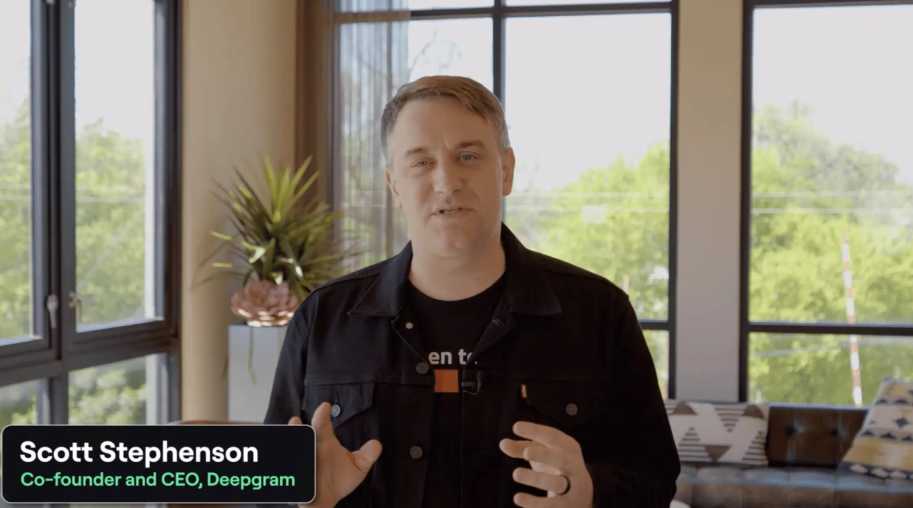
“Voice AI has gone mainstream in the last year. Any place where there’s a text field or a button click, all of those products are working on adding voice, so there’s just this groundswell of demand,” Deepgram CEO and co-founder Scott Stephenson told Reuters.
That surge in demand explains where the money is headed. Deepgram plans to expand into Europe and the Asia-Pacific, add support for more languages, and invest in acquisitions and large-scale compute purchases. The company already supports more than 50 languages, giving it a strong foundation as it enters new markets.
“As we rapidly approach a world where billions of simultaneous conversations are powered by Voice AI, enterprises and developers need real-time, reliable infrastructure capable of fully duplex, contextual conversations at scale – this is Deepgram,” said Scott Stephenson, CEO and Co-Founder of Deepgram. “From pioneering end-to-end deep learning for voice, to earning multiple patents for our research, to our commitment to pass the Audio Turing Test at scale in 2026, we’ve consistently executed on a single vision: powering a future centered on the original human interface – voice.”
The startup wasted no time putting capital to work. On Tuesday, Deepgram confirmed it acquired OfOne, a voice AI platform focused on drive-thru ordering. The move strengthens its push into the restaurant industry, where voice automation is gaining traction. Financial terms of the deal were not disclosed.
Deepgram has quietly become a backbone for conversational AI platforms such as Decagon and Sierra, which serve enterprise customers looking to automate support and sales workflows. Its tech helps businesses handle high call volumes without sacrificing context or accuracy — a problem that has long plagued traditional call center software.
TechStartups previously named Deepgram one of the AI startups to watch in 2024, a prediction that now looks well-timed. With voice interfaces spreading across apps, devices, and enterprise software, the company is positioning itself as the infrastructure layer powering that shift.
As companies race to replace menus, buttons, and forms with natural speech, Deepgram’s bet is clear: voice will become the default way people interact with software. This funding round gives it the firepower to accelerate that future.
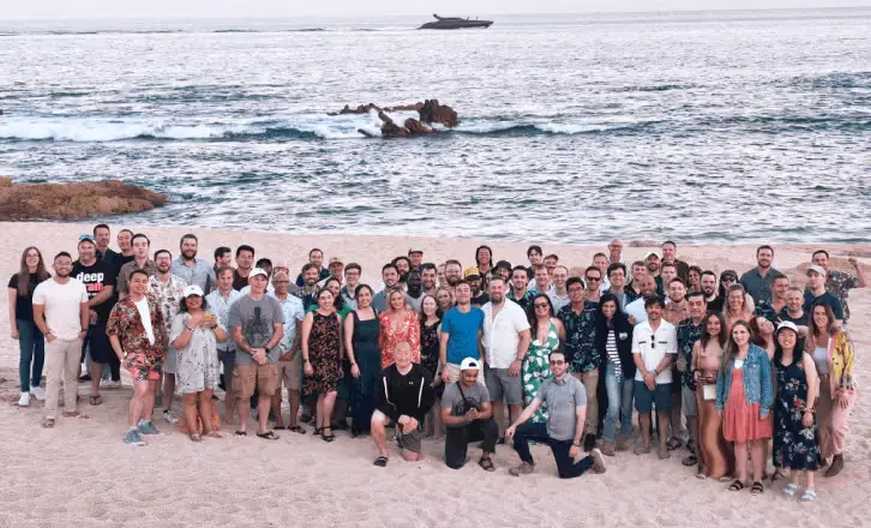
Deepgram team