Defense Unicorns becomes $1B startup after $136M Series B funding led by Bain Capital
 Daniel Levi
Posted On January 13, 2026
Daniel Levi
Posted On January 13, 2026

Defense Unicorns just crossed a major milestone — and it did so with a serious show of investor confidence.
The Colorado-based defense software startup has raised $136 million in a Series B round led by Bain Capital, pushing its valuation past $1 billion. The deal also drew backing from Ansa Capital, Sapphire Ventures, and former CIA director David Petraeus, adding heavyweight credibility to a company already deeply embedded in U.S. military operations.
For a firm founded in 2021, the rise has been swift. Defense Unicorns builds software for environments most startups never touch: air-gapped systems. These are networks sealed off from the public internet, used by the military to protect sensitive operations from cyber threats. Updating or installing software inside these closed systems is notoriously difficult, and that’s exactly the problem Defense Unicorns set out to solve.
“Defense Unicorns gives our nation a wartime software advantage,” said Dr. Rob Slaughter, CEO of Defense Unicorns. “The U.S. has significant commercial software advantages, but the systems we go to war with are typically outdated. At Defense Unicorns, we make software a strategic deterrent by making it easy to deploy and operate software in any mission environment,” continued Dr. Slaughter.
The company now provides secure software services across all major branches of the U.S. military, including the Navy, Army, Air Force, and Space Force. That kind of reach is rare, especially for a startup barely four years old.
The timing of the funding round speaks to a broader shift underway in defense tech. In 2025, venture-backed defense companies roughly doubled their share of Pentagon contracts. Silicon Valley has started paying closer attention to national security, and Washington appears more open to commercial tech players than ever before.
Yet the transition from scrappy startup to serious defense contractor is far from smooth. Building software is one thing. Scaling it within classified environments, meeting government compliance standards, and supporting weapons systems at scale are other considerations. Many firms are now learning how hard that jump can be.
Defense Unicorns seems determined to clear that hurdle. The fresh capital will help expand its platform and deepen relationships with federal agencies that demand extreme reliability. Petraeus’s participation suggests how strategically important those relationships may become.
For Bain Capital, the bet signals confidence that defense software is no longer a niche market. As geopolitical tensions rise and cyber threats grow more sophisticated, secure infrastructure has moved from a back-office concern to a front-line priority.
Defense Unicorns now sits at the intersection of venture capital and national security — a space where few startups reach unicorn status. Whether it can hold that position will depend on execution inside the most demanding customer environment imaginable: the U.S. military itself.
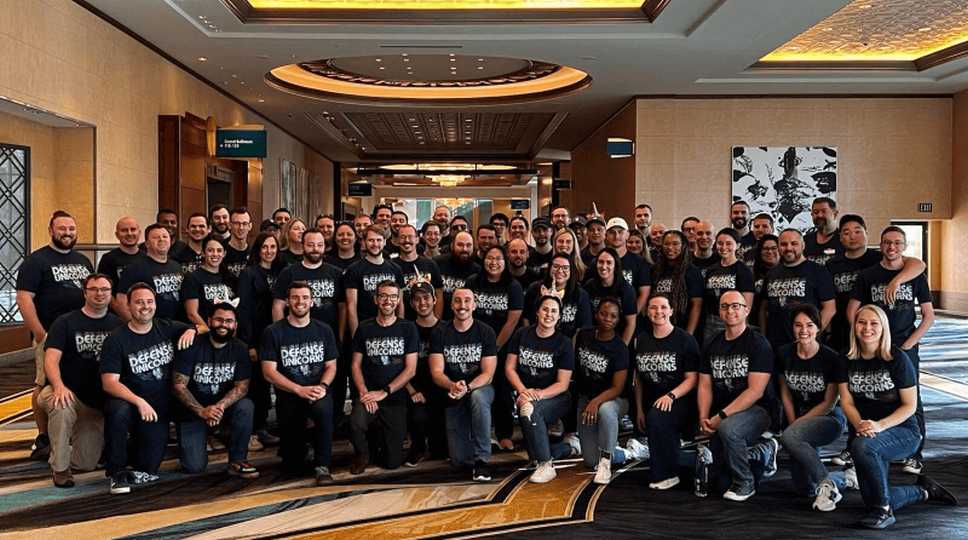
Defense Unicorns Team