
Technology News Today – Your Daily Briefing on the AI, Big Tech, and Startup Shifts Reshaping Markets
It’s Friday, January 9, 2026, and here are the top tech stories making waves today, from AI and startups to regulation and Big Tech. The AI economy is entering its infrastructure era. Over the past 24 hours, the biggest moves in tech were not about flashy new models or consumer apps, but about who controls the physical backbone of artificial intelligence: chips, power, and data centers. From TSMC’s revenue surge signaling sustained demand for advanced semiconductors to xAI’s $20 billion bet on a massive Mississippi data center, the industry’s center of gravity is shifting decisively toward compute and energy.
Big Tech is now behaving like a utility sector. Meta’s push into nuclear power, Microsoft’s expansion of Copilot into real-world commerce, and Nvidia’s tightening of chip sales to China all point to a new reality in which access, reliability, and geopolitical risk matter as much as innovation. These companies are no longer just building software platforms — they are locking in electricity, reshaping supply chains, and rewriting how AI systems interact with money, healthcare data, and consumers.
Startups are following the capital. Cyera’s $400 million round at a $9 billion valuation and Spangle’s $15 million raise in AI-driven commerce demonstrate where investors see immediate value: protecting data and driving measurable business outcomes. Meanwhile, Snowflake’s acquisition of Observe signals that enterprises now view AI observability as core infrastructure, not a nice-to-have feature.
At the same time, the growing footprint of AI is colliding with public trust and regulation. From Grok’s content restrictions following the deepfake backlash to rising concerns about ChatGPT’s health tools and community resistance to data center expansion, today’s stories highlight a widening tension between speed and responsibility. The message is clear: AI’s next phase will be defined not just by what it can do, but by how safely, transparently, and sustainably it scales.
Here’s the full breakdown of the 10 technology news stories shaping the market today.
Technology News Today
TSMC’s AI chip surge lifts revenue outlook as data center demand stays hot
Taiwan Semiconductor Manufacturing Co. reported quarterly revenue that topped expectations, reinforcing the idea that the AI buildout is still accelerating into 2026. The numbers matter because TSMC sits at the center of the AI supply chain: when hyperscalers and AI labs increase orders for advanced nodes and packaging, TSMC tends to see it first.
For the broader ecosystem, the takeaway is less about one quarter and more about what it signals for capacity planning. AI model training and inference are driving demand across GPUs, high-bandwidth memory, advanced packaging, and the networking stack. If TSMC’s trajectory holds, it supports a “higher-for-longer” cycle in AI infrastructure spending, which flows downstream into equipment makers, substrate suppliers, and the startups building optimization software for these supply chains. That, in turn, can reshape the competitive balance between US cloud giants, Chinese AI firms constrained by controls, and emerging regional compute providers in Asia and the Middle East.
Why It Matters: TSMC’s results are a real-time indicator of whether AI infrastructure spending is cooling or compounding.
Source: Bloomberg.
Nvidia-backed data center startup Nscale explores a $2 billion funding round as compute becomes the new scarce resource
Nscale is reportedly in talks to raise about $2 billion, a striking number even in a market now accustomed to AI infrastructure megadeals. The reported fundraising underscores how the center of gravity in AI has shifted from “apps first” to “compute first,” where owning power, racks, and deployment speed can be more decisive than model marketing.
If the round materializes, it will also highlight a structural shift in venture and growth financing: the largest checks increasingly go to companies that look more like industrial-scale operators than classic software startups. These data center players are effectively building the physical substrate for AI, competing on power access, grid interconnects, cooling design, and supply contracts for scarce components. For startups building infrastructure software (scheduling, orchestration, observability, cost controls), the growth of these “compute utilities” expands the addressable market, but it can also compress margins as buyers demand reliability, SLAs, and pricing transparency.
Why It Matters: The AI boom is turning power and data centers into the primary battleground, and capital is following.
Source: Bloomberg.
Meta’s nuclear power push shows how Big Tech is rewriting the energy playbook for AI
Meta is backing nuclear projects as part of a sweeping plan to secure long-term electricity for its AI ambitions, pairing the company’s data center buildout with a new energy strategy. The move reflects a blunt reality: AI isn’t just a software race, it’s an energy race. When a company as large as Meta starts treating generation capacity as strategic infrastructure, it signals that grid constraints are no longer a distant risk but an operational bottleneck.
The broader implication is that hyperscalers may increasingly pursue bespoke energy arrangements—nuclear, gas, renewables-plus-storage, and novel contracting structures—to secure predictable supply and hedge against price volatility. That will influence everything from where data centers are built to how states and regulators negotiate with Big Tech. It also creates opportunities for startups in grid optimization, demand response, behind-the-meter storage, and advanced cooling. But it raises policy questions as well: how should governments weigh local community impact, land use, and grid fairness when the largest buyers can outbid everyone else?
Why It Matters: When Meta plans around nuclear power, it confirms AI’s limiting factor is increasingly electricity, not ideas.
Source: TechStartups via The Wall Street Journal.
China signals tougher scrutiny as AI startups try to copy Meta-style dealmaking
China is reviewing a high-profile Meta acquisition of an AI startup, warning local founders and investors that cross-border deal structures that move AI know-how abroad may face resistance. The message is strategic: in an era where talent, model weights, and specialized datasets are treated like national assets, M&A is no longer just a corporate event—it’s a geopolitical trigger.
For startups, the near-term effect can be friction: longer approvals, greater uncertainty around exit paths, and heightened scrutiny of where IP and key engineers end up. For global buyers, it’s a reminder that acquisitions involving frontier AI may increasingly require political as well as financial alignment. The longer arc is that countries are trying to prevent “brain drain by term sheet,” particularly in advanced AI, where the boundary between commercial capability and strategic capability is blurry. This could push more Chinese AI companies toward domestic listings, domestic capital, and partnerships that keep core IP onshore—while non-Chinese firms may lean more heavily on licensing, joint ventures, or “build in region” strategies instead of outright acquisitions.
Why It Matters: AI dealmaking is being pulled into national security logic, reshaping how startups can exit.
Source: The Wall Street Journal.
Microsoft turns Copilot into a checkout lane, bringing AI agents closer to real commerce
Microsoft is adding checkout features to Copilot, using standards developed with OpenAI and Stripe to create rules for AI-driven purchases. In practical terms, this is a step toward “agentic commerce,” where an assistant doesn’t just recommend products—it can complete a transaction under defined constraints.
Why it matters is control. Buying things is where consumer AI assistants collide with fraud risk, chargebacks, compliance, and the messy world of returns and disputes. If Microsoft can make purchases auditable and policy-based—who approved what, which budget was used, and which vendor was selected—it becomes far easier to sell AI assistants to enterprises and regulated workflows. For startups, the shift is double-edged: it creates a platform layer for agent-enabled shopping and procurement, but it also concentrates power in the assistant providers that own identity, payment rails, and the user interface. Expect a scramble among startups to provide the missing pieces: vendor verification, pricing intelligence, policy enforcement, and post-purchase workflow automation.
Why It Matters: AI assistants become dramatically more valuable—and risky—once they can spend money.
Source: The Information.
Snowflake agrees to buy Observe Inc., intensifying the fight to monitor AI-heavy applications
Snowflake has agreed to acquire app monitoring startup Observe Inc., a deal aimed at strengthening Snowflake’s position as enterprises build and run increasingly complex AI workloads. Observability is becoming a frontline requirement because AI systems fail differently than traditional software: models drift, latency spikes, retrieval layers break, and “correctness” becomes probabilistic rather than binary.
This acquisition highlights how data and monitoring platforms are converging. Companies don’t just need dashboards; they need end-to-end visibility across data pipelines, model inference, cost-per-query, and compliance logging. For Snowflake, it’s also a competitive move against Datadog and Splunk-style ecosystems that want to own performance telemetry across modern stacks. For startups, the lesson is clear: the winners will be those that translate AI observability into action—automated rollbacks, guardrails, anomaly detection, and governance reporting—without slowing teams. As AI adoption spreads inside large enterprises, “keeping models in check” is becoming a budget line item, not an experiment.
Why It Matters: Observability is turning into core infrastructure as AI moves from demos to production systems.
Source: The Information.
Cybersecurity Startup Cyera lands a $400M round at a $9B valuation as data security becomes AI’s weak spot
Data security company Cyera announced a $400 million Series F at a $9 billion valuation, extending a rapid growth run. The driver is straightforward: AI increases the number of places sensitive data can leak—training pipelines, vector databases, retrieval systems, and model outputs—while regulators and customers demand clearer accountability.
Cyera’s momentum also points to a shift in how security budgets are being justified. CISOs are increasingly framing data security as both a breach-prevention need and an AI-enablement requirement. If a company can’t map where sensitive data lives, who can access it, and what policies govern it, it can’t safely deploy Copilot, internal search, or automated agents. For startups, this environment rewards tools that provide real data lineage, classification, and enforcement—not just alerts. For Big Tech and hyperscalers, it increases pressure to provide stronger native controls in cloud data stacks, which could compress the standalone market over time. But right now, the urgency is high: AI adoption is forcing enterprises to inventory and secure data they’ve long ignored.
Why It Matters: As AI spreads, data security is becoming a foundational prerequisite, not a compliance afterthought.
Source: TechStartups
Former Bolt CEO’s AI commerce Startup Spangle raises $15M as retailers hunt for profit, not buzz
Spangle, an AI e-commerce startup founded by former Bolt CEO Maju Kuruvilla, raised $15 million and is now valued at around $100 million. The pitch focuses on real-world commercial outcomes: improving conversion rates, reducing operational overhead, and tightening the feedback loop between customer intent and merchandising decisions.
The broader significance is that the e-commerce AI wave is maturing. Retailers are increasingly skeptical of generic chat widgets and instead want targeted systems that improve margins—inventory forecasting, returns reduction, personalization that doesn’t inflate acquisition costs, and customer service automation that doesn’t frustrate shoppers. Funding for Spangle also reflects a leadership pattern in the current market: teams with prior distribution access and payments experience have an edge because they understand how to integrate with existing stacks and merchant workflows. For startups in this space, the bar is higher than “AI for shopping.” The winners will demonstrate measurable lift, rapid deployment, and robust governance of consumer data.
Why It Matters: Retail AI is shifting from novelty to ROI, and investors are backing teams that can prove impact.
Source: TechCrunch.
PC pricing pressure builds as AI demand tightens memory and component supply
PC makers are bracing for higher component costs, with memory pricing expected to rise sharply, adding pressure to laptop and desktop prices. While consumers experience it as sticker shock, the underlying story is that AI workloads are pulling supply and capital toward data center-grade components, tightening constraints across the broader electronics ecosystem.
This matters because the “AI PC” push depends on affordability and upgrade cycles. If prices rise too quickly, it slows the adoption of on-device inference capabilities that Big Tech wants—features that run locally to improve latency, privacy, and cost. It also places greater emphasis on efficiency: chipmakers and OEMs will be required to demonstrate that AI features meaningfully improve workflows rather than simply adding marketing labels. For startups, volatility in PC economics affects distribution: software companies betting on local inference may see slower penetration if the install base updates more slowly. On the flip side, higher cloud costs and scarce components could accelerate demand for smarter hybrid architectures that split tasks between devices and the cloud in a cost-aware way.
Why It Matters: AI is reshaping hardware economics, and consumer devices are starting to feel the downstream strain.
Source: The Verge.
CES 2026 shows the “AI everywhere” problem: more features, fewer reasons
A wave of CES gadgets is slapping “AI” onto features that don’t clearly benefit users, highlighting the risk of overreach: more data collection, more complexity, and more failure modes without a meaningful payoff. The pattern is familiar—when a technology becomes a default label, companies rush to add it, whether or not it improves the product.
Why it matters in 2026 is trust and fatigue. Consumers have become more skeptical of black-box features that require persistent connectivity, collect personal data, or degrade basic reliability. For the ecosystem, CES is an early signal of where consumer tech is heading: more embedded assistants, more automated workflows, and more dependence on cloud inference. That creates opportunities for startups to bring discipline—privacy-preserving inference, explainable outputs, offline-first modes, and clear user controls. It also puts pressure on regulators, especially around children’s data and consumer transparency. If “AI” becomes shorthand for “always listening, always collecting,” the backlash will land on the entire category, including companies building genuinely useful tools.
Why It Matters: The consumer AI market will be won by products that earn trust, not by the loudest feature lists.
Source: The Verge.
OpenAI’s ChatGPT Health tools ignite a safety and privacy debate as medical use surges
OpenAI’s new ChatGPT Health features are drawing mixed reactions, reflecting a real demand signal: tens of millions of people already consult chatbots for health questions daily. The new tools add a health-focused area inside ChatGPT and include the ability to upload electronic medical records and connect with fitness apps, aiming to make health interactions more structured and personalized.
The concern is that health data shared with chatbots may not receive the same protections as data shared with healthcare providers, and privacy standards vary widely by country. Even if OpenAI says it will keep health information separate and not train on it, the risk landscape includes subpoenas, litigation discovery, breaches, and shifting policy. At the same time, the value proposition is obvious: chatbots can translate jargon, synthesize information quickly, and provide guidance that many patients struggle to get in time-constrained healthcare systems. For startups, this tension is the market: healthcare AI products will need clearer guardrails, validation, and compliance—from data handling to clinical safety—especially as regulators and hospital systems push for tighter accountability.
Why It Matters: Health is becoming a primary consumer use case for AI, forcing the industry to confront privacy and safety head-on.
Source: Axios.
Tech companies redesign data centers to defuse community backlash as AI buildouts expand
As data center construction accelerates, companies are rethinking the look and feel of facilities—moving away from fortress-like buildings toward designs that better blend into communities. The driver is practical: local resistance can delay permits, raise costs, and derail expansion plans, especially as AI data centers grow larger and more power-hungry.
This shift signals that “social license” is becoming part of infrastructure strategy. Data centers now compete not only for electricity and fiber but also for community approval. That opens new markets for startups and service firms working on siting analytics, environmental impact measurement, heat reuse, water optimization, and grid coordination. It also shapes where the AI economy can scale: regions that can approve, power, and integrate large facilities quickly become magnets for investment. Conversely, backlash can push data centers to more remote sites, increasing transmission complexity and creating new reliability concerns. Over time, design changes alone won’t solve the tension—communities will want transparency around jobs, tax base, water use, noise, and grid impacts. But the pivot shows the industry recognizes that “build faster” depends on public acceptance as much as engineering.
Why It Matters: AI infrastructure growth now hinges on permitting and politics, not just chips and capital.
Source: Semafor.
xAI restricts Grok image generation after outrage over sexualized deepfakes
Elon Musk’s xAI has restricted Grok’s image generation features following public outcry over sexualized images, including material involving children. The tightening reportedly limits image generation to paid users, reflecting a common pattern in generative media: safety failures can prompt abrupt product changes, especially when content spreads quickly and becomes politically unavoidable.
For the broader AI ecosystem, this is another reminder that “open access” and “viral growth” can be liabilities in sensitive domains like images and voice. Even sophisticated filters can fail under adversarial prompts, and once harmful content circulates, the reputational damage can eclipse the product’s intended value. The downstream effects include stricter internal gating, stronger logging and auditability, and more aggressive moderation investment—costs that smaller startups may struggle to carry. It also increases regulatory pressure, particularly in the UK and Europe, where political leaders increasingly treat platform safety as an immediate governance issue rather than a long-term policy debate. For Big Tech, the incident strengthens the argument for building safety into model architecture, deployment controls, and distribution—not bolting it on after a crisis.
Why It Matters: Generative media safety failures can trigger rapid product restriction—and accelerate regulation across the sector.
Source: Financial Times.
xAI plans a $20B Mississippi data center buildout as AI scale-up becomes a state-level economic strategy
Elon Musk’s xAI plans to invest over $20 billion in a major data center project in Southaven, Mississippi, a move that would significantly expand its computing capacity and deepen the “AI arms race” among top labs. The project underscores how AI growth is becoming inseparable from access to regional power, industrial policy, and political support—states are increasingly competing to secure these facilities, as they once competed for factories.
For the ecosystem, the story is about vertical integration at extreme scale. xAI’s approach suggests that leading AI companies may treat data centers as core assets rather than rented capacity, especially when training and inference costs explode. That can pressure cloud providers while also benefiting a wide supplier network—power generation, grid interconnects, cooling, networking, and security. It also raises familiar concerns: water use, grid stability, and who ultimately bears the cost of the infrastructure upgrades required to support multi-gigawatt projects. For startups, the compute buildout expands opportunities in data center efficiency and AI infrastructure software, but it also concentrates advantage among players that can secure power and capital at the largest scale.
Why It Matters: AI leadership is increasingly determined by who can secure power and compute resources fastest—not just who has the best model.
Source: Reuters.
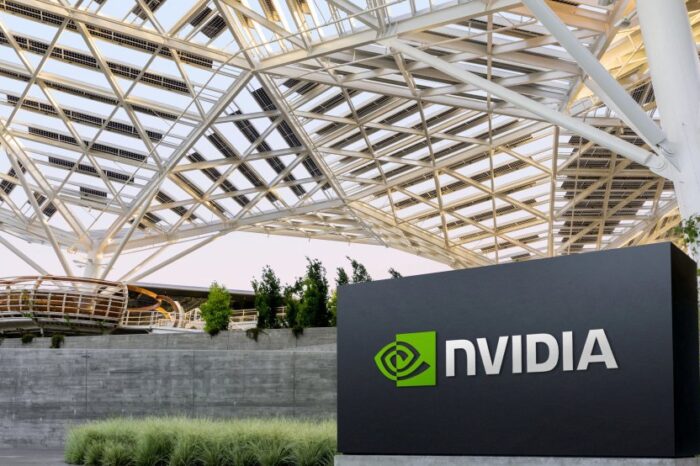
Nvidia tightens China chip sales terms, demanding full upfront payments for H200 GPUs
Nvidia is requiring full upfront payment for H200 chips in China, a change that reflects elevated risk, uncertainty, and operational complexity in cross-border AI hardware sales. The move matters because procurement terms can shape market structure: demanding upfront payment raises the cost of buying, changes who can afford to import at scale, and pushes smaller players out of the queue.
In the broader ecosystem, this is another example of how geopolitics is rewriting “normal” supply chain behavior. Export controls, compliance scrutiny, and shifting enforcement make vendors more cautious, and that caution shows up in payment terms, delivery timelines, and distributor relationships. For Chinese AI firms, tougher purchasing conditions can accelerate three paths: (1) stockpiling where possible, (2) shifting workloads to whatever hardware is available domestically, and (3) investing harder in local alternatives and efficiency improvements. For global startups, the ripple effect is that hardware scarcity and procurement friction can influence where companies train models, which markets get served first, and how quickly AI infrastructure expands outside the US.
Why It Matters: Payment terms sound mundane, but they can reshape who gets access to scarce AI compute—and at what cost.
Source: Reuters.
That’s your quick tech briefing for today. Follow us on X @TheTechStartups for more real-time updates.