SoftBank rushes to raise $22.5B to meet OpenAI funding deadline as AI compute costs surge
 Daniel Levi
Posted On December 22, 2025
Daniel Levi
Posted On December 22, 2025
SoftBank Group is racing against the calendar to assemble the remaining $22.5 billion it owes OpenAI, with people familiar with the matter saying the funds must arrive before year-end. The effort highlights how access to capital now shapes leadership in artificial intelligence, where compute spending has turned into a defining constraint.
The obligation stems from a broader agreement announced earlier this year. SoftBank Group agreed to invest up to $40 billion at a $300 billion valuation, tied to OpenAI completing its transition to a for-profit structure. That restructuring concluded in October, triggering the remaining payment terms. OpenAI has already received an initial tranche. The balance is expected by December 31 under the contract, according to sources.
“SoftBank Group is racing to close a $22.5 billion funding commitment to OpenAI by year-end through an array of cash-raising schemes, including a sale of some investments, and could tap its undrawn margin loans borrowed against its valuable ownership in chip firm Arm Holdings,” Reuters reported, citing sources familiar with the matter.
To raise the cash, SoftBank has leaned heavily on asset sales and internal tightening. The firm exited its entire Nvidia position, a stake valued at around $5.8 billion, and sold roughly $4.8 billion worth of T-Mobile US shares. Staff reductions followed as liquidity took priority.
Other funding levers remain active. SoftBank is exploring ways to monetize part of its holding in Didi Global, which is preparing a Hong Kong listing after regulatory pressure forced its U.S. delisting in 2021. The company is also considering margin loans secured by its stake in Arm Holdings, whose valuation has risen since its public debut.
Another option sits on a longer timeline. SoftBank has been working to take PayPay, its payments app operator, public. The IPO, originally expected this month, slipped after a 43-day U.S. government shutdown delayed regulatory processing. People familiar with the plans say PayPay’s market debut, which could raise more than $20 billion, is now expected in the first quarter of next year.
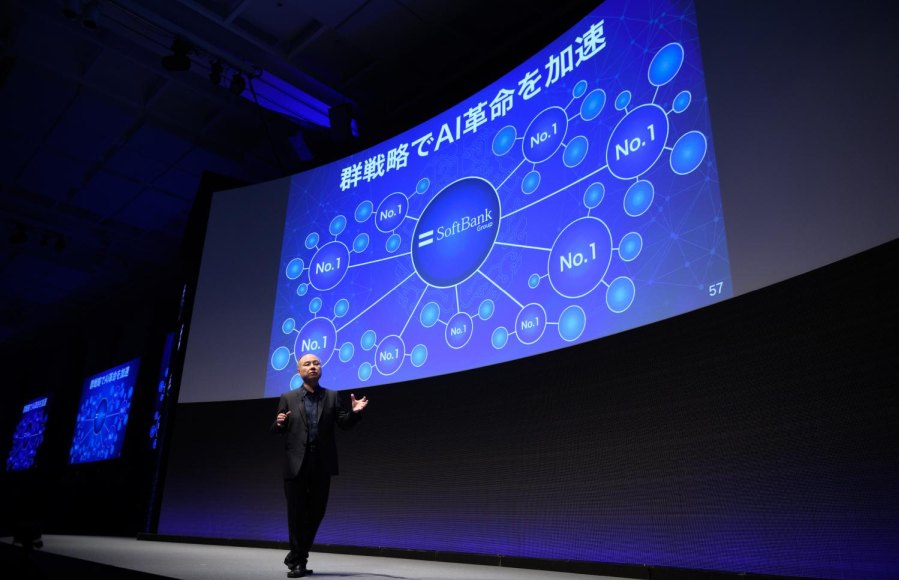
Inside the company, Masayoshi Son has narrowed focus sharply. Most dealmaking at the Vision Fund has slowed to a crawl, and any transaction above $50 million now requires his direct approval, according to two people familiar with the internal process. Investment managers across the Vision Fund have been redirected to support the OpenAI transaction, reinforcing how central the deal has become to SoftBank’s strategy.
The urgency carries strategic weight beyond a single funding round. A successful close would deepen SoftBank’s influence across the AI supply chain, including joint work on the Stargate Project, a proposed $500 billion initiative with OpenAI, Oracle, and other partners to build large-scale AI data centers in the United States. Backers see the effort as a pillar for maintaining U.S. leadership as competition from China intensifies.
Rising training and deployment costs are reshaping the industry. AI now resembles capital-intensive sectors such as energy and telecommunications, characterized by long investment cycles and persistent spending. Capital depth affects bargaining power with chip suppliers, data-center operators, and cloud partners, shaping product timelines years in advance. Tech giants have moved in the same direction. Meta and Microsoft are committing unprecedented sums to data center buildouts, often sharing risk through partnerships.
For SoftBank, meeting the OpenAI deadline would reinforce its role as a central force in the AI ecosystem. Private-market discussions already point to valuations well above the last round, offering sizable paper gains if the deal closes on time. Missing the date would send a different signal. SoftBank declined to comment, consistent with its stance on ongoing financial activity.
The scramble captures a shift underway across AI. Breakthroughs still matter. Staying power now matters as much. In this phase of the cycle, companies that continue to fund infrastructure set the pace.