OpenAI launches GPT-5 for everyone: A “complete breakthrough” in AI reasoning

Posted On August 7, 2025
0
1.0K Views
OpenAI didn’t waste any time. Just a day after teasing “LIVE5TREAM THURSDAY 10AM PT” on X, the ChatGPT maker officially announced GPT-5—its newest and most advanced AI model yet.
And in a big move, GPT-5 is now available to everyone, including free users. OpenAI says it’s smarter, faster, and “a lot more useful,” especially in areas like writing, coding, and healthcare.
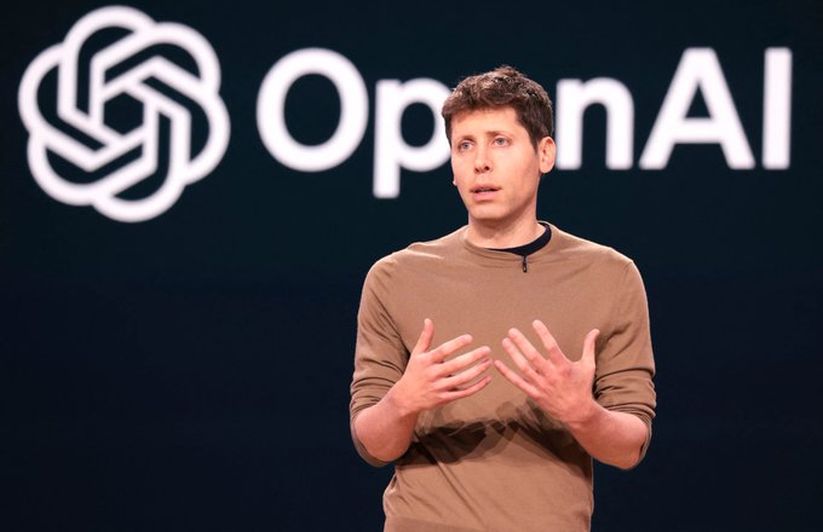
CEO Sam Altman didn’t hold back. “I tried going back to GPT-4, and it was quite miserable,” he said during a press briefing. GPT-5 brings major updates in reasoning, reliability, and overall performance. OpenAI also claims it’s far less likely to make things up—something previous models have struggled with.
This latest rollout marks a big moment for the company, which shot to global recognition after launching ChatGPT in 2022. OpenAI now says it’s approaching 700 million weekly active users and is reportedly in talks with investors about a stock sale that could value the company at around $500 billion.
Announcing the launch on X, OpenAI said:
“GPT-5 is here. Rolling out to everyone starting today.”
GPT-5 is here.
Rolling out to everyone starting today.https://t.co/rOcZ8J2btI pic.twitter.com/dk6zLTe04s
— OpenAI (@OpenAI) August 7, 2025
GPT-5 introduces what OpenAI calls “safe completions.” Instead of shutting down or dodging tricky prompts, the model now responds with high-level answers that stay within safety bounds. Michelle Pokrass, a post-training lead at OpenAI, said the model “has been trained to recognize when a task can’t be finished, avoid speculation, and can explain limitations more clearly, which reduces unsupported claims compared to prior models.”
The company said GPT-5 went through 5,000 hours of testing and internal evaluations before launch. That focus on safety and usability was front and center in a live demo during the briefing. OpenAI asked GPT-5 to create a French-learning app with flash cards, quizzes, and a progress tracker—just from a simple prompt. Within seconds, it generated two different apps. They weren’t perfect, but it was enough to show what the model could do in real-time.
Sam Altman described the model as “like having a team of Ph.D.-level experts on hand at any time.” He added, “People are limited by ideas, but not really the ability to execute, in many new ways.”
For the first time, OpenAI is giving free users access to a reasoning model—previously available only to paid subscribers. If they reach usage limits, they’ll be switched to GPT-5 mini. Plus users get higher limits, while Pro and Team users have full access, including GPT-5 Pro. Enterprise and Education plans will get it next week.
The company is also offering developers three versions of the model via its API: GPT-5, GPT-5 mini, and GPT-5 nano, each with different trade-offs in performance and cost.
Enterprise customers are already putting it to work. Box, the cloud content company, has been testing GPT-5 across complex data sets. CEO Aaron Levie said earlier models couldn’t handle the kind of deep logic required for their tasks. GPT-5, he said, is a “complete breakthrough.”
“The model is able to retain way more of the information that it’s looking at, and then use a much higher level of reasoning and logic capabilities to be able to make decisions,” Levie told CNBC.
Earlier this week, OpenAI also released two open-weight language models for developers and researchers—its first open models since GPT-2. But GPT-5 is clearly meant for a broader audience. OpenAI says the experience of chatting with GPT-5 feels more natural and human than ever before.
With GPT-5 now in the hands of millions, including free users, the next few weeks will show how far the model can really go. For OpenAI, it’s not just another release. It’s a public test.