Startup Funding News Today, November 24, 2026: Sierra, Marlowe, Embo, AidenAI, Myriota & More
 Nickie Louise
Posted On November 24, 2026

The cost of running AI is becoming just as important as what the technology can do. That’s the message emerging from today’s startup funding activity, as investors pour billions into companies building AI applications, computing infrastructure, and technologies that make artificial intelligence cheaper to deploy.
Sierra announced a $1.75 billion Series F at a $30 billion valuation on Monday, while Marlowe disclosed $277 million in seed funding to build computing infrastructure around alternatives to Nvidia chips. The two deals represent opposite ends of the same business: one sells AI results to enterprises, while the other aims to reduce the cost of producing them.
The investment extended beyond software. Ritzey Therapeutics launched with a $112.5 million Series A to develop treatments for chronic diseases. Embo emerged with a $110 million seed round backed by Andreessen Horowitz and Nvidia to develop AI for robots. Australian satellite company Myriota closed the first A$60 million of its Series C, while China’s Qiming Photonics attracted financing for optical interconnects. Investors also backed medical robotics, drug safety testing and post-quantum cybersecurity.
Across the ten selected announcements, nine disclosed amounts total about $2.36 billion in US dollars, including Myriota’s company-reported US$40 million equivalent. Qiming disclosed its financing only as a lower bound in renminbi. Sierra and Marlowe account for about 86% of the dollar-equivalent subtotal, although Marlowe’s figure includes an earlier seed investment disclosed with its latest round. These are announced financing amounts, not cash wired in the past day.
The Macro Environment: The AI Boom Is Becoming a Business of Unit Economics
The connection between Sierra and Marlowe is unusually revealing. Sierra charges customers according to completed business outcomes rather than simply selling access to a model. Marlowe is betting that a computing system optimized for a particular job can deliver those outcomes more cheaply. If inference prices fall, application companies have more room to improve margins or offer customers lower prices. If they do not, rising usage can become a cost problem instead of an unqualified growth signal.
Sierra’s company-reported annual recurring revenue of more than $400 million gives investors a commercial reference point that many AI startups lack. Even so, a $30 billion valuation is roughly 75 times a $400 million revenue benchmark. The investment assumes considerable future growth and durable economics, neither of which current customer adoption guarantees. The size of the check should not be confused with a market-wide improvement in fundraising conditions.
Capital is also reaching the physical components that determine what software can accomplish. Qiming Photonics is addressing data movement between computing components, Myriota is collecting information from equipment outside terrestrial network coverage, and Embo is developing models to help robots adapt to unfamiliar physical tasks. These companies face manufacturing, reliability, and deployment constraints that differ from those of conventional software firms.
Meanwhile, Ritzey, Apricity and Tagomics illustrate three separate opportunities in healthcare: developing medicines, increasing diagnostic capacity and improving the evidence used in drug development. Their investment cases depend on clinical or operational validation, not simply the current popularity of AI. Taken together, the announcements show investors willing to finance both fast-growing enterprise software and technically demanding businesses with longer development cycles. They do not signal a broad shift in interest rates, exits, or venture-market liquidity.
Sierra raises $1.75B in funding to expand enterprise customer-service AI
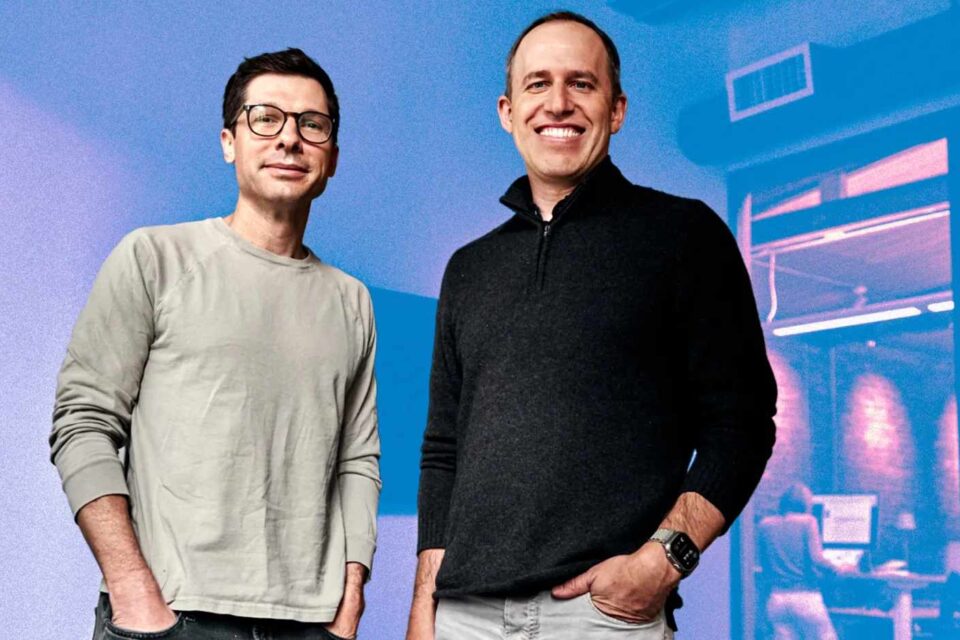
Sierra announced a $1.75 billion Series F funding led by Greenoaks and Lightspeed Venture Partners, with repeat backing from Benchmark, Sequoia, GV and Tiger Global. The financing values the business at $30 billion, compared with more than $15 billion in its May 2026 announcement. Sierra’s own post describes the financing as being raised; contemporaneous reporting describes it as a completed investment. The amount and terms are publicly announced, but the company did not separately document settlement.
Founded by Bret Taylor and Clay Bavor, Sierra develops AI agents that handle customer interactions and carry out tasks within enterprise systems. Its customers include large financial institutions, retailers, and telecommunications companies. Sierra reported exceeding $400 million in annual recurring revenue in October, less than three years after launch. That is a company disclosure, not an audited financial statement.
The distinction from a typical software subscription is its outcome-based commercial model. When a customer pays for a successful resolution, Sierra has an incentive to keep the cost of achieving it below the contract price. That creates a potentially attractive business but also makes accuracy, escalation to human staff, model selection, and inference expense important margin variables. At its new valuation, maintaining customer growth and delivering profitable resolutions matter more than conversation volume alone.
Funding Details
Startup: Sierra
Investors: Greenoaks and Lightspeed Venture Partners (co-leads); Benchmark, Sequoia Capital, GV, Tiger Global
Amount Raised: $1.75 billion, announced
Total Raised: Not fully reconciled
Funding Stage: Series F
Funding Date: November 23, 2026
Headquarters: San Francisco, California, United States
Sector: Enterprise AI/customer experience
Valuation: $30 billion
Marlowe discloses $277M in seed funding to build lower-cost AI inference infrastructure
Marlowe emerged publicly with $277 million in seed financing, led most recently by Accel, at a company-confirmed $1.15 billion valuation. Eclipse led an earlier, smaller seed investment included in that amount. Marlowe has not published the split between the two transactions, so the full $277 million should not be described as entirely new money from Accel’s round.
The startup, founded by former Microsoft executives Dan Lewis and Kutta Srinivasan, builds and operates infrastructure specifically for running trained AI models. It is initially working with AMD and Etched chips, combining hardware selection, networking and software optimization to suit individual workloads. Its first facility is scheduled for December, with another expected in 2027. The founders told GeekWire that they have signed three customer agreements, without naming the customers.
Marlowe’s target of two to three times better efficiency is a company projection, not an independent benchmark. Its opportunity rests on making alternative processors commercially practical, not merely available. Customers will need evidence on uptime, latency, model compatibility, and cost per completed task. For investors, the site-by-site financing strategy also matters: hardware purchases and facility development can consume capital long before utilization reaches profitable levels.
Funding Details
Startup: Marlowe
Investors: Accel (latest lead); Eclipse (earlier seed lead), Bessemer, Altimeter, Atreides, Valor, Scribble, Emergence Capital, Ritual, Pitango, Neo, Village Global, Banter and angels, among others
Amount Raised: $277 million in combined newly disclosed seed financing; latest-round amount not disclosed separately
Total Raised: $277 million disclosed
Funding Stage: Seed (multiple financings)
Funding Date: November 23, 2026 (public disclosure)
Headquarters: Bellevue, Washington, and Redwood City, California, United States
Sector: AI inference infrastructure/cloud computing
Valuation: $1.15 billion
Ritzey Therapeutics raises $112.5M in funding to develop treatments for chronic metabolic and neurologic diseases
Maryland-based Ritzey Therapeutics launched with a $112.5 million Series A led by Vida Ventures. Sharon Mates leads the company and previously founded Intra-Cellular Therapies, guiding it through its acquisition by Johnson & Johnson in 2025. The new venture brings together members of that company’s leadership team and investors with experience financing drug development.
Ritzey has acquired France’s Perha Pharmaceuticals, adding compounds that inhibit DYRK1A, an enzyme involved in cellular signaling. Its lead oral candidate has completed Phase 1 development; the company intends to proceed to Phase 2 studies examining metabolic and neurologic effects, including in diabetes and Down syndrome. The acquisition provides an existing scientific program rather than requiring the venture to start entirely from discovery.
The financing is a bet on both experienced leadership and a clinical hypothesis. A large Series A can provide enough runway to test that hypothesis across several indications, but early safety work does not demonstrate therapeutic benefit. Trial design, meaningful clinical endpoints, and the ability to distinguish a candidate from existing treatments will ultimately drive the asset’s value.
Funding Details
Startup: Ritzey Therapeutics
Investors: Vida Ventures (lead); EcoR1 Capital, Fidelity Management & Research Company, Perceptive Advisors, Montanova, Alexandria Venture Investments, FMB Research LLC
Amount Raised: $112.5 million
Total Raised: $112.5 million publicly disclosed at launch
Funding Stage: Series A
Funding Date: November 23, 2026
Headquarters: Towson, Maryland, United States
Sector: Biotechnology / metabolic and neurologic medicines
Valuation: Not disclosed
Embo raises $110M in funding to develop AI models for general-purpose robots
Embo raised $110 million in seed funding led by Andreessen Horowitz, with participation from Khosla Ventures, DST Global, Nvidia, and other strategic investors. Researchers Danijar Hafner and Wilson Yan lead the venture, which is pursuing a form of machine learning known as world models. The company confirmed the funding on November 23; earlier reporting in March described fundraising talks, not a completed, announced round.
Rather than rely exclusively on examples of robots performing specific actions, Embo plans to train a model on large quantities of video and refine it with experience collected from physical robots. A learned representation of how environments change can also provide a setting for simulated practice. The goal is to enable a machine to cope with objects and settings it has not encountered before.
The seed round is unusually large for a company without disclosed revenue or public customer deployments. It reflects the potential value of an intelligence layer that could apply across many robots, not just a single machine. The technical risk is equally considerable: useful predictions about a video are not the same as dependable control of a physical robot. Investors should watch for independently measured task completion, recovery from mistakes, and performance across different environments.
Funding Details
Startup: Embo
Investors: Andreessen Horowitz (lead); Khosla Ventures, DST Global, Nvidia, other strategic investors
Amount Raised: $110 million
Total Raised: $110 million publicly disclosed at launch
Funding Stage: Seed
Funding Date: November 23, 2026
Headquarters: San Francisco, California, United States (reported)
Sector: Robotics / physical AI/world models
Valuation: Not disclosed
Myriota raises $60M in funding to extend industrial connectivity from space
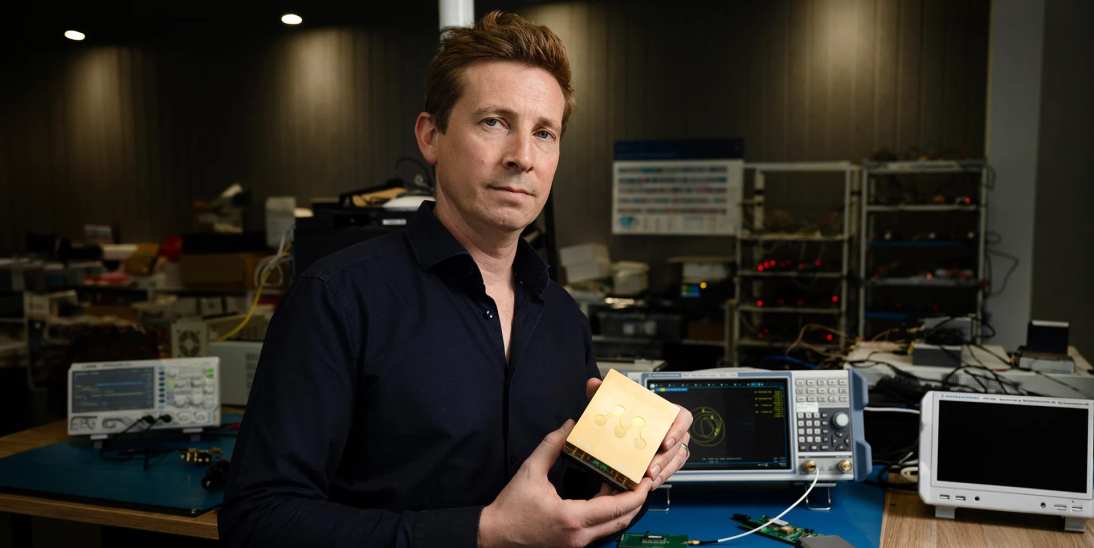
Adelaide-based Myriota closed A$60 million (US$40 million) in the first tranche of its Series C. Main Sequence Ventures and Australia’s National Reconstruction Fund Corporation (NRFC) led the financing, with Hostplus returning and Funds SA joining. The announcement puts cumulative financing above A$160 million, and the company expects to close the remaining portion of the Series C in early 2027. The Wall Street Journal reported a valuation of roughly US$200 million.
Myriota combines small satellites, low-energy connected devices, and fleet software so businesses can monitor assets where conventional wireless coverage is unavailable. Applications include tracking mining machinery, checking industrial fuel levels and monitoring water supplies. The company reports service across 57 markets and 16 satellite launches during 2026.
Unlike a general satellite broadband operator, Myriota is targeting narrow data transmissions for equipment that may remain in the field for years. The value lies in avoiding unnecessary site visits, detecting shortages, and improving maintenance timing. Repeat contracts and the lifetime economics of devices and satellites will be more informative than coverage alone. Australia’s public investment institution also participates, underscoring the strategic importance of domestic space infrastructure.
Funding Details
Startup: Myriota
Investors: Main Sequence Ventures and NRFC (co-leads); Hostplus, Funds SA
Amount Raised: A$60 million (US$40 million, company equivalent)
Total Raised: More than A$160 million (about US$107.5 million, company equivalent)
Funding Stage: Series C, first close
Funding Date: November 24, 2026 (Australian local date)
Headquarters: Adelaide, Australia
Sector: Space technology / industrial IoT
Valuation: Roughly US$200 million, reported
AidenAI raises $32M in funding to bring AI agents into legacy enterprise systems
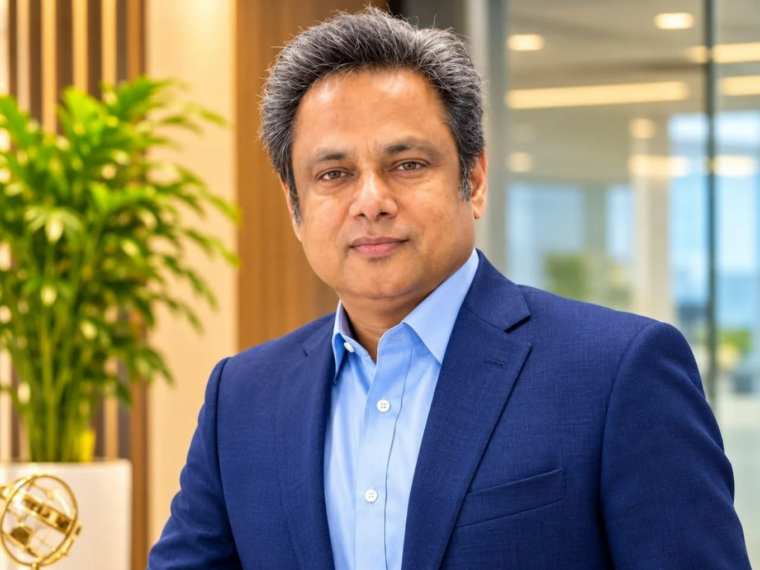
AidenAI secured $32 million in its first institutional round from A91 Partners. Industry reporting identifies the financing as a Series A. The Princeton- and Hyderabad-based company was founded in 2023 by Srinivas Kamadi, a former Infosys executive. Its target markets include banks, insurers, and other large enterprises with existing technology that cannot easily be replaced.
The business develops tools to build and manage AI agents and offers engineering services to integrate them with existing systems. Its opportunity is to help customers move from isolated experiments to applications connected to established business processes. The company intends to expand its workforce and engineering capacity, with a stated target of 1,000 AI engineers by the end of 2027.
This raises an important investor question about the mix of software and services. Custom implementation can win contracts that a self-service tool cannot, but it can also limit margins if every deployment requires substantial manual work. Reusable integration components, recurring platform revenue and the ability to deploy with fewer engineering hours per customer will show whether AidenAI can develop software-like economics.
Funding Details
Startup: AidenAI
Investors: A91 Partners (lead)
Amount Raised: $32 million
Total Raised: $32 million in disclosed institutional financing; lifetime total not disclosed
Funding Stage: Series A, reported
Funding Date: November 23, 2026 (reported announcement; November 24 in Indian follow-up coverage)
Headquarters: Princeton, New Jersey, United States; Hyderabad, India operations
Sector: Enterprise AI / IT modernization
Valuation: Not disclosed
Qiming Photonics raises over RMB 100M for optical interconnects in AI computing
Qiming Photonics, a Beijing startup drawing on research at Peking University, completed a pre-Series A exceeding RMB 100 million, according to Chinese venture publication Pedaily. Guoxin Fund and Huakong Fund co-led the financing. Tongge Ventures, Huagai Capital, Yicun Capital, Guozhong Capital and existing investors also participated.
Qiming develops integrated light sources and optical interconnect components that could carry data between computing systems with lower energy use. A central technology is the optical frequency comb, which can produce multiple wavelengths of light from a compact source. The capital will support component testing, manufacturing expansion, and technical work on co-packaged optics and chip-level optical input/output.
Marlowe’s funding highlights the importance of the full computing system; Qiming is addressing a specific constraint within that system. Faster processors alone do not eliminate the cost of moving data. Optical components could help, but the startup must demonstrate manufacturing yields, dependable performance, and compatibility with customers’ designs. Pedaily reports that production facilities are being prepared; this should not be confused with established mass-market sales.
Funding Details
Startup: Qiming Photonics (启明光子)
Investors: Guoxin Fund and Huakong Fund (co-leads); Tongge Ventures, Huagai Capital, Yicun Capital, Guozhong Capital, existing investors (translated names)
Amount Raised: More than RMB 100 million
Total Raised: Not disclosed
Funding Stage: Pre-Series A
Funding Date: November 24, 2026 (China local date)
Headquarters: Beijing, China
Sector: Silicon photonics / optical interconnects/compute infrastructure
Valuation: Not disclosed
Apricity Robotics raises $16.1M in funding to assist sonographers during cardiac ultrasound exams
Apricity Robotics announced a $16.1 million Series A led by JumpStart Ventures. The O.H.I.O. Fund’s advised funds, Orlando Health Ventures, JobsOhio Ventures and University Hospitals Ventures also participated. The company’s cumulative funding of $19.1 million includes previous seed money and National Science Foundation grants; that figure is not an equity-only lifetime total.
The Ohio startup is developing a robotic attachment for existing ultrasound equipment that supports and positions the probe under a sonographer’s direction. Its intended purpose is to reduce the repetitive physical effort required during cardiac imaging. Apricity is working with health systems, including University Hospitals, to evaluate its system. The device is investigational and is not available for sale in the United States.
The investment represents a focused automation opportunity: instead of replacing a trained clinician, the company is attempting to remove part of the physical burden of a specific task. Hospitals could benefit if it improves staff retention or increases exam capacity. Those benefits remain to be established through clinical studies, regulatory review and evidence of practical compatibility with existing equipment.
Funding Details
Startup: Apricity Robotics
Investors: JumpStart Ventures (lead); funds advised by The O.H.I.O. Fund, Orlando Health Ventures, JobsOhio Ventures, University Hospitals Ventures, others
Amount Raised: $16.1 million
Total Raised: $19.1 million including grants
Funding Stage: Series A
Funding Date: November 23, 2026
Headquarters: Dublin, Ohio, United States
Sector: Medical robotics / diagnostic imaging
Valuation: Not disclosed
Tagomics raises $13M in funding to expand blood-based drug safety monitoring
Cambridge, UK-based Tagomics closed a $13 million (£10 million) seed extension co-led by We Venture Capital, the investment arm of diagnostics company Werfen, and Calculus Capital. The investment lifts cumulative financing to $25 million (£19 million). Existing and additional supporters include IQ Capital, Mercia Ventures, Illumina Ventures and Meltwind.
Tagomics is developing LiquiPath, a blood-test platform that analyzes cell-free DNA and its epigenetic characteristics to infer the tissues from which the DNA originated. Pharmaceutical developers could use that information to investigate potential organ injury during the development of new drugs. The company says its early access program has attracted projects involving six major pharmaceutical companies.
Drug toxicity can stop a development program after years of investment. A reliable early signal could improve decisions on which drug candidates to advance and when additional testing is needed. The commercial interest is promising, but clinical sensitivity, specificity, and predictive performance still require validation. The new investor’s diagnostics background may help with commercialization and product development.
Funding Details
Startup: Tagomics
Investors: We Venture Capital and Calculus Capital (co-leads); IQ Capital, Mercia Ventures, Illumina Ventures, Meltwind, others
Amount Raised: $13 million (£10 million)
Total Raised: $25 million (£19 million)
Funding Stage: Seed extension
Funding Date: November 24, 2026
Headquarters: Cambridge, United Kingdom
Sector: Biotechnology/precision diagnostics/drug safety
Valuation: Not disclosed
Q.security raises $11.5M in funding to help enterprises migrate to post-quantum cryptography
Q.security launched from stealth with $11.5 million in seed financing led by Castle Island Ventures. Coinbase Ventures and New York Life Ventures joined the round, along with Fin Capital, SBI US Gateway Fund, and Ground Up Ventures. Co-founders Guy Peer and Nir Steinherz previously worked at cryptography company Unbound Security, which Coinbase acquired.
Q.security helps organizations identify where cryptography is used, assess business impact, and organize upgrades to quantum-resistant methods. Its AI-assisted platform connects the technical findings with the applications and business processes that rely on them, and is intended to help security teams coordinate and verify remediation.
The opportunity exists before a cryptographically relevant quantum computer is available. Replacing encryption across a large institution can take years, and some information requires long-term protection. The main challenge is persuading buyers to fund remediation now rather than postpone it. A credible product will need to demonstrate broad discovery coverage, safe migration workflows and integration with tools that security teams already use.
Funding Details
Startup: Q.security
Investors: Castle Island Ventures (lead); New York Life Ventures, Coinbase Ventures, Fin Capital, SBI US Gateway Fund, Ground Up Ventures
Amount Raised: $11.5 million
Total Raised: $11.5 million publicly disclosed at launch
Funding Stage: Seed
Funding Date: November 23, 2026
Headquarters: New York and Tel Aviv offices; primary headquarters not independently established
Sector: Cybersecurity / post-quantum cryptography
Valuation: Not disclosed
What Today’s Funding Activity Reveals
The strongest signal is the connection between AI demand and the cost of delivering it. Sierra and Marlowe represent the application and infrastructure sides of that relationship. Qiming adds the component level: improvements in data movement could become as valuable as faster processing if they reduce overall computing costs.
Robotics investment is split between platforms and narrowly defined tasks. Embo wants its models to support a range of robot tasks, while Apricity addresses a single hospital workflow. The contrast matters because the two approaches face different sales cycles and validation requirements. An expansive technology platform can capture more markets, but a narrowly focused product may reach a purchasing decision sooner.
Strategic capital is visible in several rounds. Australia is supporting a domestic satellite company through NRFC, Nvidia is backing robotic intelligence, Werfen’s venture arm is investing in diagnostics, and financial institutions are participating in a post-quantum security startup. These investments can bring sector expertise and relationships; they are not automatically proof of future revenue.
The day also shows why concentration should be measured carefully. Sierra represents about 74% of the dollar-equivalent subtotal. The other nine companies are still meaningful, but they cannot support a claim that billions of dollars were distributed evenly across emerging technologies. Likewise, a lower-bound renminbi disclosure and mixed-date seed totals prevent a precise equity-flow estimate.
Startup Funding Table
| Startup | Amount Raised | Sector | Funding Stage | Lead/Key Investors | Country |
|---|---|---|---|---|---|
| Sierra | $1.75B | Enterprise AI | Series F | Greenoaks; Lightspeed | US |
| Marlowe | $277M combined | AI inference | Seed | Accel; Eclipse | US |
| Ritzey Therapeutics | $112.5M | Biotech | Series A | Vida Ventures | US |
| Embo | $110M | Robotics AI | Seed | Andreessen Horowitz; Nvidia | US |
| Myriota | A$60M (US$40M) | Satellite IoT | Series C, first close | Main Sequence; NRFC | Australia |
| AidenAI | $32M | Enterprise AI | Series A | A91 Partners | US / India |
| Qiming Photonics | Over RMB 100M | Silicon photonics | Pre-Series A | Guoxin; Huakong | China |
| Apricity Robotics | $16.1M | Medical robotics | Series A | JumpStart Ventures | US |
| Tagomics | $13M (£10M) | Diagnostics | Seed extension | We Venture Capital; Calculus | UK |
| Q.security | $11.5M | Cybersecurity | Seed | Castle Island Ventures | US / Israel |
Funding note: The nine dollar-equivalent amounts total $2.3621 billion, using the company’s US$40 million equivalent for Myriota and counting Marlowe’s combined seed disclosure once. Qiming’s more-than-RMB-100-million financing is additional and not converted. Sierra’s announced financing is included, with the closing-language distinction noted above. This subtotal is not a verified measure of newly settled equity.
Strategic Takeaways for Founders and Investors
Price the work, not the model. Sierra’s commercial model ties revenue to useful outcomes. Founders adopting similar pricing should track failed tasks, retries, human intervention, and inference costs alongside sales. Otherwise, customer growth could conceal poor margins.
Find the expensive constraint. Marlowe and Qiming are attacking different computing costs. A startup does not have to manufacture a processor to benefit from growing AI use. It can build software, networking, component or system improvements whose value is measurable across real workloads.
Do not underestimate legacy integration. AidenAI targets systems that customers cannot quickly abandon. Reusable integrations and deployment times are worth tracking: the more repeatable the work, the less likely the company is to get trapped in a low-margin consulting model.
Use physical data to establish a competitive advantage. Myriota’s value comes from monitoring assets that are hard to reach. Embo is combining video with data from real robot movements. In both cases, proprietary field information may support better products, provided companies have permission to use it and can demonstrate its value.
Set validation milestones before spending heavily. Ritzey must produce clinical evidence, Tagomics must prove the predictive usefulness of its testing, and Apricity must demonstrate that its investigational device works in clinical practice. Evaluate their financing against distinct development milestones rather than a common software revenue benchmark.
Treat strategic investment as a relationship, not a sales contract. Nvidia, Werfen and New York Life Ventures bring relevant industrial experience, but founders should distinguish investor support from signed purchase orders, distribution commitments and repeat business.
Build a migration business around real deadlines. Q.security addresses a transition that could take enterprises years. Founders in compliance-heavy markets can create value by making a difficult migration practical and measurable, rather than merely selling a warning about future risk.
Separate early disclosure from fresh capital. Marlowe’s combined seed amount and Myriota’s first close show why investors must read beyond financing headlines. Knowing how much cash is actually available, and when, is necessary for assessing runway and dilution.
Conclusion
The November 24 funding activity is dominated by the unusually large Sierra financing, but the more instructive story runs across several smaller transactions. Investors are backing the systems that reduce the cost of AI, deliver data from inaccessible equipment, improve robotic performance and help healthcare organizations make better decisions.
These bets have very different technical and financial risks. What connects them is the opportunity to improve an activity that customers already consider expensive or difficult. As AI capabilities become more widely available, the durable advantage may lie less in access to intelligence itself and more in the ability to deliver a dependable result at a cost that leaves room for profit.