
Agon raises $70M to build Europe’s defense AI lab as autonomous warfare race heats up
 Nickie Louise
Posted On November 23, 2026
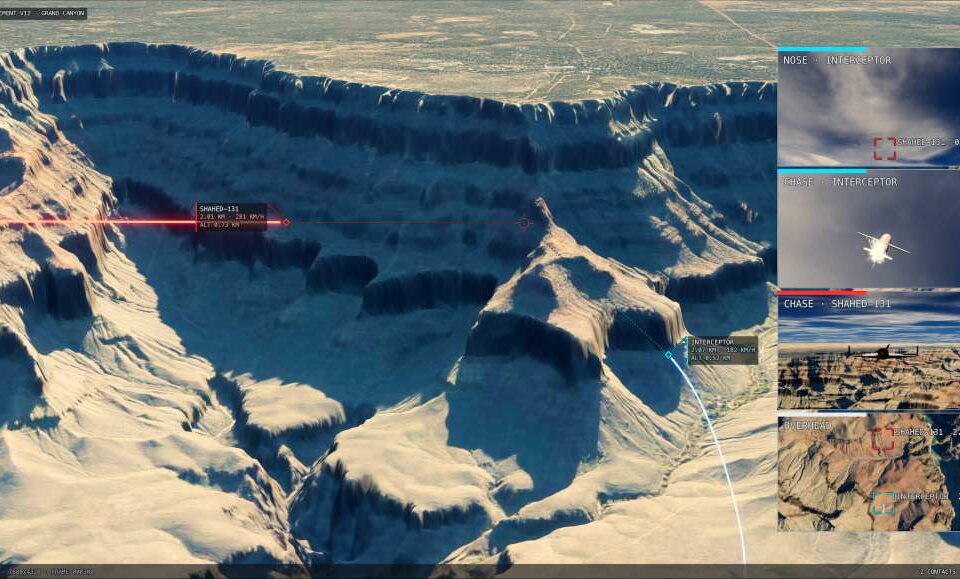
European defense AI startup Agon has raised $70 million in Series A funding to build an artificial intelligence lab focused on autonomous warfare, as European governments push to develop their own military AI capabilities amid growing security threats.
The funding values the London-based company at $450 million and brings its total funding to $100 million, following a $30 million seed round earlier this year. The deal ranks among Europe’s largest defense technology Series A rounds of 2026, reflecting growing investor interest in AI systems that could reshape how future conflicts are fought.
Northzone led the round, with participation from existing investors Lakestar, XYZ, Lux Capital, Global Founders Capital, and Speedinvest. The UK Sovereign AI Fund and the National Security Strategic Investment Fund (NSSIF) joined the financing, marking the first time the two British government-backed investment funds have invested together.
Agon Chairman David Helgason, the founder of gaming engine company Unity Technologies, increased his investment. Former Sequoia Capital leader Roelof Botha joined as a new investor.
The funding comes as military forces increasingly turn to AI-powered drones, autonomous vehicles, and intelligent defense systems. For Europe, the challenge goes beyond building advanced weapons. It includes developing the underlying AI technology without relying heavily on foreign suppliers.
Inside Agon’s push to build Europe’s defense AI infrastructure
Founded by Tristam Constant and Junaid Hussain, Agon is building what it describes as a European defense AI lab, focused on developing the infrastructure and foundation models needed to train, test, and operate autonomous military systems.
Rather than manufacturing weapons or drones, the company is concentrating on the AI systems that could control them.
At the center of its technology is the Agon Engine, which powers a synthetic battlefield where autonomous defense systems can train against simulated threats before entering real-world operations.
The platform lets developers recreate thousands of combat scenarios, including large-scale drone attacks, disrupted communications, degraded navigation, and shifting enemy tactics.
For example, an autonomous air-defense system could be tested against a simulated swarm of hostile drones, learning how to respond when conventional defenses become overwhelmed.
The approach aims to address a major challenge in military AI development: testing autonomous systems against unpredictable threats without relying entirely on costly and potentially dangerous physical exercises.
“Europe is in an AI arms race as we enter the era of agentic warfare: intelligent agents and machines that will need to understand their environment, make decisions and adapt at a speed and scale that humans alone cannot match. We exist to build the sovereign infrastructure and AI foundation models to allow us to train, test, and evolve autonomous defence systems – in Europe, for Europe – to outperform adversary capabilities,” Agon co-founder and CEO Tristam Constant said.
Tristam added: “Agon was born out of a project to bring together a coalition of European founders, operators, researchers, veterans, investors, and governments to build what we collectively believe to be urgently needed for our sovereignty and safety.
Constant, who previously served in the British Army and held senior roles at Anduril and Applied Intuition, argues that Europe’s military independence will increasingly depend on its ability to develop and control the AI models operating autonomous defense systems.
His co-founder, Junaid Hussain, brings experience from European air-defense startup Cambridge Aerospace and Google-backed AI and gaming company Iconic.
Agon operates from the UK and Germany, drawing talent from across Europe. The company plans to use the new capital to grow its engineering and research teams, develop its AI models, and deepen relationships with defense companies and government customers.
The participation of two UK government-backed funds gives the financing strategic significance beyond its size. Britain has identified sovereign AI capabilities as a national security priority, particularly as autonomous systems become more prominent in military operations.
Still, building AI models that perform reliably in simulated battles is different from proving they can operate safely and effectively in real combat. Agon will need to demonstrate that its technology can make that transition.
The larger question is whether Europe can develop its own defense AI infrastructure quickly enough to compete with better-funded rivals.
For Agon, the $70 million investment provides the capital to pursue that ambition. Whether its technology can deliver on the battlefield remains to be seen.

Agon Co-Founder and CEO Tristam Constant