Startup Funding News Today, November 17, 2026: Alecto, Bedrock Energy, Galvanize Therapeutics, Corma, Noeri, Nomad & More
 Nickie Louise
Posted On November 17, 2026

Investors committed at least $604 million in nine dollar-denominated financing disclosures, plus R$172 million for Brazilian fintech Nomad, in the 10 startup funding announcements selected for today’s TechStartups report. In approximate U.S.-dollar terms, the combined figure is about $634 million. But the more revealing number is $365 million: the amount captured by just three companies—medical-device maker Galvanize Therapeutics, cybersecurity AI developer Corma, and enterprise AI lab Noeri.
Galvanize’s $130 million Series D will finance the commercial expansion and clinical development of its pulsed electric field medical technology. Corma followed with a $125 million Series A at a $1 billion valuation, only three months after revealing its initial $60 million seed financing. Noeri, founded by Stanford researchers Yejin Choi and Carlos Guestrin, raised $110 million to build AI systems that improve through work inside customer organizations.
The day’s other announcements underline a market searching for practical applications rather than another round of broad AI promises. Remedy Robotics raised $62 million for an investigational system intended to extend access to specialized vascular procedures. Dreamteam disclosed $53 million across seed and Series A financing for a redesigned CRM. Numa secured $45 million for AI software already used by more than 1,500 automotive dealerships, while Knit Health raised $35 million for models intended to help coordinate healthcare decisions. In Brazil, Nomad brought in new strategic capital for cross-border financial services; Bedrock Energy raised $24 million for geothermal drilling; and London’s Alecto secured $20 million to run an AI-enabled law practice.
This isn’t an evenly distributed surge. The three largest financings accounted for about 58% of the selected dollar-equivalent total, and eight of the 10 businesses are based in the United States. The pattern points to concentrated bets on cybersecurity, applied AI, medical technology, and industries in which software must actually change how work gets done. This does not mean every sector or geography is experiencing the same funding conditions.
The Macro Environment: Investors Are Buying Proof That Technology Can Do the Work
The headline amounts reveal an apparent contradiction. Venture firms still finance early-stage AI businesses at valuations normally associated with much more established companies, yet many of the strongest operating stories involve ordinary tasks: answering dealership calls, entering sales information, routing patients, processing property transactions, and reducing building heating costs. The common thread is a commercial promise that can eventually be measured against labor, time, cost, or outcomes.
Corma’s valuation shows investors will pay a premium for a specialized model if they believe the threat it addresses is urgent and the customer budget is defensible. The company sells the idea that enterprise defenders need systems trained on security-specific information—not only general-purpose chat models. Noeri makes a different proposition: corporate AI should learn and improve from each customer’s work, instead of relying indefinitely on an unchanged general model. In both cases, investor conviction is substantial, but publicly demonstrated customer economics remain less extensive than the funding headlines.
Healthcare and physical infrastructure present a different timetable. Galvanize already has a marketed medical system and cites more than 4,000 procedures, but expansion into additional indications requires clinical evidence. Remedy is preparing pivotal trials for a robotic platform that is not currently available for clinical use. Bedrock’s geothermal rigs could reduce a key installation bottleneck, but scaling means buying equipment, training operators, and executing projects on customers’ schedules. Funding in these categories pays for validation and deployment as well as software development.
For software founders, Numa and Alecto offer a telling contrast with new frontier AI laboratories. Numa says its product has handled more than a billion customer interactions and tripled annual recurring revenue, although it has not published its actual ARR. Alecto reports $8 million in annualized revenue and $1.3 billion in property transactions handled within eight months of trading. Both claims are company-reported, but they give investors operating measures to investigate. Valuing a business in a regulated or hard-to-reach market may depend as much on distribution and execution as on the underlying model.
Today’s announcements also illustrate the need to separate financing from financial storytelling. Dreamteam’s $53 million combines its seed and Series A, without breaking out the two. Nomad’s R$172 million Series C includes Tether Capital’s separately disclosed $15 million investment; those two figures should never be added together as separate transactions. The market’s actual capital flow is visible only when analysts keep the timing, currency, stage, and structure of each deal straight.
Galvanize Therapeutics raises $130M in funding to expand pulsed electric field medical treatments
Redwood City-based Galvanize Therapeutics closed a $130 million Series D led by HealthQuest Capital on November 16. Olympus Innovation Ventures and Braidwell joined as new investors; existing shareholders, including Sofinnova Partners, Norwest, Elevage Medical Technologies, Perceptive Advisors, Janus Henderson Investors, Fidelity Management & Research Company, and T. Rowe Price Associates, also participated. The company did not disclose a valuation.
Galvanize develops pulsed electric field, or PEF, devices that deliver short electrical pulses to ablate tissue. Its Aliya system is being commercialized in the United States, and the company says the technology has been used in more than 4,000 procedures. Galvanize also reports more than 300 patients enrolled in its PROPEL registry and intends to expand work on its RheOx therapy for chronic bronchitis. The latest financing is therefore an investment in both an existing commercial business and a broader clinical-development program.
There is an important regulatory distinction. FDA clearance for the Aliya EX generator and soft-tissue ablation does not establish proven benefit for every oncology or immune-related use under investigation. The company’s release explicitly states that it has not established a proposed immune response that yields patient benefit. For investors, adoption, reimbursement, physician training, procedural economics, and well-designed clinical studies will matter more than the number of potential indications.
Funding Details
Startup: Galvanize Therapeutics
Investors: HealthQuest Capital (lead); Olympus Innovation Ventures, Braidwell, Sofinnova Partners, Norwest, Elevage Medical Technologies, Ally Bridge Group, Perceptive Advisors, Janus Henderson Investors, Longaeva Partners, Fidelity Management & Research Company, T. Rowe Price Associates
Amount Raised: $130 million
Total Raised: Not disclosed on a fully reconciled basis
Funding Stage: Series D
Funding Date: November 16, 2026 (8:00 a.m. EST announcement)
Headquarters: Redwood City, California, United States
Sector: Medical devices/oncology / pulsed electric field ablation
Valuation: Not disclosed
Corma raises $125M in funding to build specialized AI defenses against cyberattacks
Corma announced a $125 million Series A led by NEA at a $1 billion valuation. Sequoia Capital, Khosla Ventures, and Coatue returned as investors. The company disclosed a $60 million seed round when it emerged from stealth in August, bringing its reported total funding to $185 million in three months. Based in San Francisco and Tel Aviv, Corma is positioning itself as a developer of foundation models trained specifically for defensive cybersecurity.
The company’s software analyzes information such as security logs and configurations and uses agents to help security teams investigate and respond to threats within existing tools. Corma says it has encountered strong demand from large enterprises and has expanded computing capacity, but it has not published audited revenue or enough independent deployment results to establish how its models compare with the many competing security products on the market.
The investment reflects an urgent market question: attackers are using automation to increase the volume and speed of malicious activity, while enterprise security staff are already overwhelmed by alerts. That creates an opening for software that can resolve problems safely rather than merely produce more findings. Corma’s differentiation will depend on detection accuracy, false-positive rates, incident-handling safeguards, and trust earned under real attack conditions. A billion-dollar valuation reflects investor confidence, not proof that those questions have been settled.
Funding Details
Startup: Corma
Investors: NEA (lead); Sequoia Capital, Khosla Ventures, Coatue
Amount Raised: $125 million
Total Raised: $185 million, company-reported
Funding Stage: Series A
Funding Date: November 16, 2026 (9:00 a.m. EST announcement)
Headquarters: San Francisco, United States, with operations in Tel Aviv, Israel
Sector: Cybersecurity / defensive AI foundation models
Valuation: $1 billion, company-announced
Noeri raises $110M in funding to build self-improving AI for enterprise workloads
Noeri launched publicly with $110 million in financing led by Menlo Ventures, joined by Madrona Venture Group, Kindred Ventures, Wing Venture Capital, and NEA. Cisco Investments, Nvidia, and Snowflake participated as strategic investors. The Palo Alto company was founded by Stanford computer science professors Yejin Choi and Carlos Guestrin, who are serving as co-chief executives. The company did not disclose a valuation or formally identify the funding stage in its primary announcement.
Noeri’s thesis is that enterprises should improve AI systems around their own recurring tasks, rather than perpetually buy the most expensive general-purpose model. Its proposed tools study customer workflows, select models and software components for specific jobs, and recommend revisions to prompts, tools, or models. The company says it explains proposed changes and sends them for human approval, and that customers retain ownership of their data and the specialized work they develop, subject to third-party licenses.
This could shift AI competition toward customer-specific expertise and measurable operating costs. It also presents difficult technical questions: continuous improvement must not silently introduce errors, compromise sensitive information, or create changes that cannot be rolled back. The launch disclosure did not include named customer outcomes, independently comparable performance, or pricing. Investors are backing a strong research team and an ambitious architecture before those commercial results become public.
Funding Details
Startup: Noeri
Investors: Menlo Ventures (lead); Madrona Venture Group, Kindred Ventures, Wing Venture Capital, NEA, Cisco Investments, Nvidia, Snowflake
Amount Raised: $110 million
Total Raised: $110 million publicly disclosed at launch
Funding Stage: Not disclosed in the primary announcement
Funding Date: November 16, 2026 (12:15 p.m. EST Business Wire announcement)
Headquarters: Palo Alto, California, United States; also operating in Zurich, Switzerland
Sector: Enterprise AI / specialized models / AI research
Valuation: Not disclosed
Remedy Robotics raises $62M in funding to advance robotic stroke and cardiovascular procedures
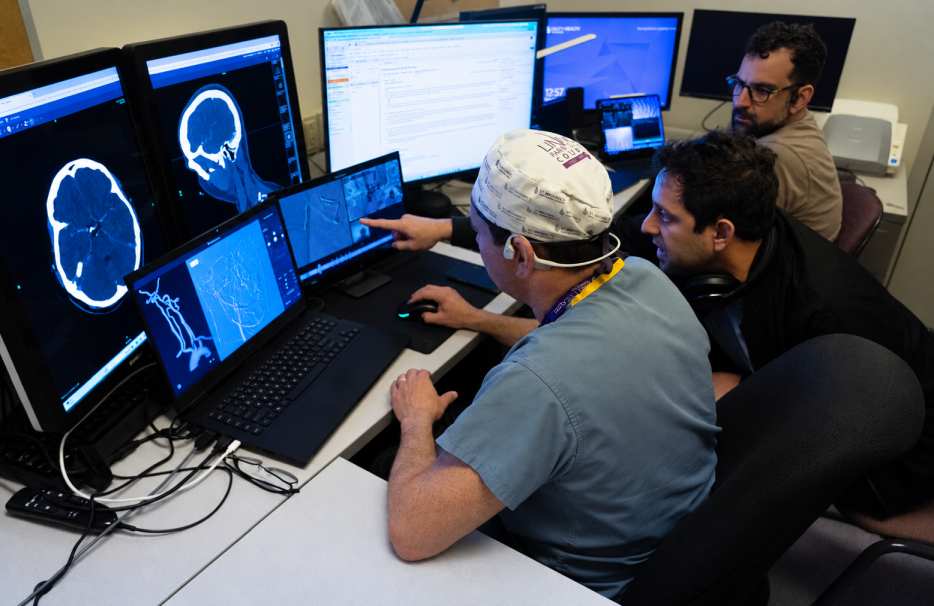
Remedy Robotics raised a $62 million Series B funding round led by DCVC with new participation from UC Investments, Skip Capital, and Hostplus. Existing investors, including Build Collective, Blackbird, Divergent Capital, and KdT Ventures, also backed the round. The San Francisco company is building an AI-enabled robotic system for catheter-based interventions in stroke, coronary, and peripheral vascular care.
Its investigational N1 platform combines robotic hardware with software that interprets scans and helps plan and execute procedures. Remedy says it works with more than 100 hospitals worldwide and is preparing a pivotal clinical trial in partnership with the University of California. It is also pursuing future applications in which specialists could operate systems remotely, potentially expanding access beyond large medical centers.
The distinction between promise and availability is fundamental. N1 is not currently approved for sale or clinical use in any jurisdiction, according to Remedy. Remote surgery also depends on communications reliability, hospital infrastructure, specialist supervision, and patient safety. This financing backs a clinical and regulatory path, not a product already demonstrated at commercial scale. Successful deployment could broaden access to time-sensitive treatment, but those outcomes remain to be established.
Funding Details
Startup: Remedy Robotics
Investors: DCVC (lead); UC Investments, Skip Capital, Hostplus, Build Collective, Blackbird, Divergent Capital, KdT Ventures
Amount Raised: $62 million
Total Raised: Not confirmed on a fully reconciled basis
Funding Stage: Series B
Funding Date: November 16, 2026 (10:00 a.m. EST announcement)
Headquarters: San Francisco, California, United States
Sector: Medical robotics / AI-assisted endovascular intervention
Valuation: Not disclosed
Source: Remedy Robotics, November 16 company announcement.
Dreamteam discloses $53M across seed and Series A financing for an AI-native CRM
Dreamteam disclosed $53 million across its seed and Series A financings, with Together Fund leading the seed and Accel leading the Series A. Premji Invest also participated. The company has not disclosed how much was allocated to each stage. The funding was reported publicly on November 16, although Dreamteam’s own explanatory blog is dated November 17. Treating the full $53 million as a newly closed Series A would be inaccurate.
Founded by former Freshworks executives Anand Venkatraman, Senthil Kanthaswamy, and Ramesh Parthasarathy, the Sacramento-headquartered company wants to replace much of the manual work associated with customer relationship management software. Dreamteam captures context from meetings, email, and connected tools, using specialized agents to prepare meetings, recommend follow-ups, highlight pipeline risks, and assist with administration. The company says more than 100 customers across 13 countries have signed up since it began selling actively.
The commercial challenge is considerable. Salesforce, HubSpot, Microsoft, and other incumbent providers can add similar features to products customers have already configured around their sales processes. Dreamteam’s chance is to offer a workflow that meaningfully reduces data entry while giving users confidence that automated actions and customer records are correct. That advantage will require reliable integrations, transparent controls, and evidence of improved sales outcomes—not simply a new interface.
Funding Details
Startup: Dreamteam
Investors: Together Fund (seed lead), Accel (Series A lead), Premji Invest
Amount Raised: $53 million in combined seed and Series A financing first publicly disclosed together
Total Raised: $53 million disclosed across the two stages
Funding Stage: Seed and Series A; individual sizes not disclosed
Funding Date: November 16, 2026 (first published press coverage; company blog dated November 17)
Headquarters: Sacramento, California, United States
Sector: Enterprise software / AI-native CRM
Valuation: Not disclosed
Source: Dreamteam, November 16 GlobeNewswire release; TechCrunch, November 16; Dreamteam company blog, November 17.
Numa raises $45M in funding to automate the work of automotive dealerships
Numa announced a $45 million Series C led by Blue Cloud Ventures, with Threshold Ventures, Costanoa, Touring Capital, Gradient Ventures, and Tokio Marine Future Fund participating. The company reports $96 million in cumulative funding. Fortune, citing a person familiar with the deal, reported a $500 million post-money valuation; the company did not confirm that valuation in its own announcement.
Numa sells software to automotive dealerships that handles inbound calls, texts, appointment booking, service requests, and other customer interactions. It says more than 1,500 dealers in the United States and Canada use its system. According to the company, its software has handled over a billion communications and booked more than four million appointments. Numa also says its annual recurring revenue tripled over the previous year, but it did not disclose the dollar amount.
The strategic appeal lies partly in distribution. Dealers are difficult to sell to individually, but Numa has established relationships with major automakers and dealership programs, potentially making adoption easier. The risks are equally specific: dealership-management incumbents could replicate features, manufacturer endorsements can change, and automated conversations must translate into profitable customer retention and lower operating costs. Investors have funded a route into a fragmented industry, not merely another AI model.
Funding Details
Startup: Numa
Investors: Blue Cloud Ventures (lead); Threshold Ventures, Costanoa, Touring Capital, Gradient Ventures, Tokio Marine Future Fund
Amount Raised: $45 million
Total Raised: $96 million, company-reported; Fortune cited a different $91 million figure
Funding Stage: Series C
Funding Date: November 16, 2026 (10:00 a.m. EST announcement)
Headquarters: Oakland, California, United States
Sector: Automotive retail software / AI workflow automation
Valuation: $500 million post-money, reported by Fortune; not company-confirmed
Knit Health raises $35M in funding to predict patient needs and improve care coordination
Knit Health raised a $35 million Series A led by NEA, with Frist Cressey Ventures, Town Hall Ventures, and SignalFire participating, alongside continued support from Uncork, Moxxie, the Aligned Fund, and Coalition Operators. The San Francisco company reports $46.6 million in total financing, including previously disclosed seed capital.
Knit’s Med-BEAM system is designed to model clinical care pathways and estimate how different interventions could affect patient trajectories. Rather than only answering questions about medical knowledge, the product attempts to learn from real decisions made across healthcare systems. Potential uses include matching patients to the right specialist, predicting care needs, and helping hospitals allocate limited clinical resources. The company says its research involves extensive real-world patient data.
This is an attractive investment thesis because U.S. healthcare systems spend heavily on coordinating care, and better routing could reduce delays and unnecessary appointments. But training on historical clinical decisions raises serious questions about confounding, bias, privacy, and whether a prediction improves actual patient outcomes. Performance claims from internal evaluations must be tested with appropriate external clinical and operational validation. Hospitals may buy workflow tools, but they need evidence before relying on them for patient-facing decisions.
Funding Details
Startup: Knit Health
Investors: NEA (lead); Frist Cressey Ventures, Town Hall Ventures, SignalFire, Uncork, Moxxie, the Aligned Fund, Coalition Operators
Amount Raised: $35 million
Total Raised: $46.6 million, company-reported
Funding Stage: Series A
Funding Date: November 16, 2026 (9:00 a.m. EST announcement)
Headquarters: San Francisco, California, United States
Sector: Healthcare AI / clinical operations / predictive modeling
Valuation: Not disclosed
Nomad raises R$172M in funding to expand international banking and investment services for Brazilians
Brazilian fintech Nomad announced a R$172 million Series C led by Tether Capital, with Endeavor joining as a new investor and existing shareholders including Globo Ventures, Tiger Global Management, and Spark Capital participating. Local reporting puts the company’s valuation at R$4 billion and cumulative financing at more than R$800 million. Tether separately confirmed that its participation totaled $15 million, included in the broader financing—not a second round.
Nomad offers dollar-denominated accounts, international payments, and investment products to Brazilian consumers. It reports five million customers, more than R$10 billion in assets under custody, and annualized revenue above R$880 million. Those are company-reported operating figures, but they give the financing a commercial context that is often missing from early-stage fintech announcements. The company intends to expand its investment tools, AI-supported products, and international payment infrastructure.
Tether’s interest adds a strategic dimension: a regulated consumer distribution network could eventually support services connected to digital dollar products. For now, the firms have discussed possible integrations involving USDT and Tether Gold; those integrations have not been announced as launched products. Future adoption will depend on financial regulation, security, transaction costs, trust, and the value customers receive compared with existing payment rails.
Funding Details
Startup: Nomad
Investors: Tether Capital (lead, $15 million contribution); Endeavor, Globo Ventures, Tiger Global Management, Spark Capital
Amount Raised: R$172 million Series C (approximately $30 million at indicative contemporaneous conversion)
Total Raised: More than R$800 million, company-reported in local coverage
Funding Stage: Series C
Funding Date: November 16, 2026
Headquarters: São Paulo, Brazil
Sector: Fintech / cross-border banking/investments
Valuation: R$4 billion, reported by Brazilian financial publications
Bedrock Energy raises $24M in funding to make geothermal drilling faster and cheaper
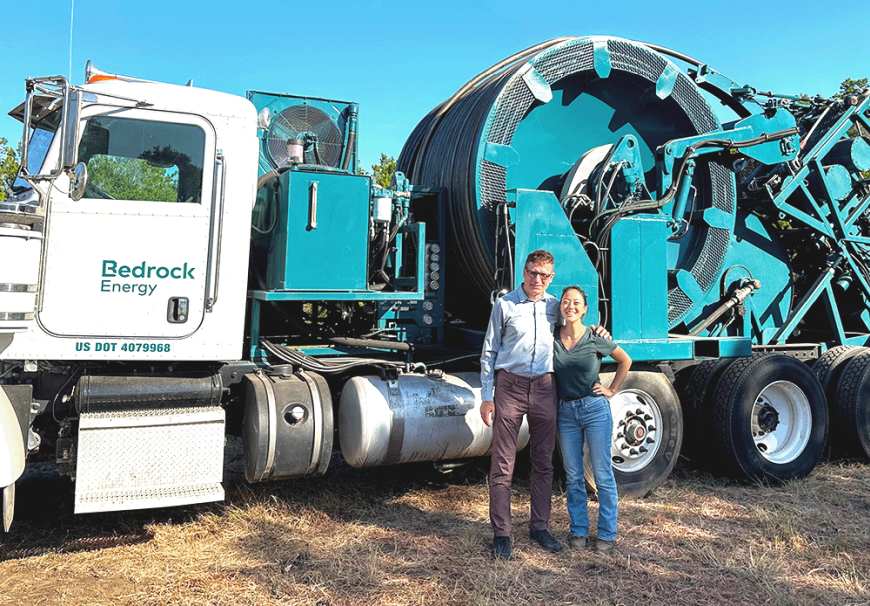
Austin-based Bedrock Energy raised $24 million in a round led by Clean Energy Ventures and Clearvision Ventures, TechCrunch reported on November 16. Other participants included GVP Climate, Susquehanna Sustainable Investments, Temasek Trust’s Catalytic Capital for Climate and Health, MUUS, Autodesk Foundation, Titanium Ventures, Energy Impact Partners, and several additional investors. The company has not clearly labeled the new financing’s stage in the original reporting, so it should not be described categorically as a Series B.
Bedrock develops guided drilling systems and subsurface software for geothermal heating and cooling installations. Ground-source heat pumps can reduce building energy use, but drilling boreholes is costly and disruptive. Bedrock says its equipment can reduce drilling time by as much as 80% compared with conventional methods. The startup has worked on nine sites, according to its chief executive, and is expanding into additional U.S. regions as it purchases more rigs.
The financing provides a useful counterpoint to software-only AI companies. Geothermal systems must be designed for local geology, construction schedules, and real estate economics. A successful product could turn an existing heating technology into a more affordable building retrofit, but the promised drilling savings require evidence across varied sites and projects. Unit economics will depend on equipment utilization, installation quality, labor availability, and whether customers can finance the complete system.
Funding Details
Startup: Bedrock Energy
Investors: Clean Energy Ventures and Clearvision Ventures (co-leads); GVP Climate, Susquehanna Sustainable Investments, Catalytic Capital for Climate and Health, MUUS, Autodesk Foundation, Titanium Ventures, Energy Impact Partners, and others
Amount Raised: $24 million
Total Raised: At least $44.5 million across three publicly described rounds; lifetime total not fully reconciled
Funding Stage: Not disclosed in original November 16 reporting
Funding Date: November 16, 2026 (8:00 a.m. EST original reporting)
Headquarters: Austin, Texas, United States
Sector: Climate technology / geothermal heating and cooling / industrial automation
Valuation: Not disclosed
Source: TechCrunch, November 16, reporting based on company interviews.
Alecto raises $20M in funding to operate an AI-enabled consumer law firm
London-based Alecto announced a $20 million seed round led by Insight Partners. Firstminute Capital, Blue Lion Global, Andrena Ventures, FJ Labs, Antiportfolio Ventures, the Rigby Group, Mishcon de Reya, and angel investors joined the financing. It is a substantial seed round for a company initially focused on consumer property law, rather than selling a conventional legal software subscription.
Alecto combines qualified legal professionals with software to handle conveyancing—the legal work behind buying and selling property in the United Kingdom. The company says it reached $8 million in annualized revenue in its first eight months of trading and has handled more than $1.3 billion in property transactions. Its strategy is to own the customer relationship and deliver the legal work itself, using AI to reduce repetitive administration while preserving professional judgment.
Investors are betting that the largest prize in some AI markets may be the service revenue, not the software license. That comes with obligations. Alecto must maintain client confidentiality, meet professional standards, control errors and insurance costs, and build a brand consumers trust with important financial transactions. If the model works, it could expand into other parts of consumer law. If it fails, faster software alone will not compensate for poor legal outcomes.
Funding Details
Startup: Alecto
Investors: Insight Partners (lead); Firstminute Capital, Blue Lion Global, Andrena Ventures, FJ Labs, Antiportfolio Ventures, Rigby Group, Mishcon de Reya, and angel investors
Amount Raised: $20 million
Total Raised: $20 million publicly disclosed in the seed round
Funding Stage: Seed
Funding Date: November 16, 2026
Headquarters: London, United Kingdom
Sector: Legal services / AI-enabled consumer law
Valuation: Not disclosed
What Today’s Funding Activity Reveals
The AI market is splitting between new research and proven industry workflows. Corma and Noeri attracted $235 million combined largely on the promise of specialized intelligence and technical talent. Numa and Dreamteam, by contrast, seek adoption through familiar business processes with direct measures of customer usage. The investment theses are different, and neither should be judged solely by a common label such as “AI agent.”
Medical technology is still a capital-intensive business. Galvanize and Remedy account for $192 million of the selected financing, but one is expanding a marketed ablation platform while the other is funding an investigational robotic system and trials. Together they show why funding stage, regulatory status, and evidence matter far more than a broad medtech category label.
Defensibility increasingly comes from where the technology is deployed. Numa has dealership-channel relationships, Alecto owns a regulated customer service, Nomad has millions of financial-services users, and Bedrock operates physical drilling equipment. In these cases, established distribution, regulatory permissions, hard-to-collect operational data, or execution capability may take longer to copy than the AI features themselves.
This sample shows no evidence of a geographically balanced boom. Eight of the 10 selected companies are headquartered in the United States; one is in Brazil and one in the United Kingdom. Global sources were searched, but the stronger qualifying, verifiable transactions during this particular 24-hour period were concentrated in the U.S. This daily snapshot should not be extrapolated into a multi-month regional trend.
One announcement is not necessarily one newly funded stage. Dreamteam first disclosed the combined $53 million across two earlier financing stages and withheld the split. Nomad’s investor-specific $15 million investment is a component of the R$172 million Series C. Counting component figures twice or presenting cumulative funds as newly raised equity would materially distort today’s totals.
Tech Funding Table
| Startup | Amount Raised | Sector | Funding Stage | Lead/Key Investors | Country |
|---|---|---|---|---|---|
| Galvanize Therapeutics | $130M | Medical devices / PEF ablation | Series D | HealthQuest Capital; Olympus Innovation Ventures; Braidwell | United States |
| Corma | $125M | Cybersecurity / defensive AI | Series A | NEA; Sequoia; Khosla Ventures; Coatue | United States |
| Noeri | $110M | Enterprise AI research | Not disclosed | Menlo Ventures; Madrona; Nvidia; Cisco; Snowflake | United States |
| Remedy Robotics | $62M | Medical robotics / endovascular care | Series B | DCVC; UC Investments; Skip Capital; Hostplus | United States |
| Dreamteam | $53M combined disclosure | Enterprise software / AI CRM | Seed + Series A | Together Fund; Accel; Premji Invest | United States |
| Numa | $45M | Automotive AI software | Series C | Blue Cloud Ventures; Threshold; Costanoa | United States |
| Knit Health | $35M | Healthcare AI / clinical operations | Series A | NEA; Frist Cressey; SignalFire | United States |
| Nomad | R$172M (about $30M) | Fintech / global banking | Series C | Tether Capital; Endeavor; Globo Ventures | Brazil |
| Bedrock Energy | $24M | Geothermal/industrial automation | Not disclosed | Clean Energy Ventures; Clearvision Ventures | United States |
| Alecto | $20M | AI-enabled legal services | Seed | Insight Partners; Firstminute; FJ Labs | United Kingdom |
Funding methodology: The nine dollar-denominated amounts sum to $604 million. Adding Nomad’s R$172 million at an indicative approximate exchange rate gives about $634 million overall; this is not a currency-exact audited total. The combined disclosures for Dreamteam are counted once, and Tether’s $15 million contribution is already part of Nomad’s round. No acquisitions, venture fund closings, or previously announced rounds have been added.
Strategic Takeaways for Founders and Investors
- Choose problems where buyers already spend money. Numa sells into dealership operating budgets; Alecto addresses fees consumers already pay for property transactions. Founders entering established spending categories may find it easier to prove financial return than founders creating a new budget from scratch.
- Differentiate on measurable outcomes, not agent counts. Judge Dreamteam by improved CRM accuracy and sales productivity; judge Corma by its ability to detect and contain incidents safely. The number of models or autonomous agents is a weak substitute for customer results.
- Protect proprietary data without trapping the customer. Noeri’s promise of customer-owned, specialized workflows is attractive partly because enterprises don’t want their competitive knowledge locked into one model provider. Contractual control, portability, privacy, and third-party licenses will matter in procurement.
- Use distribution as a product advantage. Numa’s relationships with dealership networks and Nomad’s existing consumer base can reduce acquisition friction. They also create dependencies on channel partners and regulators that investors should scrutinize.
- Treat approvals and clinical evidence as separate milestones. Galvanize’s marketed system and Remedy’s investigational robot occupy very different risk categories. Device clearance for one use should not be presented as validation for every planned application.
- Test the full cost of automation. Bedrock’s investment case depends on rig utilization and construction costs; Corma’s depends partly on specialized compute and security operations. Financial analysis must include the systems and people needed to deliver the promised result.
- Assess service businesses on liability and gross margin. Alecto’s model of providing legal services, rather than selling tools to law firms, gives it access to the full fee. It also makes professional responsibility, error rates, and staffing central to economics.
- Demand external validation in sensitive industries. Knit Health’s model may improve patient routing, but independent evidence on safety, bias, and operational outcomes will be key to adoption. Enterprise buyers and insurers will want more than benchmark presentations.
- Read valuation sources carefully. Corma publicly announced a $1 billion valuation; Numa’s reported $500 million valuation came from a source cited by Fortune; Nomad’s R$4 billion valuation appeared in local financial reporting. Those levels of disclosure differ.
- Separate new money from headline totals. Dreamteam’s financing spans two stages, and Nomad’s investor-specific investment sits inside its larger Series C. The same discipline applies to debt, secondary shares, convertible instruments, and grants whenever calculating market-wide financing.
Conclusion
Today’s largest financing commitments backed a commercial medical platform, a cybersecurity-focused AI lab, and a new approach to company-specific AI. Their $365 million combined represents more than half the selected total, underlining how much capital is concentrated in businesses investors believe could become foundational to their industries.
The other rounds tell a related story: financing is also reaching companies that automate a dealership, manage patient flow, improve geothermal installation economics, modernize financial services, and deliver legal work. Those opportunities are less about proving AI can generate an answer, and more about showing a technology can complete a job at an acceptable cost and risk level.
The enduring competitive advantage will belong to companies that turn technical capability into measurable, trusted work, not those that simply raise the largest round.