Startup Funding News Today, November 12, 2026: Fractile, UFORCE, Agile Robots, Imprint & More
 Nickie Louise
Posted On November 12, 2026
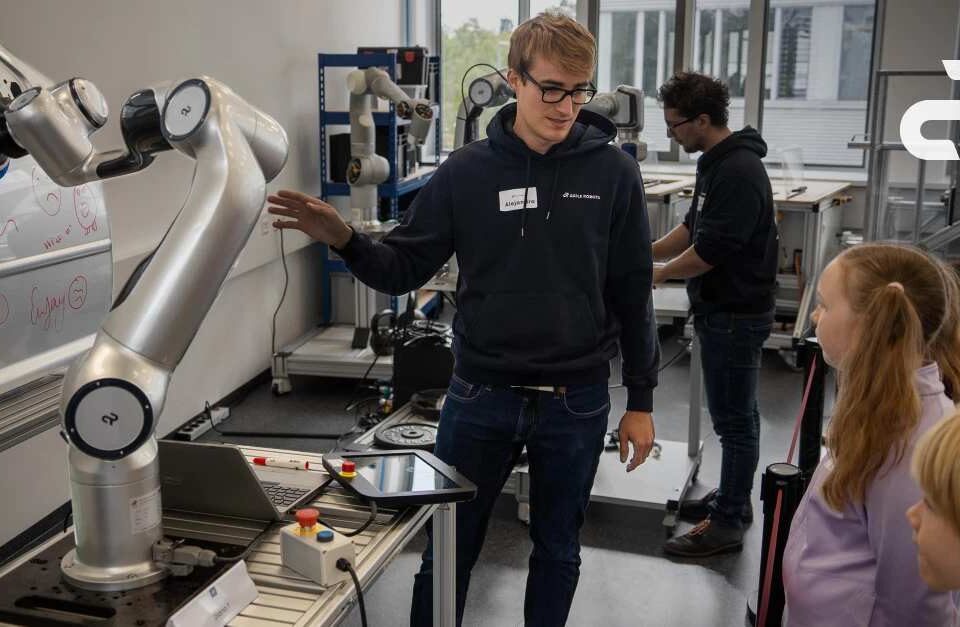
Venture capital is pouring billions into artificial intelligence hardware, autonomous defense systems, and industrial robotics, as investors increasingly back startups building the physical infrastructure behind the next generation of technology. British AI chip startup Fractile led the latest funding announcements with a $720 million Series C at a $7 billion valuation. Ukrainian-founded defense technology company UFORCE followed with a $700 million Series A at a $6 billion valuation, while German robotics company Agile Robots secured $500 million in funding led by SoftBank, with Nvidia and Hitachi participating.
Together, those three rounds represent $1.92 billion in announced financing, underscoring the enormous capital requirements of developing advanced semiconductors, autonomous systems, and industrial machines. The investment activity also extended into financial technology, enterprise AI, biotechnology, and battery manufacturing. New York-based fintech Imprint raised $130 million at a $1.9 billion valuation, while San Francisco startup Rox secured $100 million at a $1.3 billion valuation to develop AI agents for enterprise sales operations.
Healthcare startups also attracted significant backing. Neurosterix closed a $105 million Series B to advance experimental treatments for schizophrenia and other neurological conditions. China’s Eli Radiopharma announced nearly RMB 400 million in Series A financing to develop radiopharmaceuticals. Meanwhile, Israeli data infrastructure startup Edelbyte emerged from stealth with $70 million in previously raised seed and Series A funding, and Chinese robotics chip developer XILECT disclosed a RMB 500 million angel round. California-based Coreshell Technologies added a $30 million Series B to expand domestic battery manufacturing technology.
The 10 selected announcements represent $2.355 billion in dollar-denominated funding disclosures, plus RMB 500 million and nearly RMB 400 million in Chinese financing. The dollar total includes Edelbyte’s $25 million seed financing raised earlier, disclosed alongside its $45 million Series A. Excluding that earlier round, the total is $2.33 billion in newly announced or newly disclosed dollar-denominated rounds, although the disclosure dates do not indicate when all the capital was received.
The investment pattern points to a growing divide in venture capital. AI software remains attractive, but some of the largest checks are going to companies building proprietary chips, manufacturing systems, and technologies competitors find hard to reproduce. Investors appear willing to finance years of technical development when they believe the resulting products could control strategically important markets.
The Macro Environment: Investors Are Financing the Physical Foundations of AI
The most striking feature of today’s funding announcements is the concentration of capital in businesses that combine advanced software with expensive physical technology.
Fractile is developing processors specifically for AI inference. Agile Robots is manufacturing robotic systems for industrial automation. UFORCE is expanding production of autonomous defense platforms already used in military operations. Together, these companies are pursuing markets where success depends on engineering expertise, manufacturing capacity, and the ability to deliver reliable products at scale.
That requires a different investment approach from traditional software venture capital. A software startup can often launch a product with a relatively small engineering team and cloud infrastructure. Semiconductor companies must finance chip design, manufacturing relationships, testing, and software compatibility. Robotics companies need mechanical engineering, production facilities, and complex integration with customer operations.
For investors, those costs create risks but can also establish barriers to entry. A competitor might reproduce software features in months. Reproducing a semiconductor architecture, manufacturing process, or industrial robotics system can require years of research and substantial capital.
Government involvement is another important theme. Fractile’s financing includes British public investment institutions, while UFORCE attracted the UK National Wealth Fund and the U.S.–Ukraine Reconstruction Investment Fund. Coreshell’s battery development is supported by an earlier $50 million grant from the U.S. Department of Energy. These transactions show how private investment is increasingly intersecting with national priorities in computing, defense, energy, and manufacturing.
Meanwhile, Imprint, Rox, and Edelbyte demonstrate that enterprise software still attracts significant financing when startups can address specific commercial problems. Imprint wants to strengthen payment and customer loyalty relationships. Rox is using AI agents to automate sales activity. Edelbyte is developing lower-cost data infrastructure for companies dealing with growing analytical workloads.
The broader funding environment remains selective. Today’s unusually large investments do not mean venture financing is generally easier for startups. Instead, they show that investors are concentrating substantial resources in companies with specialized technology, strategic relevance, or evidence of commercial demand.
The central question is whether these companies can translate investor conviction into durable businesses before the cost of building their technologies overtakes the value they create.
Fractile raises $720M to challenge Nvidia with specialized AI inference chips

British semiconductor startup Fractile has raised $720 million in Series C financing at a $7 billion post-money valuation, becoming one of the United Kingdom’s most valuable privately held technology companies. Thrive Capital, Founders Fund, Lightspeed Venture Partners, and Redpoint co-led the financing. Other investors included CapitalG, BlackRock, DST Global, Balderton Capital, Britain’s Sovereign AI Fund, and the British Business Bank.
Founded in 2022 by Walter Goodwin, Fractile is developing specialized processors to accelerate AI inference, the computational process that lets trained models generate responses and perform tasks.
Its technical approach addresses a major constraint in modern AI computing: moving large quantities of information between memory and processing components. Fractile is developing an architecture that stacks custom DRAM directly above computing logic to increase memory bandwidth and reduce the cost of running advanced models.
Unlike companies that sell chips alone, Fractile is developing computing systems and accompanying software intended to make its processors practical for AI developers and infrastructure operators.
The timing is important. As AI companies deploy increasingly capable models, inference costs are becoming a major operating expense. Even modest improvements in energy efficiency, processing speed, and hardware utilization could have significant commercial value at scale.
However, the investment comes with considerable execution risk. Fractile has not yet shipped its first production chip, which is expected in 2027. Its $7 billion valuation therefore reflects confidence in future technical performance rather than a mature, proven manufacturing business.
The company must demonstrate that its architecture works reliably in production and provides advantages large enough to persuade customers to adopt an alternative to Nvidia’s established computing ecosystem.
Why the round matters: Fractile illustrates investors’ willingness to finance expensive semiconductor development when a startup offers a potentially significant improvement in AI infrastructure economics.
Funding Details
Startup: Fractile
Investors: Thrive Capital, Founders Fund, Lightspeed, Redpoint, CapitalG, BlackRock, DST Global, Balderton, UK Sovereign AI Fund, British Business Bank, and others
Amount Raised: $720 million
Total Raised: At least $955 million in publicly reported rounds
Funding Stage: Series C
Funding Date: November 11, 2026
Headquarters: London and Bristol, United Kingdom
Sector: AI semiconductors and inference infrastructure
Valuation: $7 billion post-money
UFORCE raises $700M to expand combat-tested autonomous defense systems

UFORCE has secured $700 million in Series A funding at a $6 billion valuation, as defense investors increase their backing of autonomous systems developed and tested during the war in Ukraine. The round was co-led by Valor Equity Partners and the UK National Wealth Fund. Participants included the U.S.–Ukraine Reconstruction Investment Fund, Menlo Ventures, Xantium, Hiro Capital, and existing investors Shield Capital, Ballistic Ventures, Lakestar, and Squadra.
Founded in Ukraine and headquartered in London, UFORCE develops autonomous military systems for maritime, aerial, and ground operations. Its portfolio includes MAGURA uncrewed surface vessels, NEMESIS aerial platforms, LIUT ground robots, and PREDATOR defensive systems. The company also develops command-and-control software intended to coordinate its different autonomous platforms.
Unlike many defense technology startups that are still testing prototypes, UFORCE says some of its systems have already been deployed in active military operations. Its MAGURA naval drones have been involved in operations against Russian naval assets, while the company reports extensive operational use of its aerial systems.
Those operational claims come from UFORCE and should be distinguished from independently verified performance data. The new financing is intended to increase manufacturing capacity in Ukraine and allied countries, expand research and development, and strengthen partnerships with military customers.
The significance extends beyond Ukraine. Militaries worldwide are examining how lower-cost autonomous systems can perform missions traditionally requiring substantially more expensive equipment.
That creates commercial opportunities for suppliers that can produce reliable systems at scale while meeting defense procurement, cybersecurity, and operational requirements.
UFORCE also represents an unusual funding milestone: a $700 million Series A for a company already valued at $6 billion. The size reflects the strategic importance investors place on the company’s technology, but it also raises expectations for future production and commercial growth.
Funding Details
Startup: UFORCE
Investors: Valor Equity Partners, UK National Wealth Fund, U.S.–Ukraine Reconstruction Investment Fund, Menlo Ventures, Xantium, Hiro Capital, Shield Capital, Ballistic Ventures, Lakestar, and Squadra
Amount Raised: $700 million
Total Raised: Not fully disclosed
Funding Stage: Series A
Funding Date: November 12, 2026, at 4:00 a.m. EST
Headquarters: London, United Kingdom, with major operations in Kyiv and Washington, D.C.
Sector: Defense technology, autonomous systems, and military robotics
Valuation: $6 billion
Agile Robots raises $500M from SoftBank, Nvidia, and Hitachi to expand industrial robotics
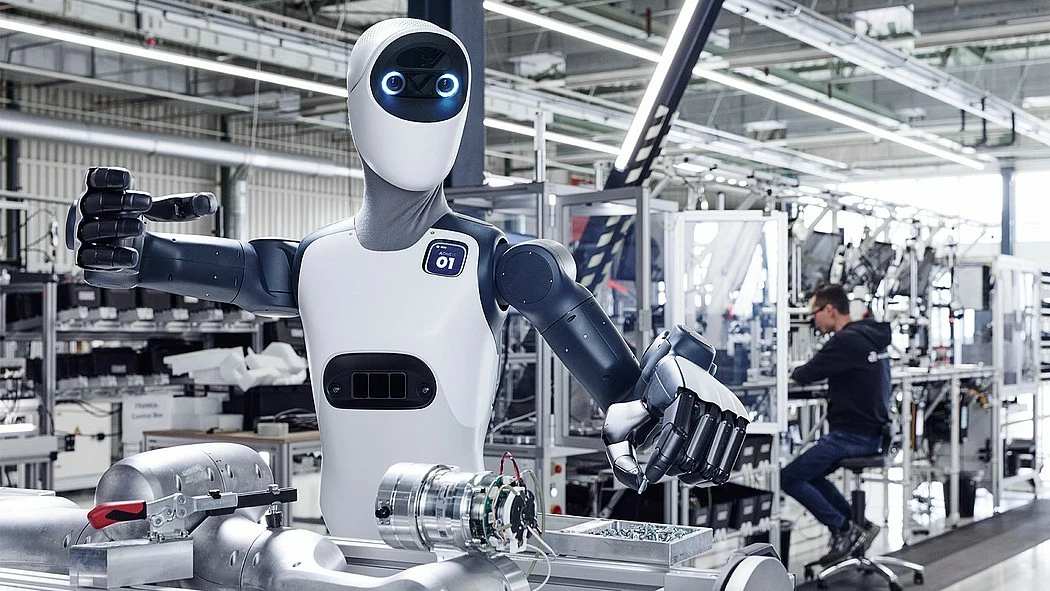
German robotics company Agile Robots has raised $500 million in a funding round led by SoftBank, valuing the Munich-based business at $8.5 billion. Nvidia, Hitachi, and T. Capital also participated in the financing, which will support the company’s planned expansion into the United States and additional manufacturing capacity.
Founded in 2018 as a spin-off from the German Aerospace Center, Agile Robots builds industrial automation systems that combine AI software, mechanical engineering, and robotics hardware. Its products include robotic arms, automated production cells, mobile transport systems, robotic hands, and humanoid machines designed for factories and warehouses.
Agile Robots operates in a field increasingly described as physical AI: technology that allows machines to interpret their surroundings, make decisions, and perform tasks in real environments.
The company has invested heavily in manufacturing infrastructure. Earlier this year, it opened a production facility in Fürstenfeldbruck, near Munich, designed to manufacture up to 10,000 legged and wheeled humanoid robots annually. That represents production capacity, not confirmed customer orders or actual annual output.
Nvidia’s involvement is particularly significant. The chipmaker is investing in robotics as AI models become increasingly capable of handling perception, movement, and physical interactions. SoftBank’s participation reinforces its longstanding interest in robotics and automation, while Hitachi brings an industrial perspective to the financing.
For Agile Robots, the next challenge is turning technological capabilities into commercially viable deployments. Industrial buyers need systems that can operate reliably for long periods, integrate with existing equipment, and generate measurable productivity gains.
Why the round matters: Investors are backing robotics companies that can connect AI research with manufacturing capacity and real industrial applications.
Funding Details
Startup: Agile Robots
Investors: SoftBank, Nvidia, Hitachi, and T. Capital
Amount Raised: $500 million
Total Raised: Approximately $2 billion
Funding Stage: Series F, as reported by Sifted
Funding Date: November 12, 2026
Headquarters: Munich, Germany
Sector: Industrial robotics, humanoid robotics, and physical AI
Valuation: $8.5 billion
Imprint raises $130M in funding to expand payment technology as AI reshapes commerce
New York-based fintech startup Imprint has raised $130 million in financing at an approximately $1.9 billion valuation, as retailers and financial technology companies prepare for changes in how consumers discover products and make purchases. Existing investor Khosla Ventures led the funding, with participation from Hedosophia, Ribbit Capital, Spice, Thrive Capital, and new investor Positive Sum.
Founded in 2020 by Daragh Murphy, Gaurav Ahuja, and Michael Pechman, Imprint provides payment, credit card, loyalty, and customer intelligence infrastructure for consumer brands. Its platform allows companies to develop branded payment products and rewards programs while gaining more direct insight into customer purchasing behavior.
Imprint says it now serves more than two million members and works with brands representing over $500 billion in annual U.S. consumer spending. That spending figure reflects the scale of its brand partners, not the transaction volume Imprint processes directly.
The company plans to use its latest financing to develop additional payment capabilities and AI tools that help retailers understand customers and deliver personalized purchasing experiences.
The investment comes as AI assistants play a bigger role in product research, shopping recommendations, and consumer purchasing decisions.
That creates a challenge for retailers. As discovery moves into AI-powered interfaces, companies may find it harder to maintain direct customer relationships. Payment infrastructure and loyalty programs could become increasingly valuable ways to preserve those connections. Imprint is positioning itself at that intersection of financial services and customer engagement.
Why the round matters: The financing suggests investors see opportunities in financial infrastructure that helps retailers retain customer relationships as AI changes how consumers shop.
Funding Details
Startup: Imprint
Investors: Khosla Ventures, Hedosophia, Ribbit Capital, Spice, Thrive Capital, and Positive Sum
Amount Raised: $130 million
Total Raised: Approximately $482 million in reported equity funding
Funding Stage: Venture financing; specific series not disclosed
Funding Date: November 11, 2026, at 11:15 a.m. EST
Headquarters: New York, United States
Sector: Fintech, payments, and customer loyalty infrastructure
Valuation: Approximately $1.9 billion
Neurosterix raises $105M in funding to advance experimental schizophrenia treatments
Clinical-stage biotechnology startup Neurosterix has closed a $105 million Series B financing round to advance experimental treatments targeting schizophrenia and other neuropsychiatric disorders.
Addex Therapeutics, the Swiss biotechnology company from which Neurosterix was spun out in 2024, announced the financing. The investors participating in the latest round were described as a syndicate of life sciences investors, but the announcement did not identify the full syndicate or a lead investor.
Neurosterix is developing medicines that modify the activity of specific brain receptors. Its lead candidate, NTX-253, is an oral positive allosteric modulator targeting the muscarinic M4 receptor. The company believes this approach could help manage schizophrenia symptoms while potentially reducing some adverse effects associated with traditional antipsychotic medicines. That potential remains to be established through larger clinical studies.
Neurosterix has completed Phase 1 testing and plans to advance NTX-253 into Phase 2 development. Its pipeline also includes NTX-819, which targets mood and anxiety disorders, and NTX-529, another M4-focused drug candidate.
The financing highlights continued investor interest in neuroscience treatments, particularly where new drug mechanisms could improve on existing therapies.
Unlike software startups, biotechnology companies must spend substantial amounts on research, clinical trials, regulatory submissions, and manufacturing before generating meaningful commercial revenue.
A $105 million Series B can therefore provide important financial support as a company moves from early safety studies toward testing clinical effectiveness.
The transaction also affects Addex. Following the financing, its ownership in Neurosterix stands at 8.5%, which Addex valued at approximately $18.6 million. That figure is the value of Addex’s stake, not an independently announced valuation for Neurosterix as a whole.
Funding Details
Startup: Neurosterix
Investors: Latest Series B syndicate not individually disclosed; earlier backers include Perceptive Advisors and Acorn Bioventures
Amount Raised: $105 million
Total Raised: Approximately $168 million, including its previously announced $63 million launch financing
Funding Stage: Series B
Funding Date: November 11, 2026, at 4:32 p.m. EST
Headquarters: Operations in Geneva, Switzerland, and Boston, United States
Sector: Biotechnology, neuroscience, and drug development
Valuation: Not disclosed
Rox raises $100M in funding at $1.3B valuation to bring AI agents into enterprise sales
San Francisco-based enterprise AI startup Rox has raised $100 million in Series B financing at a $1.3 billion valuation, reflecting growing investor interest in AI systems that perform business tasks rather than simply generate content. The round was co-led by General Catalyst and March Capital, with participation from existing investors Sequoia Capital and Factory and new investors including Databricks Ventures and Prosperity7 Ventures.
Rox develops AI agents designed to help large organizations manage and automate sales operations. Its technology can research potential customers, identify sales opportunities, prepare outreach, assist with account management, and support revenue-generating activities.
The company pitches enterprise software as more than a place to store customer information. It should help employees complete the work associated with managing customer relationships.
Rox reports that its annual recurring revenue increased more than tenfold during its first year in the market. The company also reported net revenue retention exceeding 700% among enterprise customers.
The latest financing will support AI research, custom model development, and expansion across industries including healthcare, energy, manufacturing, and financial services. The investment raises a competitive question for traditional customer relationship management providers.
Platforms such as Salesforce have historically focused on organizing customer data and workflows. AI-native competitors are experimenting with systems that can independently execute portions of those workflows. The commercial opportunity is substantial, but adoption will depend on accuracy, security, integration with existing enterprise systems, and the ability to demonstrate measurable returns.
Why the round matters: Rox represents the shift from AI assistants that recommend actions to AI agents that execute tasks tied directly to business outcomes.
Funding Details
Startup: Rox
Investors: General Catalyst, March Capital, Sequoia Capital, Factory, Databricks Ventures, and Prosperity7 Ventures
Amount Raised: $100 million
Total Raised: Approximately $150 million in publicly announced rounds
Funding Stage: Series B
Funding Date: November 11, 2026, at 8:00 a.m. EST
Headquarters: San Francisco, United States
Sector: Enterprise AI, sales automation, and AI agents
Valuation: $1.3 billion
Edelbyte discloses $70M in funding to challenge traditional data infrastructure
Israeli data infrastructure startup Edelbyte has emerged from stealth with $70 million in previously raised seed and Series A financing, as businesses face rising costs to store, search, and analyze data.
The financing consists of a $25 million seed round led by Sequoia Capital and a subsequent $45 million Series A led by Quiet Capital. Other investors include Greenoaks, Swish Ventures, QP Ventures, Startpoint Capital, and Cerca Partners. The company’s reported valuation following its Series A is approximately $500 million.
Founded in 2025 by former Microsoft engineers Avner Aharoni, Evgeney Ryzhyk, Alexander Sloutsky, and Yoni Leibowitz, Edelbyte is developing a platform intended to help organizations search and analyze large datasets more efficiently.
The founders previously worked on Microsoft’s data infrastructure technologies, including systems associated with Azure Data Explorer. Edelbyte believes the growing use of AI agents will increase demand for data infrastructure that can process more queries at lower cost. That matters because AI applications increasingly require access to structured and unstructured business information. As organizations expand their use of automated systems, inefficient data processing can become a significant expense.
The company says it already supports petabyte-scale deployments involving Fortune 500 customers and that some users can execute substantially more queries within existing budgets.
Those performance claims require independent validation across different workloads. Edelbyte will compete in a crowded market containing established providers such as Snowflake, Databricks, and ClickHouse. Its opportunity is to offer a more efficient architecture for increasingly demanding analytical workloads. Its challenge will be persuading large enterprise customers to introduce another data platform into their technology infrastructure.
The $70 million represents two financing rounds disclosed together on November 11. It should not be described as a single new $70 million Series A or assumed to represent $70 million received during the reporting period.
Funding Details
Startup: Edelbyte
Investors: Sequoia Capital, Quiet Capital, Greenoaks, Swish Ventures, QP Ventures, Startpoint Capital, Cerca Partners, and others
Amount Raised: $70 million disclosed, comprising $25 million seed and $45 million Series A
Total Raised: $70 million
Funding Stage: Seed and Series A
Funding Date: November 11, 2026, public disclosure
Headquarters: Tel Aviv, Israel, with operations in San Francisco
Sector: Enterprise data infrastructure, analytics, and AI
Valuation: Approximately $500 million, according to CTech
XILECT raises RMB 500M in funding to develop specialized processors for humanoid robots
Chinese semiconductor startup XILECT has announced a RMB 500 million angel financing round to develop processors specifically designed for embodied AI and advanced robotic systems. The round was co-led by GGV Capital and Matrix Partners China, with participation from several other investment firms, including SAIC-related Hengxu Capital, CDH-backed investors, and additional domestic venture capital groups.
Founded in May 2026 in Wuxi, China, XILECT was established through an initiative involving semiconductor company MetaX and robotics manufacturer UBTECH. The startup is developing system-on-chip technology intended to support the computational requirements of humanoid and industrial robots.
Robots operating in physical environments must process information from cameras and other sensors, interpret their surroundings, decide what actions to take, and coordinate mechanical movement. Those workloads create requirements different from traditional data center AI computing.
XILECT wants to integrate capabilities supporting perception, reasoning, and motor control into a computing platform optimized for robotic applications. The company has identified Nvidia’s Thor platform as a technical benchmark for its development plans. However, the first commercial products are still years away.
XILECT expects to provide development and validation platforms to industry partners in 2027, followed by its first proprietary system-on-chip product and accompanying robotics solution in 2028.
That extended development schedule introduces substantial execution risk. The company will need to deliver competitive processing performance, energy efficiency, software compatibility, and reliable production before its technology can achieve broad commercial adoption.
Its investors are financing a long-term opportunity in a market where demand for humanoid and autonomous robots could generate new requirements for specialized computing hardware.
Why the round matters: The financing reflects China’s efforts to develop domestic semiconductor technology for robotics while reducing dependence on foreign computing platforms.
Funding Details
Startup: XILECT
Investors: GGV Capital, Matrix Partners China, Hengxu Capital, CDH-related investors, and other domestic investment firms
Amount Raised: RMB 500 million
Total Raised: RMB 500 million in the announced angel round
Funding Stage: Angel
Funding Date: November 12, 2026, China local time; first verified media coverage appeared before the 6:15 a.m. EST cutoff
Headquarters: Wuxi, China
Sector: AI semiconductors, robotics processors, and embodied AI
Valuation: RMB 4 billion post-money, according to Chinese financial media
Eli Radiopharma raises nearly RMB 400M to advance radiopharmaceutical treatments
Chinese biotechnology company Eli Radiopharma has completed a Series A financing round of nearly RMB 400 million to advance experimental radiopharmaceutical treatments for cancer and neurological diseases.
Huagai Capital led the financing, with Bayland Capital as co-lead investor. Other backers included Boyu Ventures, Delian Capital, InnoPinnacle Fund, Haibang Venture, Bairui Capital, Shenzhen Angel FOF Management, and Grand Flight Investment. Existing shareholders also participated.
Based in Hangzhou, Eli Radiopharma develops technologies that combine diagnostic imaging with targeted therapeutic approaches. Radiopharmaceuticals use radioactive substances designed to reach particular tissues or biological targets. Some are used for medical imaging, while others deliver radiation to targeted cells.
The field has attracted growing interest because it can treat certain cancers more precisely than conventional methods. Eli Radiopharma is developing a pipeline of experimental products intended to address oncology and neurological indications.
The latest financing will support research, product development, and the advancement of its leading programs toward clinical testing. Like other early-stage biotechnology companies, Eli faces significant scientific and regulatory uncertainty. Advancing a promising laboratory technology into an approved treatment requires evidence of safety, effectiveness, reliable manufacturing, and clinical value.
The financing nevertheless demonstrates continued investor interest in specialized biotechnology platforms, particularly those with potential applications across multiple medical indications.
Why the round matters: Eli Radiopharma adds to the day’s evidence that investors are funding highly specialized technologies requiring substantial research and development before commercial deployment.
Funding Details
Startup: Eli Radiopharma
Investors: Huagai Capital, Bayland Capital, Boyu Ventures, Delian Capital, InnoPinnacle Fund, Haibang Venture, Bairui Capital, Shenzhen Angel FOF Management, Grand Flight Investment, and existing shareholders
Amount Raised: Nearly RMB 400 million
Total Raised: Not fully disclosed
Funding Stage: Series A
Funding Date: November 11, 2026, at 7:00 p.m. EST
Headquarters: Hangzhou, China
Sector: Biotechnology, radiopharmaceuticals, oncology, and neurological treatments
Valuation: Not disclosed
Coreshell Technologies raises $30M in funding to scale U.S. battery manufacturing
California-based battery technology startup Coreshell Technologies has raised $30 million in Series B financing to expand battery manufacturing technology designed to reduce dependence on imported critical materials. Ferroglobe and Access Industries co-led the financing, with participation from ADS, Helios Ventures, Pegasus Tech Ventures, Mana Ventures, and Entrada Ventures.
Founded to develop advanced battery materials and manufacturing technology, Coreshell is working to improve the economics and performance of battery production while strengthening domestic supply chains. The company is particularly focused on reducing reliance on Chinese-controlled battery material processing.
Conventional lithium-ion batteries often depend on graphite and other materials that are heavily concentrated in international supply chains. That concentration creates potential vulnerabilities for manufacturers serving electric vehicles, industrial equipment, defense applications, and energy storage markets.
Coreshell is developing technology intended to support battery production using alternative materials and domestic sources. The latest financing builds on a previously announced $50 million grant from the U.S. Department of Energy. The grant is separate from the Series B equity financing and should not be counted as venture investment in the round.
The company will use its funding to advance commercialization, expand manufacturing programs, and strengthen relationships with industrial customers. The investment reflects growing interest in technologies that address supply-chain vulnerabilities rather than simply improve consumer-facing products.
For battery startups, the critical challenge remains manufacturing economics. A new material or production process must demonstrate competitive cost, consistent quality, safety, and performance at industrial scale.
Why the round matters: Coreshell illustrates how supply-chain security and industrial policy are creating financing opportunities for startups working on foundational manufacturing technologies.
Funding Details
Startup: Coreshell Technologies
Investors: Ferroglobe, Access Industries, ADS, Helios Ventures, Pegasus Tech Ventures, Mana Ventures, and Entrada Ventures
Amount Raised: $30 million
Total Raised: Not fully disclosed
Funding Stage: Series B
Funding Date: November 11, 2026, at 11:00 a.m. EST
Headquarters: San Leandro, California, United States
Sector: Battery technology, advanced materials, and energy manufacturing
Valuation: Not disclosed
What Today’s Funding Activity Reveals
Today’s financing announcements point to five important developments in the global startup market.
First, venture capital is concentrating in capital-intensive technology. Fractile, UFORCE, and Agile Robots account for $1.92 billion, or approximately 82% of the selected dollar-denominated announcements. That concentration is significant, but it also means the day’s total is heavily influenced by three unusually large transactions.
Second, investors are financing alternatives to established AI infrastructure providers. Fractile wants to improve inference computing economics, while XILECT is developing specialized processors for robotics. Both companies are targeting opportunities created by increasing demand for AI computing, but neither has yet established mass-market commercial success with its proposed hardware.
Third, robotics and autonomous systems are becoming major investment categories. Agile Robots is expanding industrial automation, while UFORCE is scaling autonomous defense technology. The companies serve different markets, but both depend on combining software intelligence with reliable physical systems.
Fourth, enterprise AI funding increasingly emphasizes measurable business results. Rox targets sales productivity, while Edelbyte aims to reduce data processing costs. Their opportunities depend less on general AI capabilities than on whether customers can demonstrate financial returns from deploying their technologies.
Finally, strategic and government-linked capital is playing a larger role in selected technology investments. Public institutions participated in Fractile and UFORCE, while Coreshell has received federal support for domestic battery technology. These investments reflect commercial opportunities that overlap with national priorities, including supply-chain resilience, computing independence, and defense readiness.
The geographic distribution is also notable. The selected companies span Europe, North America, Israel, and China, reflecting the increasingly international competition for advanced technology capabilities.
However, today’s funding should not be interpreted as evidence that capital is flowing equally across these markets. A small number of exceptionally large rounds account for most of the announced financing.
Funding Table: November 12, 2026
| Startup | Amount Raised | Sector | Funding Stage | Lead/Key Investors | Country |
|---|---|---|---|---|---|
| Fractile | $720M | AI semiconductors | Series C | Thrive, Founders Fund, Lightspeed, Redpoint | UK |
| UFORCE | $700M | Defense technology | Series A | Valor Equity, UK National Wealth Fund | UK / Ukraine |
| Agile Robots | $500M | Industrial robotics | Series F | SoftBank, Nvidia, Hitachi | Germany |
| Imprint | $130M | Fintech / Payments | Venture round | Khosla Ventures, Ribbit Capital | US |
| Neurosterix | $105M | Biotechnology | Series B | Syndicate not disclosed | Switzerland / US |
| Rox | $100M | Enterprise AI | Series B | General Catalyst, March Capital | US |
| Edelbyte | $70M disclosed | AI data infrastructure | Seed + Series A | Sequoia, Quiet Capital | Israel |
| XILECT | RMB 500M | Robotics semiconductors | Angel | GGV Capital, Matrix Partners China | China |
| Eli Radiopharma | Nearly RMB 400M | Biotechnology | Series A | Huagai Capital, Bayland Capital | China |
| Coreshell Technologies | $30M | Battery technology | Series B | Ferroglobe, Access Industries | US |
Funding summary: Eight dollar-denominated announcements total $2.355 billion, including Edelbyte’s previously raised $25 million seed financing. The two Chinese rounds are reported separately in their announced currencies to avoid introducing exchange-rate assumptions. These totals describe the selected announcements, not the entire global venture capital market.
Strategic Takeaways for Founders and Investors
The latest funding rounds offer several lessons on how investors evaluate technology businesses.
1. Difficult engineering problems can create valuable competitive advantages
Fractile, Agile Robots, and XILECT are developing technologies that require significant research, specialized expertise, and substantial investment before reaching commercial scale.
Those requirements increase risk, but they can also discourage competitors.
For founders, the lesson is that defensibility increasingly matters in markets where software functionality can be copied or replicated relatively quickly.
2. AI businesses need to connect their products to financial outcomes
Rox and Edelbyte are targeting specific business expenditures: sales operations and data infrastructure.
That positioning gives customers a concrete basis for evaluating performance.
Enterprise founders should focus on measurable cost reductions, productivity improvements, and revenue generation rather than relying solely on technical demonstrations.
3. Manufacturing capacity is becoming a strategic asset
Agile Robots and UFORCE are pursuing opportunities where producing reliable physical systems at scale matters as much as developing sophisticated software.
Their financing suggests that investors increasingly recognize the importance of manufacturing capability in emerging technology markets.
However, production capacity alone does not guarantee demand. Founders must demonstrate that customers will purchase and deploy the products at commercially sustainable prices.
4. Government priorities can influence private investment decisions
Fractile, UFORCE, and Coreshell operate in sectors where domestic production, supply-chain security, and technological independence are nationally important.
Public investment, procurement opportunities, and industrial policies can create advantages for companies working in these fields.
Founders should nevertheless distinguish between a temporary, policy-driven opportunity and a business model that can succeed without continued government support.
5. Large valuations create demanding execution expectations
Fractile’s $7 billion valuation and UFORCE’s $6 billion valuation illustrate how investors are assigning significant value to companies operating in strategically important markets.
Those valuations may create opportunities to recruit talent, finance expansion, and establish market positions.
They also increase pressure to achieve commercial milestones.
For investors, the critical question is whether the expected future market opportunity justifies the operational and technical risks associated with reaching it.
Conclusion: The Next Phase of Venture Capital Is About Building, Not Just Coding
The November 12 startup funding report highlights a shift in where some of venture capital’s largest investments are going.
Artificial intelligence remains a dominant investment theme, but the opportunities extend beyond developing better models or launching new software applications.
Investors are financing semiconductor architectures, autonomous machines, advanced manufacturing, enterprise infrastructure, and specialized medical technologies. These businesses often require more capital and longer development cycles than traditional software startups, but they also offer the chance to build difficult-to-replicate commercial capabilities.
Fractile, UFORCE, and Agile Robots illustrate that trend through unusually large funding rounds. Rox and Edelbyte demonstrate that specialized enterprise software remains attractive when companies can connect technology to measurable results.
Meanwhile, investments in biotechnology and battery manufacturing show that the demand for specialized engineering extends well beyond AI.
The defining question for this next generation of venture-backed companies is no longer simply whether they can develop impressive technology. It is whether they can manufacture, deploy, and commercialize that technology at a scale that justifies the billions investors are committing.
That distinction will help determine which of today’s highly valued startups become enduring businesses—and which discover that raising capital was the easier part.