DeepSeek raises $15 billion at $74 billion valuation, backed by Tencent, CATL, and Chinese tech giants
 Daniel Levi
Posted On October 22, 2026
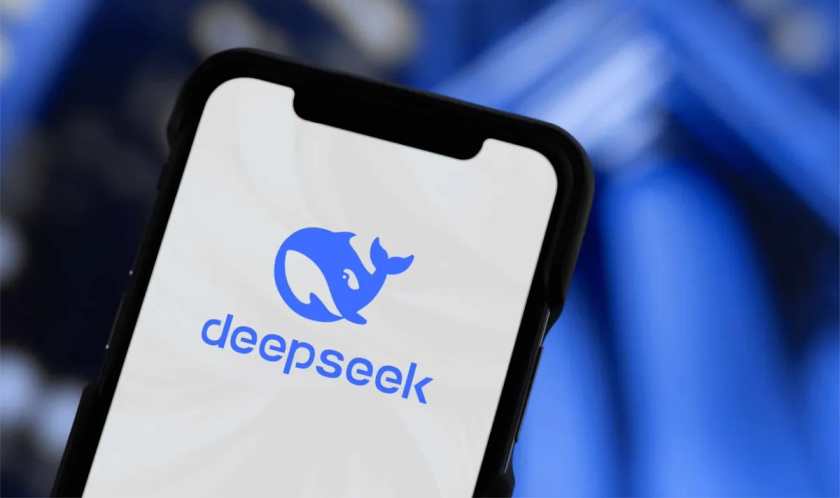
Chinese AI startup DeepSeek has raised approximately $15 billion in a massive funding round backed by some of China’s biggest technology and industrial companies, giving the Hangzhou-based AI company fresh financial muscle to challenge U.S. rivals OpenAI and Anthropic. The fundraising, one of the largest in China’s AI sector, comes as the company prepares for a potential initial public offering.
The news comes just over two weeks after Bloomberg reported on October 6 that DeepSeek was close to securing at least 80 billion yuan ($12 billion), already surpassing its original 50 billion yuan fundraising target. Sources said the round could reach 100 billion yuan ($15 billion) ahead of a potential IPO in early 2027. The latest figures suggest the company is now on track to reach that higher amount.
The company secured roughly 100 billion yuan ($14.98 billion) from more than 15 investors, including Tencent, battery giant Contemporary Amperex Technology (CATL), automaker Geely, chipmaker GigaDevice, and food delivery company Meituan, according to a Reuters report, citing four people familiar with the matter.
The latest funding round values DeepSeek at approximately 500 billion yuan ($74 billion) before the new capital is added, potentially bringing its post-money valuation to nearly $89 billion. The final terms and investor commitments could still change before the transaction closes in the coming days.
The investment size is significant. DeepSeek initially sought 50 billion yuan, roughly $7.5 billion, but investor demand pushed the total to twice that amount. The result signals how aggressively China’s largest corporations are backing domestic AI development as the country races to reduce its dependence on American technology.
China’s biggest corporations are betting on DeepSeek
The investor lineup reads more like a cross-section of China’s industrial economy than a conventional startup funding round.
Tencent, the company behind WeChat, and CATL, one of the world’s largest electric vehicle battery manufacturers, were among the biggest contributors. Both were existing shareholders.
Other participants included appliance manufacturer Midea, gaming and internet company NetEase, private equity firm Boyu Capital, CPE, Legend Capital, and IDG Capital. Geely and GigaDevice brought additional automotive and semiconductor expertise to the investor group.
That mix matters. AI development increasingly depends on access to advanced chips, computing infrastructure, electricity, and industrial partnerships. DeepSeek’s backers operate across several of those sectors, giving the company relationships that could extend far beyond financial support.
“It’s encouraging to see such a high valuation for DeepSeek, showing the confidence from investors on the future of its open-source strategies,” chief analyst at research firm Omdia Lian Jye Su told Reuters.
“Given that they (the investors) are all Chinese and critical component supply chain vendors, I can see DeepSeek itself becoming a key part of these domestic tech supply chains,” Su added.
The fundraising follows DeepSeek’s $7.4 billion inaugural external funding round in June. Investor filings in July indicated a valuation of approximately 350.88 billion yuan, or $52 billion, at the time. Its latest reported pre-money valuation represents a substantial increase in just four months.
DeepSeek has gained international attention for developing competitive AI models at costs that challenged assumptions about how much money companies need to spend to compete with leading American AI labs.
The company released DeepSeek-V4.1-Flash in September, promoting improvements in inference speed, throughput, model capabilities, and scalability. It has pursued closer integration with China’s domestic computing ecosystem, including work involving Huawei’s Ascend AI chips.
A $15 billion bet amid growing fears of an AI spending bubble
DeepSeek’s enormous fundraising arrives at an unusual moment for the global AI industry.
Investors have become increasingly nervous about the extraordinary sums flowing into AI infrastructure, particularly the cost of building data centers and acquiring specialized processors. Those concerns have contributed to recent technology stock selloffs and weaker demand for some AI-related public offerings.
Chinese AI developers have experienced that pressure firsthand. Shares of Hong Kong-listed AI companies Z.AI and MiniMax have fallen sharply from their earlier peaks, raising questions about how public investors will value AI businesses that require substantial spending to compete.
DeepSeek appears to be moving in the opposite direction, attracting more private capital despite those concerns.
The company is preparing for a possible public listing. Reuters reported in September that DeepSeek had hired CITIC Securities to advise on a potential IPO on Shanghai’s STAR Market, a stock exchange venue focused on science and technology companies.
DeepSeek has not announced a final IPO date, offering size, or public valuation.
The latest financing could give DeepSeek additional room to develop AI models, expand computing capacity, and strengthen its position against better-funded international competitors before entering public markets.
For China, the implications extend beyond one company’s balance sheet.
DeepSeek is emerging as a focal point for a domestic AI industry seeking greater independence from foreign chips, cloud infrastructure, and proprietary AI systems. The participation of major Chinese corporations suggests they increasingly view domestic AI development as a long-term industrial priority rather than a short-term investment opportunity.
The bigger question is whether $15 billion in new funding can help DeepSeek turn its technical achievements into a sustainable business that can compete with the world’s leading AI companies.
That test is still ahead.

DeepSeek Founder (Image credit: South China Morning Post)