Startup Funding News Today, September 16, 2026: Anew Labs, CADDi, Space Epoch, TypeSafe AI & More
 Nickie Louise
Posted On September 16, 2026

Venture capital is getting more physical, more specialized, and more willing to finance the infrastructure around artificial intelligence. The 10 most important freshly announced rounds in the latest 16-hour window span AI drug discovery, manufacturing intelligence, robotaxis, reusable rockets, autonomous scientific research, industrial world models, semiconductor equipment, composable AI, supply-chain software, and advanced materials.
The selected companies disclosed $471 million in explicitly dollar-denominated new capital across Anew Labs, Hello Robotaxi, Noetive, and TypeSafe AI; ¥17.7 billion for CADDi; nearly RMB1.05 billion across Apex Intelligence, Fuller Technology, and Jinjing Technology; and a £22.7 million mixed financing package for iGii. Space Epoch separately said its Series B financings over the past six months have exceeded RMB2.3 billion, though the company did not disclose the size of today’s B++ tranche.
Seven of the 10 companies are directly AI-led or AI-enabled. But the more revealing pattern is what investors are paying for around AI: proprietary scientific IP, manufacturing data, real-world driving data, industrial control, semiconductor equipment, compute-intensive research, and software architecture built for machine-to-machine intelligence.
China is unusually prominent, accounting for six of today’s selected companies, with Japan, the United States, and the United Kingdom making up the rest. Some of that concentration reflects the timing of the funding cycle, but the sector mix is still notable: Chinese capital is simultaneously financing AI science, autonomous mobility, commercial space, semiconductor equipment, and industrial software.
The Macro Environment: AI Capital Is Getting More Physical, and More Specialized
Today’s funding cycle is a useful counterpoint to the giant foundation-model rounds that have defined much of 2026. Investors are still financing AI aggressively, but the money is spreading into companies that control domain-specific data, physical infrastructure, specialized architectures, and the systems through which intelligence reaches the real economy.
CADDi and Fuller Technology are good examples. Neither needs to build a frontier foundation model. Their advantage comes from knowing how manufacturers and logistics operators actually work: drawings, specifications, procurement histories, warehouse processes, transportation data, production decisions, and years of enterprise integrations. As general-purpose models improve, that operational context becomes more valuable, not less. CADDi explicitly argues that manufacturing data is too fragmented and specialized for generic AI alone; its new Series D will fund the expansion of an AI data platform designed around those workflows.
Physical AI is taking several forms at once. Hello Robotaxi is financing compute clusters, end-to-end autonomous-driving models, and data pipelines for L4 vehicles. Noetive is building a world model around manufacturing, logistics, and construction. Space Epoch is pouring capital into the very different problem of making large rockets reusable. These businesses ultimately have to prove themselves against miles driven, factory throughput, launch success, reliability, and unit economics—not chatbot benchmarks.
Early-stage risk tolerance is also remarkable. Apex Intelligence has raised nearly RMB400 million only months after its founding to pursue recursively self-improving AI research. TypeSafe AI emerged from stealth with a $40 million seed round to build models designed as machine-readable software components rather than conversational assistants. Noetive raised $41 million at seed before the category it is pursuing—industrial world models—has an established market leader.
Finally, strategic and public capital is increasingly intertwined with conventional venture money. A Shanghai state-backed fund led Hello Robotaxi’s round. CADDi brought in Woven Capital and Salesforce Ventures. Apex attracted three state-linked or regional funds in its Angel+ round. iGii paired £11.7 million of private Series B equity with £11 million from Scottish Enterprise. That mix makes sense when startups move from software into factories, mobility, materials, aerospace, and scientific infrastructure, where commercialization takes longer and often depends on industrial ecosystems as much as product-market fit.
Anew Labs raises $290M to turn ByteDance’s AI drug unit into a standalone biotech
Shanghai-based Anew Labs has completed a $290 million inaugural external financing at a $1.5 billion valuation, Reuters reported, citing two people familiar with the transaction. HSG (formerly Sequoia China), IDG Capital, and Hillhouse Investment led the financing, with 5Y Capital as a co-lead. Gaorong Ventures, Primavera Venture Partners, Boyu Capital, SBP Group, and the state-backed Shanghai Future Industries Fund also participated.
The round is especially interesting because it follows ByteDance’s decision to spin the AI drug-discovery operation out of the broader internet group. ByteDance will retain a 56% stake after the financing, Reuters reported.
That structure gives Anew something many corporate AI projects never receive: a dedicated capitalization table, external investors, and a governance structure built around the economics and timelines of drug development rather than those of a consumer internet company.
The $1.5 billion valuation shows investors are assigning substantial value to the scientific team, technology, and intellectual property before the company has become a conventional standalone biotech business. But the hard test will come outside the AI system. Drug-discovery models ultimately have to generate molecules that survive toxicology, clinical trials, regulators, and competition from existing therapies.
There is also an important sourcing caveat: ByteDance and the investors have not publicly announced the fundraising. Reuters’ sources disclosed the completed transaction, and the parties did not respond to its requests for comment.
Funding Details
Startup: Anew Labs
Investors: HSG, IDG Capital, Hillhouse Investment, 5Y Capital, Gaorong Ventures, Primavera Venture Partners, Boyu Capital, SBP Group, Shanghai Future Industries Fund
Amount Raised: $290 million
Total Raised: $290 million in disclosed external funding
Funding Stage: Inaugural external financing; formal round label not disclosed
Funding Date: September 16, 2026
Headquarters: Shanghai, China
Sector: AI biotechnology/drug discovery
Valuation: $1.5 billion
CADDi raises ¥17.7B to build an AI data layer for global manufacturing
Tokyo-based CADDi raised ¥17.7 billion in Series D funding, taking cumulative equity financing to ¥36.31 billion and valuing the company at ¥182 billion. New investors include Moore Strategic Ventures, Coreline Ventures, Recruit’s HR Tech Fund, Toyota-backed Woven Capital, and Salesforce Ventures. Atomico, Globis Capital Partners, and Japan Post Asset Management-linked funds also participated.
CADDi has undergone a substantial strategic evolution. It originally built a procurement platform for manufactured parts but has since folded that business into a broader AI and data platform for manufacturing companies.
Its thesis is that much of the most valuable industrial knowledge sits inside fragmented drawings, specifications, project records, purchasing histories, and production systems. CADDi uses AI to structure and connect that information so engineers, procurement teams, production staff, and AI agents can work from a shared context.
The new funding will support proprietary AI development, expansion of the CADDi manufacturing data platform, international growth—particularly in North America—and hiring. CADDi says its software is deployed across 22 countries and used by more than half of the discrete-manufacturing companies in Japan’s Nikkei 225. The company provides those adoption figures.
The investment case illustrates an increasingly important vertical-AI principle: the model is replaceable; decades of engineering context are not. A new entrant can license similar foundation models, but reproducing the accumulated relationships among engineering drawings, supplier decisions, quality problems, production histories, and expert knowledge inside a factory is much harder.
Funding Details
Startup: CADDi
Investors: Moore Strategic Ventures, Coreline Ventures, HR Tech Fund, Woven Capital, Salesforce Ventures, Atomico, Globis Capital Partners, Japan Post Asset Management-linked funds
Amount Raised: ¥17.7 billion
Total Raised: ¥36.31 billion in cumulative equity funding
Funding Stage: Series D
Funding Date: September 16, 2026
Headquarters: Tokyo, Japan
Sector: Manufacturing AI / industrial data/enterprise software
Valuation: ¥182 billion
Hello Robotaxi raises about $100M at a valuation near $3B
Shanghai-based Hello Robotaxi, operated by Shanghai Zaofu Intelligence Technology, raised approximately $100 million in fresh funding, led by Shanghai Guotou’s Pioneer Fund, with Minjin Investment and Genesis Capital participating. The financing values the business at nearly $3 billion post-money.
The company formed in June 2025 through entities connected to mobility company Hello, Ant Group, and CATL to develop and commercialize Level 4 autonomous-driving technology. Alibaba subsequently made a strategic investment.
What makes this round worth watching is where the money is going. Hello Robotaxi plans to invest in a 10,000-GPU-scale computing platform, end-to-end autonomous-driving models, and a higher-quality data supply chain. Its first internally developed Robotaxi model, HR1, entered mass-production delivery this summer, according to Chinese reports.
That capital allocation shows how autonomous driving is converging with the broader AI infrastructure race. Robotaxi economics are not determined only by vehicles or sensors. Companies need enormous compute resources and continuous streams of real-world data to train, test, and improve driving systems.
The investor mix is also strategic. State-backed capital sits alongside an ecosystem that already includes Ant, CATL, Alibaba, and a mobility operator. If Hello Robotaxi is going to scale fleets rather than simply demonstrate autonomous driving, access to capital, vehicles, batteries, cloud infrastructure, mapping, regulators, and operating markets all matter.
Funding Details
Startup: Hello Robotaxi / Shanghai Zaofu Intelligence Technology
Investors: Shanghai Guotou Pioneer Fund, Minjin Investment, Genesis Capital
Amount Raised: Approximately $100 million
Total Raised: Not disclosed
Funding Stage: Not disclosed
Funding Date: September 16, 2026
Headquarters: Shanghai, China
Sector: Autonomous driving / Robotaxi / physical AI
Valuation: Nearly $3 billion post-money
Space Epoch raises fresh B++ funding to push reusable rockets toward orbit
Beijing-based Space Epoch has completed a Series B++ financing, bringing its total Series B capital raised over roughly the past six months to more than RMB2.3 billion. The company did not disclose how much of that total came from the newest B++ tranche, an important distinction when comparing today’s rounds.
The wider B-series investor group includes IDG Capital, Chaos Investment, Hangzhou Capital, Songyuan Venture Capital, Heda Investment, Linglan Capital, Huafu Capital, Addor Capital, and others, with existing investors continuing to participate.
Space Epoch is building Yuanxingzhe-1, a large stainless-steel, liquid-oxygen-and-methane reusable launch vehicle. Funding from the latest tranche will support its first orbital mission, first-stage recovery validation, commercial delivery capabilities, and engineering work around tower-based vehicle capture.
The company’s next milestone is brutally simple compared with an AI benchmark: the rocket has to fly.
Space Epoch says Yuanxingzhe-1 should be ready for its first flight by the end of 2026, when it plans to attempt an orbital launch and first-stage recovery. The company targets commercial launch services for 2027. Those dates remain company targets, not completed milestones.
The financing illustrates why commercial space increasingly resembles infrastructure investing. Reusable launch requires years of engineering expenditure before recurring revenue appears, but success can create a strategic transportation platform with substantial barriers to entry.
Funding Details
Startup: Space Epoch
Investors: IDG Capital, Chaos Investment, Hangzhou Capital, Songyuan Venture Capital, Heda Investment, Linglan Capital, Huafu Capital, Addor Capital and others
Amount Raised: Latest B++ tranche not disclosed; Series B funding over the past six months exceeds RMB 2.3 billion
Total Raised: Not fully disclosed
Funding Stage: Series B++
Funding Date: September 16, 2026
Headquarters: Beijing, China
Sector: Space technology / reusable launch
Valuation: Not disclosed; company says it has reached unicorn status
Apex Intelligence raises nearly RMB400M to build AI that researches and improves AI
Chinese AI startup Apex Intelligence raised nearly RMB400 million across Angel and Angel+ financings, less than three months after its founding in June 2026. IDG Capital, Starlink Capital, and XtalPi co-led the Angel round, with Deshun Capital, Infinity Fund, Chuxin Capital, and Yunxiu Capital participating. Zhongguancun Science City Fund, Shenzhen Capital Group, and Shanghai Future Industry Fund co-led the Angel+ financing.
Founder Chen Yongchao, a 27-year-old assistant professor at Tsinghua University’s Institute for Artificial Intelligence, is pursuing recursive self-improvement, or RSI: AI systems that contribute to the research required to improve AI itself.
Apex says its research system can move from an initial idea through method design, code generation, experiments, and paper writing. It is also involved in ASI-Bench, an effort to evaluate whether AI can perform scientific research with less human methodological guidance. These remain research claims and benchmarks, not proof of a sustainable commercial business.
That is precisely what makes the financing remarkable. Investors are funding talent, compute, architecture, and a scientific thesis before a conventional enterprise market has clearly formed.
The round therefore represents one of today’s purest conviction bets. If AI can meaningfully automate parts of AI research itself, the economic impact could be enormous. If the systems remain advanced research assistants rather than autonomous researchers, the eventual market may look very different from the thesis being financed today.
Funding Details
Startup: Apex Intelligence
Investors: IDG Capital, Starlink Capital, XtalPi, Deshun Capital, Infinity Fund, Chuxin Capital, Yunxiu Capital, Zhongguancun Science City Fund, Shenzhen Capital Group, Shanghai Future Industry Fund
Amount Raised: Nearly RMB 400 million
Total Raised: Nearly RMB 400 million disclosed
Funding Stage: Angel and Angel+
Funding Date: September 16, 2026
Headquarters: China; exact corporate headquarters not disclosed in the financing report
Sector: Foundation models / AI for science / autonomous research
Valuation: Not disclosed
Fuller Technology raises RMB350M to bring AI deeper into supply-chain operations
Shanghai-based Fuller Technology raised RMB350 million in Series B funding led by Shenzhen Capital Group, with Matrix Partners China, SINOMACH Industry Fund, Kunshan Venture Capital, BOCOM Capital, and Manshi Capital participating. The company previously raised RMB300 million in 2024.
Fuller builds warehouse management, transportation management, supply-chain collaboration, and logistics software. The company says it serves more than 1,300 large and midsized enterprises across more than 20 industries, including over 300 listed companies, and operates across 27 countries. Those are company-reported figures.
Its AI strategy is deliberately embedded, not standalone. Fuller is putting AI across its FLUX product suite and developing LUMA agents for warehousing, transport, and supply-chain scheduling.
This is an important category because supply-chain software sits close to physical execution. An AI system that changes warehouse priorities, transportation schedules, or inventory flows can affect labor costs, delivery times, equipment utilization, and working capital.
The company’s age and existing customer base also make the investment different from a speculative AI seed. Investors are financing the insertion of AI into an established enterprise-software distribution channel rather than asking customers to adopt an entirely new category.
Funding Details
Startup: Fuller Technology
Investors: Shenzhen Capital Group, Matrix Partners China, SINOMACH Industry Fund, Kunshan Venture Capital, BOCOM Capital, Manshi Capital
Amount Raised: RMB 350 million
Total Raised: At least RMB650 million across its disclosed 2024 and 2026 rounds
Funding Stage: Series B
Funding Date: September 16, 2026
Headquarters: Shanghai, China
Sector: Supply-chain software/logistics/enterprise AI
Valuation: Not disclosed
Jinjing Technology raises RMB300M to scale electron-beam lithography and microscopy systems
Beijing-based Jinjing Technology, also known as Goldenscope Tech, raised RMB300 million in Series B financing. Existing investor Kangyu Capital and Fujiang Capital led the round, with Transfar Group, CITIC Goldstone, and investor Xiang Guanglong also participating. It is the company’s second financing this year after a Pre-B round.
Jinjing builds electron-beam lithography systems, electron microscopes, and related electron-optics equipment used in semiconductor research, quantum devices, micro- and nanofabrication, and advanced materials research.
The funding will go toward mass-production lines, expanded sales and service infrastructure, hiring, and next-generation products.
That matters because scientific and semiconductor equipment is one of the least glamorous but most strategically important parts of the chip ecosystem. Building a chip design company is impossible without tools that can fabricate and inspect structures at extremely small dimensions.
Jinjing says it has already delivered its Pharos 310 electron-beam lithography equipment to Chinese universities and research institutions. The company also plans to begin mass-producing a domestically developed electron microscope. Those commercialization claims come from the company and associated funding reports.
The investment case is therefore less about AI directly than about technological sovereignty. Semiconductor and quantum research depend heavily on specialized scientific instruments, and restrictions or supply concentration can make domestic alternatives strategically valuable even before they achieve the scale of incumbent global suppliers.
Funding Details
Startup: Jinjing Technology / Goldenscope Tech
Investors: Kangyu Capital, Fujiang Capital, Transfar Group, CITIC Goldstone, Xiang Guanglong
Amount Raised: RMB 300 million
Total Raised: Not disclosed
Funding Stage: Series B
Funding Date: September 16, 2026
Headquarters: Beijing, China
Sector: Semiconductor equipment / scientific instruments/electron optics
Valuation: Not disclosed
Noetive raises $41M to bring world models into factories and logistics
Noetive raised $41 million in seed funding led by Eclipse, with Craft Ventures, Westly Group, Meta CTO Andrew Bosworth, Airbnb CTO Ahmed Al-Dahle, and other investors participating. Former Meta generative-AI executive Amir Frenkel and former Netlify product executive Dan Barak founded the startup.
Noetive is building an industrial world model intended to understand the spatial and operational behavior of factories, logistics sites, construction environments, and other physical businesses.
That puts it in a very different category from language-first enterprise AI. Industrial operations involve equipment constraints, production sequencing, space, time, labor, legacy software, and real-world events that text alone cannot reliably infer.
Noetive is also developing a universal sensing pod to feed real-time physical data into the system. One early customer, Steuben Foods, told The Wall Street Journal that Noetive’s software could increase capacity on an existing production line by 10% to 15%. That is an early customer estimate, not independently verified performance.
The economic proposition is compelling because industrial AI does not need to replace an entire workforce to matter. A few percentage points of additional throughput from a multimillion-dollar production line can be worth far more than the software required to achieve it.
Funding Details
Startup: Noetive
Investors: Eclipse, Craft Ventures, Westly Group, Andrew Bosworth, Ahmed Al-Dahle and others
Amount Raised: $41 million
Total Raised: $41 million disclosed
Funding Stage: Seed
Funding Date: September 16, 2026
Headquarters: Not disclosed
Sector: Industrial AI/world models / physical industries
Valuation: Not disclosed
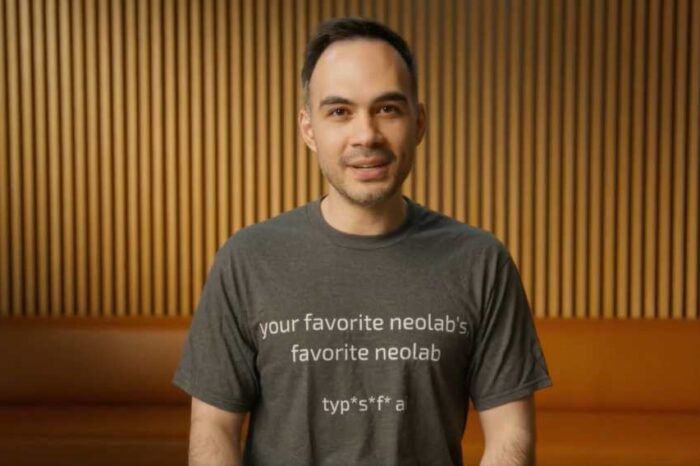
TypeSafe AI raises $40M to make AI a software primitive instead of a chatbot

San Francisco-based TypeSafe AI emerged from stealth with $40 million in seed funding led by DCVC. Former OpenAI researcher Diogo Almeida, Erik Gafni, and Sasha Sheng founded the company in 2024. It announced the financing at 3:00 p.m. ET on September 15, placing it just inside today’s strict funding window.
TypeSafe is pursuing a different architecture from conversational frontier models.
Its first model, Jev, is meant to operate inside software systems that need frequent semantic decisions: classification, routing, scoring, extraction, or decisions that can be passed directly to deterministic code.
The thesis is important because a model that writes an excellent essay is not necessarily ideal for software that must make millions of tiny decisions cheaply and predictably. Latency, confidence calibration, consistency, and cost may matter more than conversational fluency.
TypeSafe claims Jev can operate below 100 milliseconds and at substantially lower cost than large frontier models. Those performance figures are company claims and have not been independently validated.
The $40 million seed round shows investors are willing to fund alternative model architectures even as access to large foundation models becomes easier. The bet is that the AI market ultimately supports multiple model classes optimized for very different kinds of computation.
Funding Details
Startup: TypeSafe AI
Investors: DCVC
Amount Raised: $40 million
Total Raised: Approximately $40 million
Funding Stage: Seed
Funding Date: September 15, 2026
Headquarters: San Francisco, California
Sector: AI infrastructure / machine-native models/developer technology
Valuation: Not disclosed
iGii raises £11.7M Series B plus £11M in public funding to commercialize a new carbon material
Stirling-based advanced-materials company iGii secured a £22.7 million financing package, consisting of a £11.7 million Series B equity round led by the Scottish National Investment Bank and £11 million from Scottish Enterprise. PXN Ventures and Archangels also backed the equity round.
That distinction matters: the full £22.7 million should not be described as venture equity.
iGii has developed Gii, a proprietary three-dimensional porous carbon nanomaterial produced at room temperature. The company is targeting applications including sensors, microheaters, and flexible printed battery electrodes.
Advanced materials have difficult commercialization economics. A material can show impressive laboratory performance and still fail because manufacturers cannot qualify it, produce it consistently, integrate it into existing processes, or justify changing supply chains.
iGii says it has already built manufacturing capability at industrial volumes. The new capital will push commercial adoption and work with large manufacturers, moving the company from scientific validation toward qualification and long-term production relationships.
The public-private financing structure matches that risk. Patient government capital can help fund industrial scaling and technology qualification, while venture equity absorbs the commercial and company-building risk.
Funding Details
Startup: iGii
Investors: Scottish National Investment Bank, PXN Ventures, Archangels; Scottish Enterprise providing public funding
Amount Raised: £11.7 million Series B equity plus £11 million from Scottish Enterprise; £22.7 million total package
Total Raised: Not disclosed
Funding Stage: Series B plus public funding
Funding Date: September 16, 2026
Headquarters: Stirling, Scotland
Sector: Advanced materials/nanotechnology
Valuation: Not disclosed
What Today’s Funding Activity Reveals
The first pattern is venture capital shifting from generic AI access to proprietary context.
CADDi owns manufacturing context. Fuller owns warehouse and logistics workflows. Noetive wants a model of the physical behavior inside industrial sites. Hello Robotaxi is accumulating autonomous-driving data. Anew Labs is being valued around scientific teams, IP, and drug-discovery capability. These assets do not become irrelevant because next year’s foundation model gets smarter.
Second, physical AI is much broader than humanoid robotics. Robotaxis are physical AI. Factory world models are physical AI. Automated warehouses are physical AI. The same investment logic also reaches Space Epoch, where software, sensing, controls, propulsion, materials, and enormous physical systems have to operate together.
Third, seed rounds are getting unusually large, where investors believe architecture itself may matter. TypeSafe’s $40 million seed and Noetive’s $41 million seed would have been considered growth-stage check sizes in many software categories a decade ago. Apex has raised nearly RMB400 million at the angel stage. In each case, investors are financing expensive technical teams and compute before conventional commercial proof is fully visible.
Fourth, today’s China concentration deserves attention without overinterpreting a single overnight window. Six of the 10 selected companies are Chinese. They span AI biotech, autonomous driving, commercial space, foundation models, supply-chain software, and semiconductor equipment. The breadth matters more than the raw count: private venture firms, corporate investors, regional funds, and state-linked capital are all financing strategic technologies at the same time.
Fifth, industrial AI is developing around measurable economics. If Noetive adds factory throughput, CADDi reduces manufacturing errors or lead times, Fuller improves logistics utilization, or Hello Robotaxi lowers the cost per autonomous mile, customers can compare software spending with existing P&L lines. That is fundamentally different from selling an AI assistant on the promise of generalized productivity.
Sixth, capital structures are changing as the technologies get harder. Space Epoch needs aerospace-scale engineering capital. Jinjing needs production equipment and service infrastructure. iGii combines public and private money. The financing strategies increasingly resemble those of industrial technology companies rather than traditional SaaS startups.
Valuations also show where conviction is highest. Anew Labs has already reached $1.5 billion through its first external financing. Hello Robotaxi is approaching $3 billion. CADDi is valued at ¥182 billion. Those investors are pricing more than software: they are paying for scientific capability, accumulated data, strategic relationships, and positions inside industries that are difficult to enter.
Startup Funding Table
| Startup | Amount Raised | Sector | Funding Stage | Lead/Key Investors | Country |
|---|---|---|---|---|---|
| Anew Labs | $290M | AI biotech/drug discovery | Inaugural external financing | HSG, IDG Capital, Hillhouse, 5Y Capital | China |
| CADDi | ¥17.7B | Manufacturing AI / industrial data | Series D | Moore Strategic Ventures, Coreline, Woven Capital, Salesforce Ventures + others | Japan |
| Hello Robotaxi | ~$100M | Autonomous driving / Robotaxi | Not disclosed | Shanghai Guotou Pioneer Fund, Minjin, Genesis Capital | China |
| Space Epoch | B++ amount not disclosed; B-series >RMB2.3B in six months | Reusable launch/space | Series B++ | IDG Capital, Chaos Investment, Hangzhou Capital, Songyuan + others | China |
| Apex Intelligence | ~RMB400M combined | Foundation AI / AI for science | Angel + Angel+ | IDG, Starlink, XtalPi, Shenzhen Capital, Shanghai Future Industry Fund + others | China |
| Fuller Technology | RMB350M | Supply-chain software/enterprise AI | Series B | Shenzhen Capital, Matrix China, SINOMACH Industry Fund + others | China |
| Jinjing Technology | RMB300M | Semiconductor equipment/electron optics | Series B | Kangyu Capital, Fujiang Capital, Transfar, CITIC Goldstone | China |
| Noetive | $41M | Industrial AI/world models | Seed | Eclipse, Craft Ventures, Westly Group | United States |
| TypeSafe AI | $40M | AI infrastructure / composable models | Seed | DCVC | United States |
| iGii | £11.7M equity + £11M public funding | Advanced materials/nanotechnology | Series B + public support | Scottish National Investment Bank, PXN, Archangels, Scottish Enterprise | United Kingdom |
Strategic Takeaways for Founders and Investors
Own the context around the model. CADDi’s manufacturing data, Fuller’s logistics workflows, and Noetive’s industrial operating context illustrate where defensibility is moving. If model APIs become cheaper every year, proprietary information about how customers actually work becomes more valuable.
Physical AI does not begin and end with humanoids. Hello Robotaxi and Noetive show two very different paths: put intelligence directly into an autonomous vehicle or build a world model around existing industrial assets. The common denominator is a closed loop between sensing, decision-making, and action.
Large seed rounds require architectural conviction. Investors are giving TypeSafe, Noetive, and Apex unusually large early checks because they believe each is pursuing a technical architecture that could define a category. That can create enormous upside, but the capital also raises the performance bar very early.
Industrial founders should optimize for measurable economics, not AI novelty. A factory manager cares about throughput, downtime, defect rates, labor requirements, and inventory. A logistics operator cares about cost per shipment and service levels. Products that tie AI directly to those metrics should have stronger pricing power than those selling an abstract promise of intelligence.
Strategic investors matter more as technology moves into physical industries. Woven Capital brings manufacturing context to CADDi. State-linked capital can help Hello Robotaxi and Space Epoch operate inside infrastructure-heavy markets. Scottish Enterprise can support iGii through long qualification cycles. In these sectors, the best investor may be the one that removes an operating constraint, not simply the one with the most prestigious venture brand.
AI for science eventually has to leave the benchmark. Anew Labs and Apex Intelligence both represent enormous ambitions around machine-assisted discovery. But the final evidence will come from drug candidates, experiments, published discoveries, reproducibility, and eventually commercial outcomes—not from model demonstrations alone.
Deep-tech financing should follow engineering milestones. Space Epoch’s next value inflection is an orbital flight and recovery attempt. Jinjing must prove reliable manufacturing and service at greater scale. iGii must secure repeat industrial adoption. In deep tech, another fundraising round does not remove technical risk; successful deployment does.
Conclusion
Today’s funding cycle shows AI capital moving deeper into the economy.
Anew Labs is separating from ByteDance with $290 million to build an independent AI-biotech company. CADDi is raising ¥17.7 billion to turn decades of manufacturing knowledge into an AI-accessible data layer. Hello Robotaxi is spending heavily on compute, driving models, and data. Noetive is building world models for factories. TypeSafe wants intelligence to disappear inside software itself. Space Epoch, Jinjing, and iGii are financing technologies whose success ultimately depends on rockets, precision equipment, and materials behaving correctly in the physical world.
The premium is shifting toward companies that own something intelligence alone cannot cheaply reproduce: scientific IP, domain data, real-world control loops, manufacturing capability, specialized hardware, institutional relationships, and accumulated operating context.
Models are becoming more capable and more widely available. Context, control, and physical execution remain scarce. Today’s venture dollars increasingly price in that difference.