Biotech startup Neomorph raises $100M to crack the ‘undruggable’ protein problem with molecular glue technology
 Daniel Levi
Posted On April 13, 2026
Daniel Levi
Posted On April 13, 2026
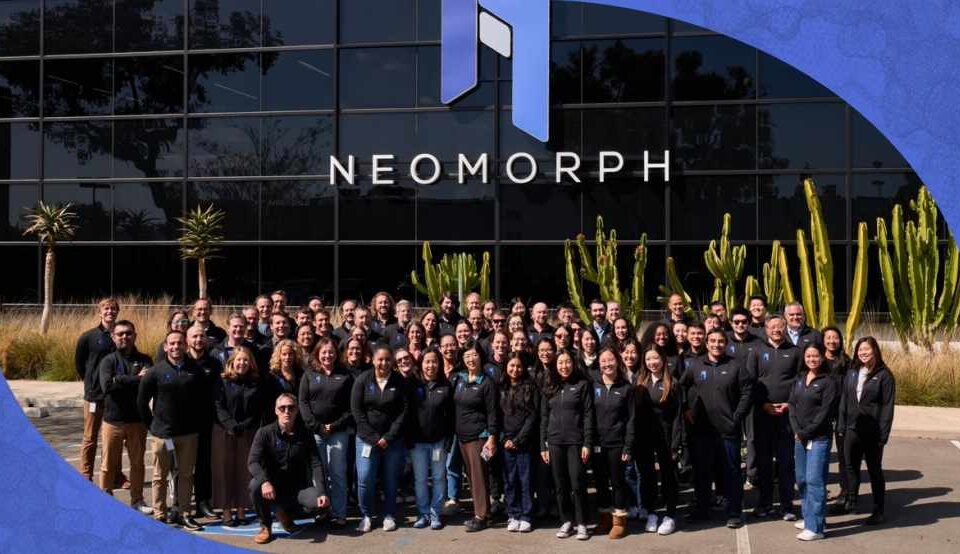
For decades, drug discovery has run into the same wall: a large share of disease-driving proteins simply couldn’t be targeted with traditional therapies. Neomorph thinks that the wall is starting to crack—and investors are betting $100 million on it.
The San Diego–based biotech startup said it has closed a $100 million Series B round led by Deerfield Management, with backing from Regeneron Ventures, Longwood Fund, Alexandria Venture Investments, and Binney Street Capital of Dana-Farber Cancer Institute, among others. The raise brings fresh momentum to a company built around a single idea: if you can’t inhibit a harmful protein, you might be able to eliminate it entirely.
“This financing is a testament to the science, strategy, and team we have built at Neomorph, and it provides us with the capital to execute on our most important near-term priorities,” said Phil Chamberlain, D.Phil., Co-Founder, President, and Chief Executive Officer of Neomorph. “We remain focused on executing the Phase 1/2 trial of NEO-811 to generate clinical data that will inform continued development, while advancing a broader pipeline of novel molecular glue degraders against targets that have historically been considered undruggable. We are delighted to welcome new partners and grateful for the continued support of our founding investor, Deerfield. We look forward to working together to deliver innovative medicines for patients with significant unmet need.”
At the center of Neomorph’s approach is a class of therapies known as molecular glue degraders. Instead of blocking a protein’s activity, these compounds bring two proteins together—one being the disease target, the other part of the cell’s natural disposal system. The result is simple in concept: the unwanted protein gets marked and broken down.
The $100M Bet on the ‘Undruggable’: Neomorph Pushes Molecular Glue Drugs Into the Clinic
That shift matters. Many proteins linked to cancer and other serious diseases have resisted decades of drug development. By redirecting the body’s own machinery, molecular glues offer a different path—one that could broaden the range of targets scientists can pursue.
The new funding will advance Neomorph’s lead program, NEO-811, which is now in a first-in-human Phase 1/2 trial. The study is evaluating safety, dosing, and early signals of anti-tumor activity in patients with advanced clear cell renal cell carcinoma, a form of kidney cancer that often proves difficult to treat at later stages. The capital will support that trial and help expand a broader pipeline that spans multiple disease areas.
Investors backing the round are leaning into both the science and the platform behind it.
“We believe that Neomorph has built a differentiated platform with the scientific depth to systematically access a vast new target space, as well as a team with the expertise to translate key findings into compelling drug candidates,” said Cam Wheeler, Ph.D., Partner at Deerfield Management and Chair of Neomorph’s board of directors. “Additionally, the confidence of leading global pharmaceutical companies, including Novo Nordisk, Biogen, and AbbVie, who have partnered with Neomorph across cardiometabolic disease, rare disease, neurology, oncology, and immunology, speaks to the versatility of this platform and provides multiple potential paths to validation. We are proud to continue supporting Neomorph as the company advances its molecular glue technology through clinical trials and works to redefine the universe of therapeutic targets available to physicians and patients.”
That list of partners signals something else: large pharma is paying close attention. Companies like Novo Nordisk, Biogen, and AbbVie don’t partner early without seeing a credible path forward. Their involvement gives Neomorph multiple opportunities for validation across therapeutic areas, from oncology to rare diseases.
Founded in 2020, Neomorph is still early in its clinical journey. The coming readouts from NEO-811 will carry weight, offering the first real look at how its approach performs in patients. Positive signals could push molecular glue degraders further into the spotlight, a space that has gained traction in recent years as researchers search for ways to target long-considered-out-of-reach proteins.
For now, the company has time, capital, and a growing set of partners. The next chapter will be written in the clinic, where the promise of turning “undruggable” proteins into viable targets faces its toughest test yet.
Trending Now
Top Tech News Today, March 25, 2026