Amazon in talks to buy Globalstar in $9B deal to rival Elon Musk’s Starlink as satellite internet race heats up
 Daniel Levi
Posted On April 2, 2026
Daniel Levi
Posted On April 2, 2026
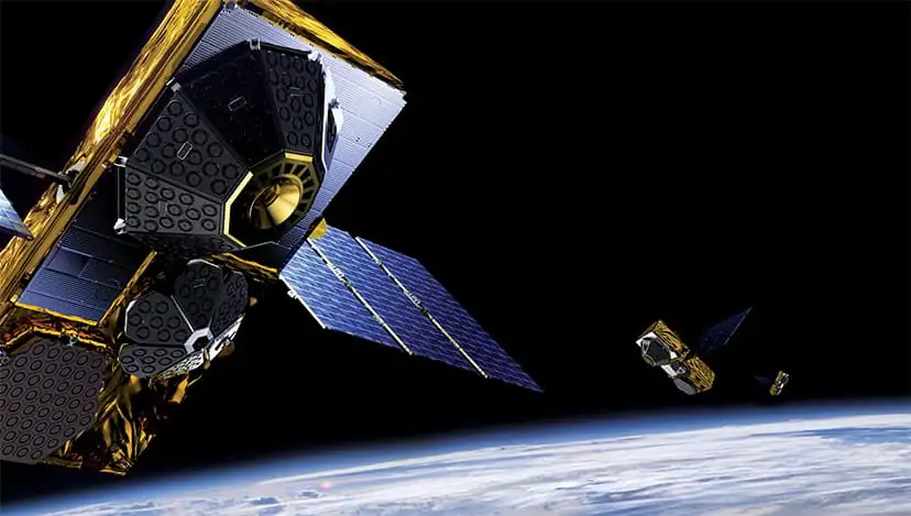
Amazon is making a serious move in the race to bring the internet from space. The company is in talks to acquire Globalstar, a satellite communications firm, in a deal valued at around $9 billion, according to a Financial Times report citing people familiar with the discussions.
If it goes through, the acquisition would mark one of Amazon’s biggest bets yet on low Earth orbit satellite infrastructure—and a direct challenge to Elon Musk’s Starlink. “Amazon in talks to buy $9bn satellite group Globalstar in bid to rival Musk’s Starlink. The e-commerce giant is trying to catch up with SpaceX’s low Earth orbit internet service,” The Financial Times reported.
Investors reacted quickly. Globalstar’s stock jumped sharply in premarket trading, rising more than 12%, after already gaining momentum over the past year, according to a CNBC report. Amazon shares dipped slightly.
Globalstar, based in Covington, Louisiana, operates a network of low Earth orbit satellites that support voice, data, and asset tracking across enterprise, government, and consumer use cases. Its market cap stood at $8.81 billion at the last close, putting the reported deal size roughly in line with its current valuation.
The talks are still ongoing, and the details are far from settled. One sticking point is Apple’s involvement. The iPhone maker took a 20% stake in Globalstar in 2024 as part of a $1.5 billion investment to expand the company’s satellite constellation and ground infrastructure. That stake has added another layer to negotiations, with discussions now involving both Amazon and Apple, according to the report.
Amazon has declined to comment. Globalstar has not responded to requests for comment.
Amazon’s $9B Globalstar talks signal serious push into Starlink’s orbit
The potential acquisition ties directly into Amazon’s broader satellite strategy. Its low Earth orbit initiative, now referred to as Leo and previously known as Project Kuiper, is the company’s attempt to build a global broadband network from space. Amazon has launched around 200 satellites since last April and plans to begin commercial service later this year.
The ambition is large. Amazon aims to deploy roughly 7,700 satellites over time. That effort has not been smooth. The company recently asked the Federal Communications Commission for more time to meet a key deadline that requires it to launch about 1,600 satellites by July 2026.
Starlink, operated by SpaceX, remains far ahead. The network already has more than 10,000 satellites in orbit and serves over 9 million users worldwide. It has become a core part of SpaceX’s business, accounting for a significant share of its revenue and extending into government and defense contracts through its Starshield program.
Amazon’s Leo network is targeting many of the same customers, from individual users to enterprises and public-sector clients. The gap between the two companies is still wide, though a deal with Globalstar could help Amazon move faster by adding existing infrastructure, spectrum assets, and operational experience.
The Globalstar discussions did not happen in isolation. Bloomberg reported last year that the company had explored a potential sale and held early talks with SpaceX as well, highlighting how valuable satellite capacity has become.
All of this is unfolding at a moment when the stakes in space-based internet are rising quickly. Satellite networks are moving beyond remote connectivity and into national security, disaster response, and global communications infrastructure.
Adding to the momentum, SpaceX has confidentially filed for an initial public offering, according to Reuters. The company is expected to seek a valuation of up to $1.75 trillion, with much of that tied to the strength of its Starlink business.
If Amazon closes a deal for Globalstar, it would signal a shift from building alone to buying speed—and a clear message that it plans to compete head-on in one of the most important infrastructure battles shaping the next decade of connectivity.
Trending Now
Top Tech News Today, March 25, 2026