Iran threatens attacks on Nvidia, Apple, Microsoft, Google as war escalates into tech sector
 Daniel Levi
Posted On April 1, 2026
Daniel Levi
Posted On April 1, 2026
The war between the U.S., Israel, and Iran is no longer confined to military targets. It is now brushing up against the backbone of the global tech industry.
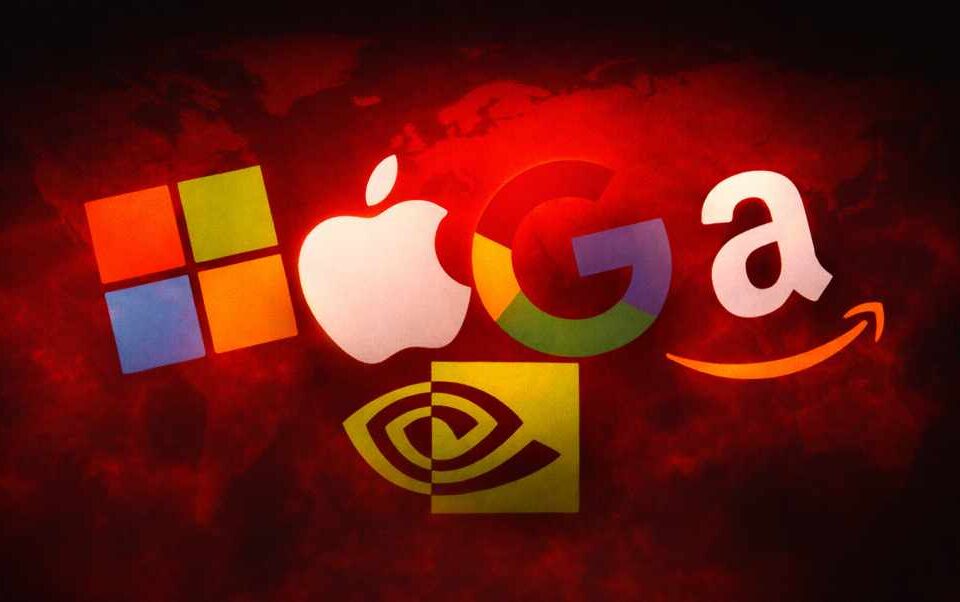
Iran’s Islamic Revolutionary Guard Corps (IRGC) has issued a direct warning to a group of major U.S. companies operating in the Middle East, naming Nvidia, Apple, Microsoft, and Google among what it described as potential targets.
In a message posted Tuesday on a Telegram channel linked to the IRGC, the group said 18 companies would be treated as “legitimate targets” following recent U.S. and Israeli strikes on Iran. The warning carried a specific timeline. Attacks, it said, could begin at 8 p.m. Wednesday in Tehran, which is 12:30 p.m. Eastern time, CNBC reported.
The message did not leave much room for interpretation. Employees working at those companies were urged to leave their offices immediately to protect their lives.
“From now on, for every assassination, an American company will be destroyed,” the group wrote.
From War to Tech: Iran’s IRGC Targets Nvidia, Apple, Microsoft, Google in New Threat Warning
The list extends far beyond Big Tech. It includes Cisco, HP, Intel, Oracle, IBM, Dell, Palantir, JPMorgan Chase, Tesla, General Electric, Boeing, regional firm Spire Solutions, and Abu Dhabi-based AI company G42.
The threat follows a recent wave of attacks that have already hit digital infrastructure. Earlier this month, Iranian strikes targeted AWS data centers in the region, triggering outages across apps and services used in the United Arab Emirates. That incident exposed how quickly geopolitical conflict can ripple through cloud systems that businesses rely on every day.
U.S. tech companies have been investing heavily across the Middle East, drawn by access to energy, land, and governments eager to build out AI infrastructure. Data centers, cloud regions, and AI training hubs have become part of that push. The same footprint now raises new questions about exposure as tensions rise.
Several companies are already responding cautiously. An Intel spokesperson said, “The safety and well-being of our team is our number one priority. We are taking steps to safeguard and support our workers and facilities in the Middle East and are actively monitoring the situation.”
Others have stayed quiet. Microsoft, Google, and JPMorgan declined to comment.
The backdrop to this moment is a conflict that has intensified in recent weeks. U.S. and Israeli strikes on Iran in late February triggered retaliatory attacks across the region. Since then, more than 3,000 drones and missiles have been launched toward the United Arab Emirates, Saudi Arabia, Bahrain, and Kuwait, according to data from the Center for Strategic and International Studies.
The human toll continues to rise. The Human Rights Activist News Agency reports that more than 3,400 Iranian civilians and military personnel have been killed. U.S. Central Command has confirmed 13 American service members have died.
At the political level, signals remain mixed. President Donald Trump said Tuesday that U.S. forces could leave Iran within “two or three weeks,” and the White House confirmed he will address the nation on Wednesday night.
For the tech industry, the situation marks a shift. What started as a regional military conflict is now affecting the infrastructure that underpins cloud computing, AI systems, and global services. The companies named in the IRGC warning are not just corporate brands. They run systems that millions of people and businesses depend on daily.
If those systems become targets, the impact will not stay local.
Trending Now
Top Tech News Today, March 25, 2026