Starcloud raises $170M at $1.1B valuation to launch orbital AI data centers, as demand for compute outpaces Earth’s limits
 Daniel Levi
Posted On March 30, 2026
Daniel Levi
Posted On March 30, 2026
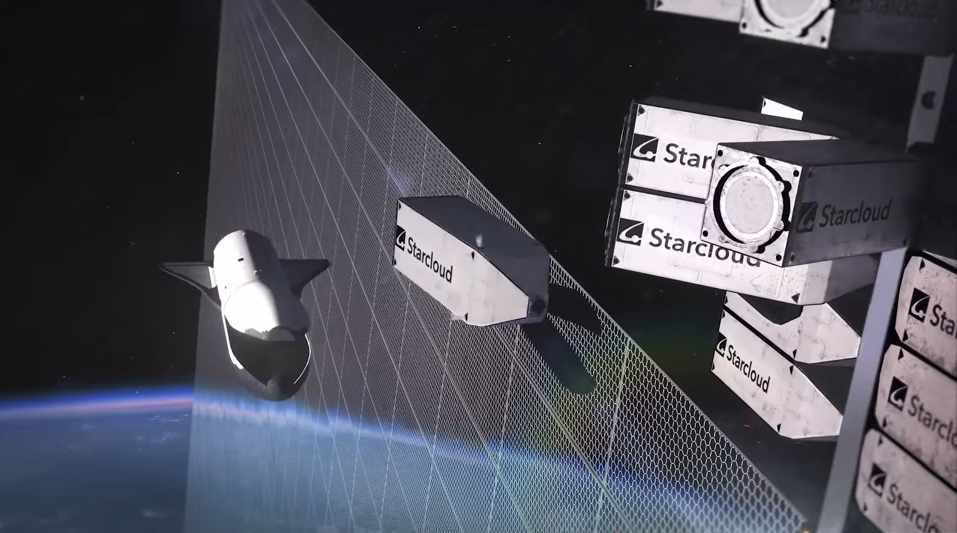
Starcloud has raised a $170 million in Series A funding at a $1.1 billion valuation, hitting unicorn status just 17 months after its Y Combinator demo day.
The Redmond-based orbital AI infrastructure startup is moving fast in a race that’s starting to look less like science fiction and more like the next phase of AI infrastructure. That pace alone would turn heads in Silicon Valley. What’s drawing even more attention is the company’s bet: shifting data centers off Earth and into orbit.
The pitch lands at a moment when demand for AI is colliding with physical limits. Building new data centers on Earth can take years, held back by permitting delays, land constraints, and power shortages. Starcloud is taking a different route—placing compute in low Earth orbit, where solar energy is abundant and continuous.
“The AI revolution is colliding with the physical limits of our terrestrial energy grid. We are quickly running out of places to build new energy projects for data centers on Earth. By moving AI compute to space, we unlock access to unlimited solar power and completely remove the energy bottleneck. This funding allows us to rapidly scale our orbital infrastructure and meet the massive commercial demand for sustainable AI compute.” said Philip Johnston, Co-Founder and CEO of Starcloud.
Starcloud targets AI’s energy bottleneck with orbital data centers
Investors are buying into that vision. The round was led by Benchmark and EQT, with participation from Macquarie Capital, NFX, 776 Ventures, Manhattan West, and others. Benchmark’s Chetan Puttagunta is joining the board, adding another signal that top-tier firms see this as more than a moonshot.
“We believe that we are in the early innings of a decades-long buildout of AI infrastructure,” said Puttagunta. “Starcloud is pioneering a solution to the challenges of scaling AI infrastructure on Earth with orbital data centers. Their extraordinary engineering team has achieved significant technical breakthroughs in power and cooling, as well as innovative advancements in manufacturing processes. Most notably, the great team at Starcloud has reached these milestones while remaining exceptionally capital efficient. We believe their technical rigor and remarkable ambitions will enable them to achieve extraordinary scale.”
The company’s early execution is part of what’s fueling that confidence. With just $3 million in pre-seed funding, Starcloud designed, built, and launched its first satellite, Starcloud-1, in 21 months. That mission, launched in November 2025, checked off several firsts for the industry: deploying an NVIDIA H100 GPU in orbit, running AI training workloads in space, executing inference on a version of Gemini, and completing model fine-tuning off-planet.
Those milestones point to a broader shift taking shape across the industry. As AI models grow larger and more energy-hungry, infrastructure is becoming the real bottleneck. On Earth, hyperscalers are already facing limits tied to grid capacity and land availability. In orbit, those constraints look very different.
Starcloud’s next step is to scale. The company plans to launch Starcloud-2 later this year, featuring what it says will be the largest commercial deployable radiator ever sent to space and a 100x increase in power generation over its first satellite. This second system is expected to handle commercial workloads, including early customers like Crusoe, as well as partnerships with AWS, Google Cloud, and NVIDIA.
According to a Reuters report, the company is already working with partners, including NVIDIA and the cloud units of Amazon and Google. Its next launch, scheduled for October, is expected to carry Amazon Web Services’ AWS Outposts, bringing cloud infrastructure directly into orbit.
The long-term vision is far more ambitious. Starcloud is working toward a massive constellation that could eventually include tens of thousands of satellites, forming a distributed, space-based compute layer. That idea is starting to gain traction beyond a single company. SpaceX, following its acquisition of xAI, has signaled plans for a much larger orbital network, and Blue Origin has explored similar concepts.
Still, the economics remain a question mark. Launch costs remain a hurdle, even as prices trend down. Starcloud believes the math starts to work within the next few years, as launch cadence increases and hardware improves.
For now, the company is focused on execution. The new funding will go into building its next-generation Starcloud-3 satellites, expanding manufacturing, hiring engineers, and locking in future launch contracts.
The bigger picture is coming into focus. AI is pushing infrastructure into territory that traditional systems weren’t built to handle. Starcloud is betting that the solution isn’t just bigger data centers—but a different location entirely.
Trending Now
Top Tech News Today, March 25, 2026