Former U.S. Ambassador Troy Fitrell Joins SAGINT to Lead Global Expansion of Tokenized Critical Minerals and Energy Infrastructure
 Nickie Louise
Posted On March 23, 2026
Nickie Louise
Posted On March 23, 2026
The former top U.S. official for Africa policy joins SAGINT to scale a platform that turns supply chain compliance into tradeable digital assets across global minerals and energy markets
A senior U.S. diplomat who spent three decades at the center of global policy is stepping into a very different arena—one where supply chains, compliance, and capital markets are starting to merge into software.
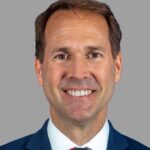
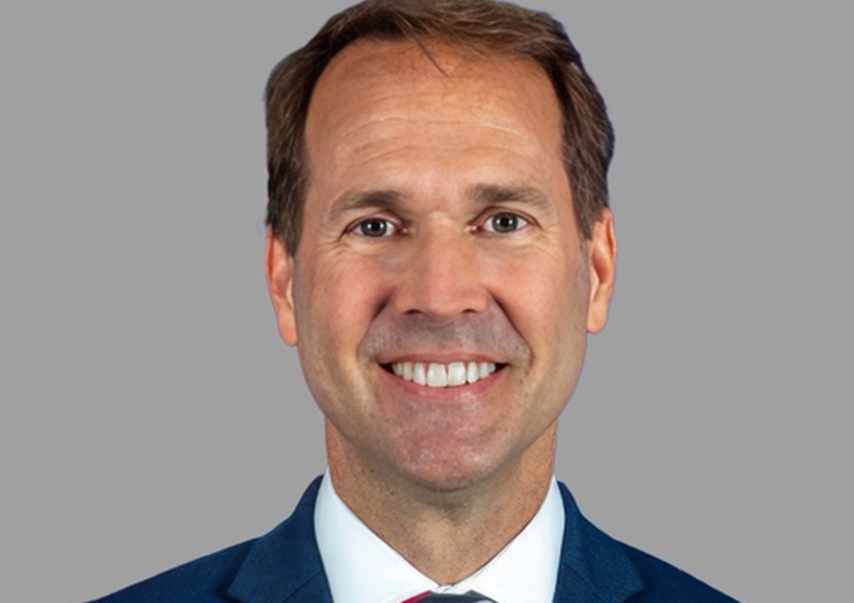
SAGINT Inc. said it has appointed Ambassador (Ret.) Troy Fitrell as Chief Executive Officer of SAGINT International, the company’s global operations arm. The move signals where the company is placing its bet: turning government relationships and policy frameworks into a foundation for scaling its digital asset infrastructure across critical minerals and energy markets.
Fitrell is not a typical corporate hire. He served as the top U.S. official overseeing policy across Sub-Saharan Africa and spent years working at the intersection of diplomacy and commerce. Now he’s being tasked with taking SAGINT’s platform beyond the U.S., working directly with governments, regulators, and institutional partners to bring a new kind of traceability into global supply chains.
SAGINT’s pitch is straightforward but ambitious. The company builds infrastructure that converts compliance into digital assets. Its platform tracks the origin, custody, and regulatory status of materials like minerals and energy resources, then turns that data into verifiable, tradeable records. The goal is to give governments and markets real-time visibility without exposing sensitive information. The system relies on zero-knowledge proof cryptography and is backed by a patent portfolio, positioning traceability as a means of generating value rather than merely satisfying regulators.
“Troy Fitrell is one of the most consequential American diplomats of the last decade,” said Jacob Clayton, Founder and CEO of SAGINT Inc. “He didn’t just represent the United States abroad—he rewrote how America competes commercially across an entire continent. The strategy he built at the State Department is now the playbook. Having him lead SAGINT International means we’re not just building technology—we’re building the relationships, the trust, and the policy architecture that make this technology matter at sovereign scale.”
Fitrell’s career offers a clear throughline. He has spent years working in places where economic interests, political stability, and access to resources are tightly linked. During his time leading the State Department’s Bureau of African Affairs, he oversaw U.S. policy across 49 countries and introduced a continent-wide commercial diplomacy strategy. That effort focused on strengthening American companies’ position in markets where state-backed competitors from China and Russia were already active.
The strategy was rolled out through direct engagement with regional leaders and business groups, including a West Africa commercial diplomacy trip in 2025 and a presentation at the Corporate Council on Africa U.S.-Africa Business Summit. It reflected a shift toward aligning diplomatic engagement more closely with economic outcomes, especially in sectors related to critical minerals and infrastructure.
At the same time, Fitrell played a central role in U.S.-mediated peace talks between Rwanda and the Democratic Republic of the Congo. The negotiations aimed to stabilize a region rich in mineral resources essential to global supply chains. His approach was direct and urgent, captured in his public statement during the process: “There’s no time for delay. If we’re going to make this happen, we need to act now.” The effort helped position the U.S. as a lead mediator and set the stage for more transparent sourcing frameworks—an area closely aligned with what SAGINT is building.
Before that, Fitrell served as U.S. Ambassador to the Republic of Guinea, where he led a multi-agency mission during a period marked by political transition and national crises. Guinea holds some of the world’s largest reserves of bauxite and iron ore, placing it at the center of global resource discussions. His tenure included managing a prison outbreak, responding to a major fuel explosion, and maintaining diplomatic engagement with a military-led government, all while supporting commercial activity and public health initiatives. The Guinean government later awarded him the rank of Commander of the Order of Merit.
His record has earned recognition across multiple areas of government service, including the U.S. Presidential Rank Award for Service and a series of honors tied to commercial diplomacy and labor policy. He holds advanced degrees in national security strategy and international relations and speaks four languages, reflecting the global scope of his work.
Now, that experience is being redirected into a private-sector mission.
“The challenge of our time is ensuring that the critical minerals, energy, and water resources powering the global economy are sourced transparently, traded fairly, and tracked from origin to end use,” said Ambassador Fitrell. “I spent my career building the diplomatic relationships and policy frameworks that enable American companies to compete globally. SAGINT’s technology is the missing piece—it gives governments, industry, and investors the verified, real-time traceability they need to trust the value chain. I’m honored to lead that mission on the global stage.”
As CEO of SAGINT International, Fitrell will oversee global government relations, international business development, and partnerships with sovereign and institutional stakeholders. His role includes guiding market entry across regions outside the United States and working with regulators and multilateral organizations to support the adoption of the company’s infrastructure.
SAGINT is positioning itself at a moment when governments and markets are paying closer attention to how resources move from extraction to end use. Compliance rules are tightening. Supply chains are under scrutiny. At the same time, digital systems are becoming the backbone for tracking and verifying those flows.
The company is betting that turning compliance into a tradable, verifiable asset can reshape how value moves through these systems. Fitrell’s appointment suggests that success may depend as much on policy alignment and international trust as it does on the underlying technology.
Headquartered in Austin, with operations in Washington, D.C., and a growing international footprint, SAGINT is building its case that infrastructure for transparency could become a central layer in global trade. The next phase will test whether that vision can take hold across borders where politics, economics, and resources intersect.
Trending Now
Top Tech News Today, March 25, 2026