China’s “Sputnik” Moment Escalates with DeepSeek V4, Heats Up The AI Arms Race
 Daniel Levi
Posted On March 23, 2026
Daniel Levi
Posted On March 23, 2026
China’s DeepSeek recently hinted at a major new release of its model, which could potentially rival top American models while using significantly less computing resources. The V4 model will focus on multimodal performance, meaning that it can handle not just text but photos, videos, and other media.
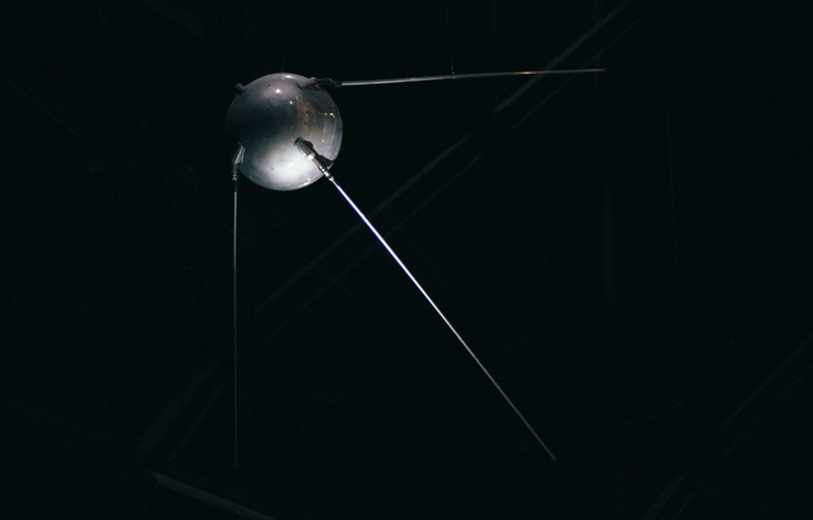
DeepSeek’s launch in early 2025 was considered a “Sputnik moment” because the innovation seemed to come out of nowhere, even as American models such as ChatGPT had taken vast amounts of resources and talent to develop and used massive amounts of compute power in their development and use. The introduction of a near-peer model with a light footprint was game-changing, and the surprise hit US markets hard.
Over the last year, the race stabilized with the new player, but the US models’ monopoly was over. This has developed into a frantic race not just between companies like OpenAI and DeepSeek, but between the US and China over AI dominance. This type of political rivalry has played out before, and, just like the Sputnik moment, the space race between the US and the USSR was a wild, winner-take-all show of force.
For AI, the race is similar in the political ambitions to be at the top of the field. But it’s also different in that there isn’t necessarily a single winner, as the AI developments and innovations have an immediate impact across society. While the space race developed technology like rockets, duct tape, and countless other innovations, these only eventually trickled down into society and industry at large. With AI, businesses can improve workflows, gain insights, or use agents to create a digital workforce, benefiting nearly every industry today.
But what does this escalating AI race mean for the two countries involved, and for the majority of countries that aren’t? And how might one side winning vs. the other affect the average person? The bigger question is: Why do we have yet another arms race between two superpowers, and is this the only way forward? Unlike space technology, AI is a very different technology in that people with few resources can contribute toward innovation, which means that the resources of an entire country might not even be necessary, and decentralized players like the ASI Alliance could help to build a coalition of AI development larger than the US and China combined.
The AI Arms Race: Who Wins?
What is certain about this race is that all sides recognize the importance and promise of AI. During the space race, there were consistent voices arguing that the vast resources could be better spent on the ground to address tangible needs. With AI, there is resistance to its dangers, such as its potential to replace humans, invade privacy, or go off the rails and cause unintended tragedy. Yes, these are all major concerns, but they concern how we use AI, not its potential power. To most people, the power of AI is clear. This makes the arms race that much more interesting, because even if there is concern about your side developing AI, there is even more concern about a rival developing it ahead of you. This has resulted in incredible investment in building AI as quickly as possible and in pursuing AGI (artificial general intelligence).
No matter who “wins”, or develops the more powerful AI models at any given moment, it doesn’t matter so long as both sides are within sight of each other’s results. As long as there is no clear dominance, both sides will develop industry-changing AI that can vastly improve how we solve problems. It cannot be overstated how pervasive this will be, finding applications at all levels of nearly every industry. There will be rapid improvements in design, productivity, automation, medicine, research, manufacturing, delivery, and just about any other function you can imagine. There will also be, however, greater concerns around privacy, mass surveillance, targeted minority groups, the political party in power consolidating even more power, and the military using AI to target its own citizens. Like any other technology, AI isn’t good or evil; it’s a tool used by people who want to do good and evil things with it. The difference is that AI can cause much more benefit (or damage) than most other technologies.
The Third Entrant In The AI Race
While the US and China are pouring massive resources into this, other countries are either supporting one side or seeking to benefit from the AI being developed as a result. However, there is potential for a third entrant in this AI arms race: the decentralized global community. Through blockchain, decentralization has developed in parallel with AI. This could be a coincidence, but it might also be as a response to the concern we are already seeing: mega corporations and governments abusing their asymmetrical power to control and manipulate the population. What might have sounded like a conspiracy theory 10-20 years ago is now another daily headline, with AI being used for all types of illegal and nefarious purposes by the organizations developing it. Looking at the players involved in the current AI race, there is nothing to suggest this race won’t increase these risks. Unlike the space race, however, the growing global community of AI developers can band together and contribute to decentralized AI, which spreads that power across borders, away from corporations, and into the hands of everyone. Currently, the ASI Alliance is leading this charge, though other organizations will likely emerge to contribute to the effort as well (cooperating with ASI rather than competing).
Final Thoughts
The fact is, we are living in wild, unprecedented times. Who knows what incredible AI innovations will emerge in the next year, the next month, the next week? There is reason to celebrate and reason to be deeply concerned. However, there is also a reason to get involved, as decentralized AI provides an option that other types of arms races have never seen: a third option, and one that benefits the many vs. the few.
Trending Now
Top Tech News Today, March 25, 2026