Jeff Bezos in talks to raise $100B AI fund to automate global manufacturing
 Daniel Levi
Posted On March 19, 2026
Daniel Levi
Posted On March 19, 2026
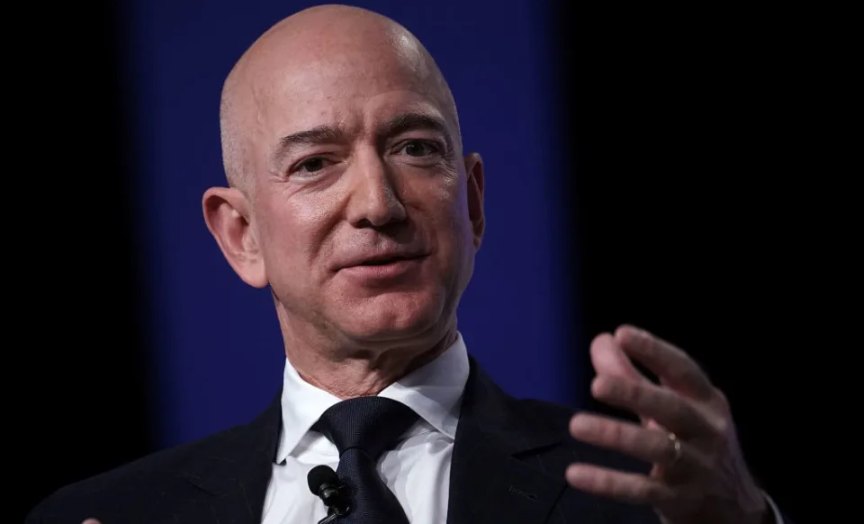
Jeff Bezos is back—and this time, he’s aiming straight at the factory floor.
The Amazon founder is in early discussions to raise a staggering $100 billion for a new AI-focused fund that would acquire manufacturing companies and push them toward automation, according to a report from The Wall Street Journal. If it comes together, the effort could mark one of the largest private-sector bets ever placed on reshaping how physical goods are made.
The fund, described in investor materials as a “manufacturing transformation vehicle,” is expected to target industries like semiconductors, defense, and aerospace. The idea is straightforward: buy traditional manufacturers, inject advanced AI systems, and rebuild operations around automation. The payoff, at least on paper, is higher efficiency, lower costs, and a step-change in output.
“Jeff Bezos is in early talks to raise $100 billion for a new fund that would buy up manufacturing companies and seek to use AI technology to accelerate their path to automation,” The Wall Street Journal (WSJ) reported.
The groundwork for this move has been quietly taking shape. Bezos is already leading a stealth startup called Project Prometheus, launched in late 2025 with $6.2 billion in funding. The company is focused on what insiders describe as “physical AI”—systems that model real-world environments like factories, machines, and supply chains with high precision.
Inside Jeff Bezos’ $100B AI Fund to Digitize and Automate the World’s Factories
Prometheus is not a small experiment. Bezos serves as co-CEO alongside Vik Bajaj, a physicist and former Google X executive. The team includes talent recruited from OpenAI, DeepMind, and Meta, and Blue Origin CEO David Limp recently joined the board. Their core technology centers on digital twins—AI systems that simulate how physical systems behave under different conditions, from material stress to factory layouts.
Earlier reporting by the Financial Times suggested that Prometheus was already exploring a holding company structure to acquire manufacturers disrupted by AI. That vision has now grown into something far larger. The $100 billion target signals an ambition to reshape entire industrial sectors, not just improve them at the margins.
Bezos has been actively pitching the idea to global investors. He has met with major asset managers, traveled to the Middle East to engage sovereign wealth funds, and made stops in Singapore as part of the fundraising effort. Interest appears to be driven by a mix of factors: Bezos’ track record, the promise of proprietary AI systems, and the scale of opportunity in modernizing aging industrial infrastructure.
Some investors see echoes of earlier industrial consolidation waves. J.P. Morgan’s efforts in the late 19th century come up in conversations about how fragmented industries were brought together into dominant players. One backer described the current moment as a rare opening, calling it a “huge buying opportunity” as legacy manufacturers struggle to keep pace with technological shifts.
Bezos has framed the broader AI surge in pragmatic terms. He has compared it to past investment booms, where excess capital led to failures but left behind infrastructure that reshaped entire industries. In his view, the long-term gains will outweigh the near-term shakeout.
That perspective aligns with what’s happening across the manufacturing industry. Companies are already experimenting with automation at scale, driven by labor shortages, rising costs, and supply chain pressures. The next phase centers on physical AI—systems that connect software intelligence with machines, robotics, and real-world operations.
The geopolitical angle is hard to ignore. A fund of this size could strengthen domestic manufacturing in critical areas such as semiconductors and defense, at a time when governments are pushing for greater local production capacity. Bezos brings direct experience here from Amazon’s warehouse automation efforts, now paired with the simulation capabilities being built at Prometheus.
Still, turning this vision into reality won’t be easy. Integrating AI into complex, decades-old factories is a heavy lift. Regulatory scrutiny is likely, especially in sensitive sectors. The impact on jobs remains an open question, as automation continues to reshape traditional roles.
What’s clear is that Bezos is placing a massive bet on the physical economy. After reshaping retail and cloud computing, he’s now setting his sights on manufacturing. If the fund comes together, it could mark the start of a new phase where AI moves beyond software and begins to rewire the industrial base itself.
More details are expected in the coming weeks. For now, the signal is hard to miss: the next major AI battleground is not on screens, but on factory floors—and Bezos wants to lead it.
Trending Now
Top Tech News Today, March 25, 2026