Meta’s former AI chief Yann LeCun’s startup AMI raises $1.03B to challenge the limits of large language models
 Daniel Levi
Posted On March 10, 2026
Daniel Levi
Posted On March 10, 2026

The AI industry is crowded with bold promises. Yann LeCun has spent years arguing that many of them are headed in the wrong direction. Now the longtime artificial intelligence pioneer is putting his own theory to the test.
Advanced Machine Intelligence Labs (AMI Labs), the startup founded by Meta’s former chief AI scientist, announced Tuesday that it raised $1.03 billion at a $3.5 billion pre-money valuation. The funding signals strong investor belief in LeCun’s view that today’s large language models—systems that generate text by predicting the next word—cannot deliver the kind of intelligence required for machines that truly reason about the world.
Investors Back Yann LeCun’s Vision With $1.03B Bet on Post-LLM Artificial Intelligence, Now Valued at $3.5 Billion
The round was co-led by Cathay Innovation, Greycroft, Hiro Capital, HV Capital, and Bezos Expeditions. The deal places the young company among the year’s most heavily funded AI startups, even though the firm is only weeks old.
“Advanced Machine Intelligence Labs, or AMI Labs, has raised over $1 billion in seed funding from investors in the United States, Europe and Asia. Some are familiar names like Jeff Bezos, the founder of Amazon, and Mark Cuban, a minority owner of the Dallas Mavericks basketball team, while others are less recognizable venture capital firms,” The New York Times reported.
LeCun built his reputation as one of the architects of modern AI. His work on deep learning helped shape the technology that drives many of today’s models. He joined Meta in 2013 and founded Facebook AI Research, later known as FAIR, turning the lab into one of the most influential research groups in the industry. He stepped down at the end of 2025.
TechStartups previously reported on LeCun’s plans late last year. In December 2025, we cited a Financial Times report that the Meta AI chief was in talks to raise $586 million for a new artificial intelligence startup at a $3 billion valuation, signaling early investor interest in his vision.
Now he wants to pursue a different path.
In an interview with Reuters, LeCun said AMI aims to develop AI systems capable of reasoning and planning in complex environments. “We want to become the main provider of intelligent systems, regardless of what the application is,” he said.
His argument is straightforward. Large language models learn by analyzing massive amounts of digital text and predicting what comes next. That method can produce impressive chatbots and writing tools. Yet LeCun believes it falls short when machines must interact with the real world.
He said systems trained to predict the next word or pixel cannot develop genuine reasoning abilities on their own. Without a deeper model of how the physical world works, they struggle to plan actions, anticipate consequences, or adapt to unfamiliar situations.
AMI’s approach centers on what researchers often call world models—AI systems that learn internal representations of the environment and use them to plan actions before carrying them out. The concept draws inspiration from how humans and animals learn to interpret the physical world.
The company plans to sell its technology to organizations running complex operations. Early targets include manufacturers, automakers, aerospace companies, biomedical firms and pharmaceutical groups. These industries rely on systems that must operate in dynamic environments, where prediction alone may not be enough.
LeCun sees consumer applications further down the road. One possibility he mentioned involves household robotics. “What consumers could be interacting with is a domestic robot. You need a domestic robot to have some level of common sense to really understand the physical world.”
Another potential application could appear much sooner. LeCun said he has been in discussions with Meta about using the technology in its Ray-Ban Meta smart glasses. “That’s probably one of the shorter-term potential applications,” he said.
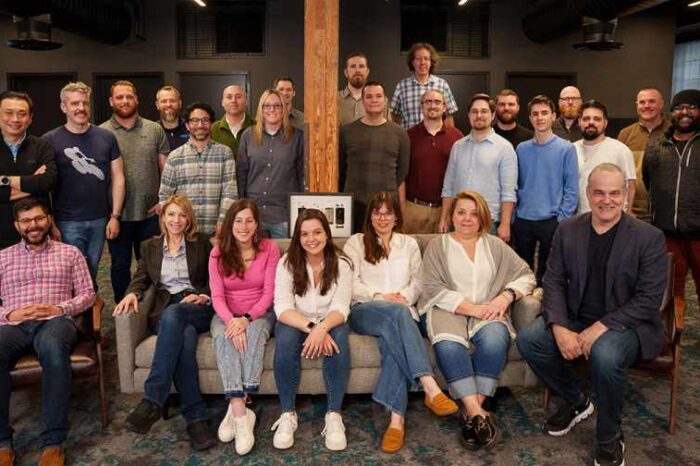
The startup’s leadership includes several former Meta researchers. Alex LeBrun, AMI’s chief executive and a former Meta engineer, said the company will initially operate much like a research lab, exploring ideas that depart from today’s mainstream AI playbook.
“If you try to take robots into open environments — into households or into the street — they will not be useful with current technology,” LeBrun told The New York Times. “We want to help them reach to new situations with more common sense.”
AMI’s early funding round highlights a larger pattern across the AI industry. Investors remain willing to place large bets on experienced researchers, especially those with a track record of shaping the field.
LeCun, now 65, received the Turing Award—the highest honor in computer science—alongside Geoffrey Hinton and Yoshua Bengio for their contributions to deep learning. That work laid the foundation for many of today’s AI systems, including large language models such as ChatGPT.
Yet LeCun has long argued that the industry’s current path has limits.
His new startup represents the most direct attempt yet to prove that claim. If AMI succeeds, it could push AI development in a very different direction—one that focuses less on predicting text and more on building systems that understand and reason about the world around them.
Trending Now
Top Tech News Today, March 25, 2026