U.S. Supreme Court rejects AI copyright case: No human, no copyright
 Daniel Levi
Posted On March 2, 2026
Daniel Levi
Posted On March 2, 2026
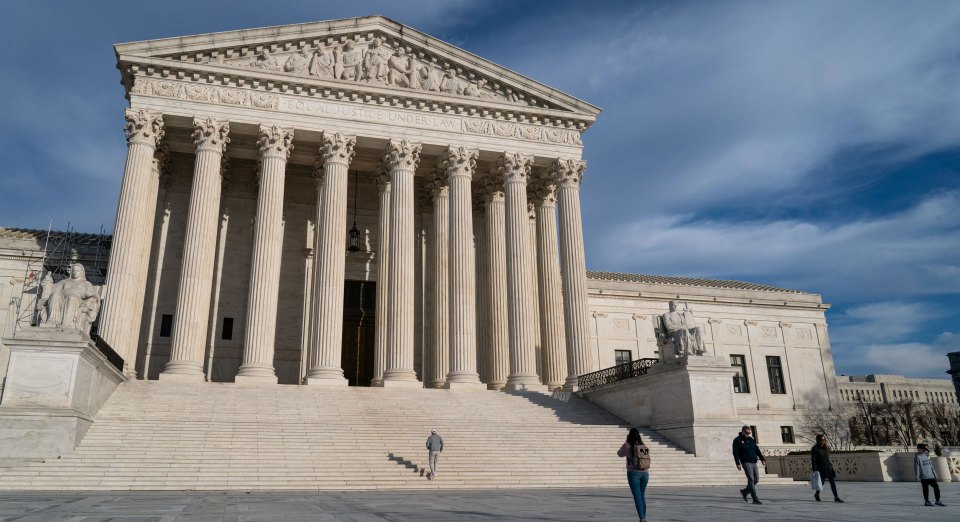
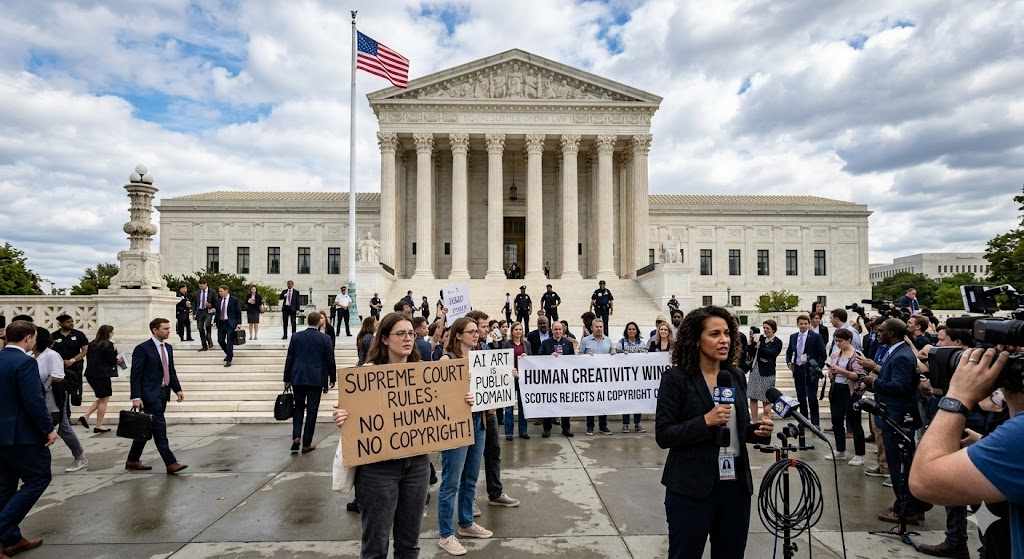
The U.S. Supreme Court just sidestepped one of the biggest legal questions hanging over generative AI. On Monday, the justices declined to hear a closely watched case that asked whether artwork created entirely by artificial intelligence can qualify for copyright protection under U.S. law.
The decision leaves intact lower court rulings that say copyright still requires a human author, delivering a clear signal to developers building fully autonomous creative systems.
“The U.S. Supreme Court declined on Monday to take up the issue of whether art generated by artificial intelligence can be copyrighted under U.S. law, turning away a case involving a computer scientist from Missouri who was denied a copyright for a piece of visual art made by his AI system,” Reuters reported.
Supreme Court Declines to Hear AI Art Copyright Case, Upholds Human Authorship Rule
The case centers on Stephen Thaler, a computer scientist from Missouri who has spent years testing the legal boundaries of machine creativity. Thaler sought copyright protection for a piece of visual art titled “A Recent Entrance to Paradise,” which he said was generated independently by his AI system known as DABUS. The image depicts train tracks leading into a glowing portal surrounded by plantlike forms in green and purple tones.
Thaler first applied for federal copyright registration in 2018. The U.S. Copyright Office rejected the application in 2022, stating that works must have human authors to qualify for protection. Thaler challenged that position in court, arguing that the law should evolve alongside advances in artificial intelligence.
He lost.
A federal judge in Washington upheld the Copyright Office’s position in 2023, writing that human authorship remains a “bedrock requirement of copyright.” The U.S. Court of Appeals for the District of Columbia Circuit affirmed that ruling in 2025, reinforcing the long-standing view that copyright law protects human creativity, not autonomous machine output.
Thaler then took the fight to the Supreme Court, framing the issue as one of growing national importance amid the surge in generative AI. His lawyers warned in court filings that failure to address the question now could slow AI development in the creative industries during a pivotal period.
The justices declined to intervene.
The Biden administration had urged the Court to stay out of the dispute, arguing that the Copyright Act’s language and structure point to human authorship. Government lawyers told the Court that “multiple provisions of the act make clear that the term ‘author’ refers to a human rather than a machine.”
With the Supreme Court stepping aside, that interpretation remains the controlling standard.
The ruling path echoes another defeat for Thaler. In a separate case involving AI-generated inventions, the Supreme Court previously declined to review his argument that machines can be listed as inventors on patent filings. The U.S. Patent and Trademark Office had rejected those applications on similar grounds, reinforcing a consistent position across intellectual property law.
The Supreme Court’s move follows a similar setback for Thaler in the patent arena, reinforcing a pattern in how U.S. law is treating machine-generated work.
The rejection came almost three years after the U.S. Supreme Court declined to recognize patents for AI-generated inventions. In April 2023, TechStartups reported that the nation’s highest court refused to let Thaler move forward with a challenge tied to inventions he said were created by his artificial intelligence system.
According to a Reuters report, Thaler had challenged the U.S. Patent and Trademark Office over its refusal to issue patents for inventions his AI system produced. The justices turned away his appeal of a lower court ruling that patents can be issued only to human inventors, adding that his AI system could not be considered the legal creator of the two inventions he said it generated.
Taken together, the copyright and patent outcomes point to a consistent position across U.S. intellectual property law: human authorship and human inventorship remain the gatekeepers for legal protection.
AI Art Still Can’t Be Copyrighted: Supreme Court Turns Away Landmark DABUS Case
The Copyright Office has taken a similar stance in disputes involving popular image generators. It has rejected several artists’ attempts to claim copyright over works produced with Midjourney when the human contribution was deemed insufficient. Those cases differ from Thaler’s approach. He maintained that DABUS created the artwork entirely on its own, without human authorship.
That distinction sits at the center of the legal tension now facing the AI industry. Tools that assist human creators may still qualify for protection, depending on the level of human input. Fully autonomous systems remain outside the copyright fence.
For startups building generative models, the Court’s move does not close the door forever. It does signal that any major shift will likely have to come from Congress or from a future case with different facts.
For now, the message from U.S. courts remains: copyright law protects human creativity. AI working on its own still has no claim to it.
Trending Now
Top Tech News Today, March 25, 2026