Finland’s quantum computing startup IQM to go public via SPAC at $1.8B valuation
 Nickie Louise
Posted On February 23, 2026
Nickie Louise
Posted On February 23, 2026
Finland’s push into the quantum spotlight is picking up speed. IQM, the Espoo-based quantum computing startup, said Monday it plans to go public through a merger with special-purpose acquisition company Real Asset Acquisition Corp., in a deal that values the company at about $1.8 billion. The combined company is expected to list in New York once shareholder approval and regulatory clearances are secured.
The move would place IQM among the first European pure-play quantum firms to list on public markets, a milestone for a sector that has attracted significant research funding but has so far seen only limited commercial traction. The company said the transaction could close around June, with trading expected soon after. IQM is weighing a secondary listing on the Helsinki Stock Exchange.
TechStartups first covered IQM in 2019, after the Finland-based startup raised $12.6 million to advance quantum computing technology, putting the company on the radar of Europe’s emerging quantum hardware players early.
From Lab to Wall Street: IQM Plans $1.8B Quantum IPO via SPAC
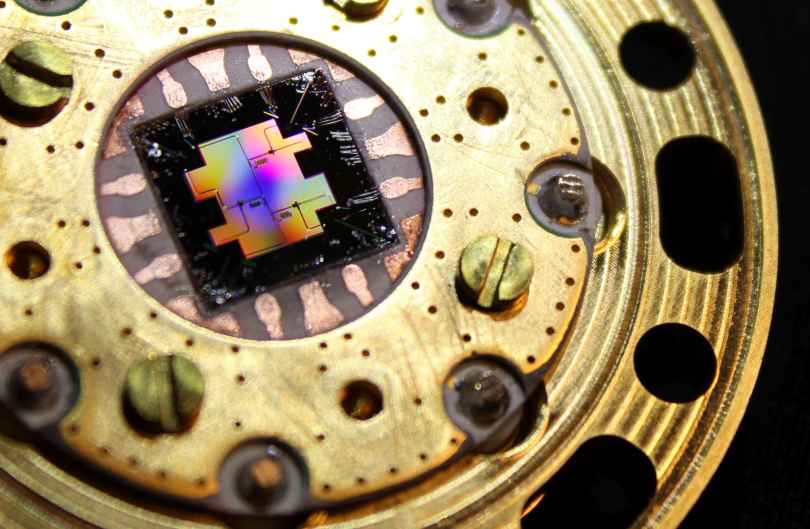
Founded in 2018, IQM focuses on building hardware systems to enable scalable quantum computing. The Espoo-based team has reported progress in thermal management and other engineering areas that affect computational speed and information accuracy, positioning the company as one of Europe’s more visible quantum hardware contenders.
IQM’s founding team came together through research work at Aalto University and Finland’s VTT Technical Research Centre. The founders hold PhDs in quantum physics and specialize in superconducting quantum processors. Both Aalto and VTT have long been recognized for their research in superconducting circuits and quantum technologies, fields that underpin many modern quantum computing efforts.
Superconducting circuits power qubits, the fundamental units that store and process quantum information. These components remain central to the industry’s push toward practical quantum machines.
Through the SPAC deal, IQM could raise more than $300 million in fresh capital from private investment in public equity financing and cash held in RAAQ’s trust account, assuming investors do not redeem their shares before the merger, CNBC reported.
The timing reflects growing investor interest in quantum computing, a field long viewed as promising but commercially distant. The technology aims to perform certain calculations far faster than classical computers, opening potential gains in drug discovery, materials science, and financial modeling.
Commercial reality still lags the ambition. Large-scale, fault-tolerant quantum systems remain under development, and many enterprises continue to treat the technology as experimental. Yet sentiment has shifted in recent months.
“We built IQM from the beginning for one purpose — to put working quantum computers in the hands of the people who will use them to solve real problems. Not someday. Now. Quantum computing is a science project no more. It is an industry where customers own, operate, and build on advanced quantum computers. That’s what IQM makes possible,” Jan Goetz, Co-Founder and Chief Executive Officer, IQM, said:
“Whilst progress has been slow and there have been many challenges, we are starting to see meaningful breakthroughs in the quantum space,” UBS analysts wrote in a January report.
IQM’s leadership argues the industry is moving out of the lab phase. “Quantum computing is a science project no more,” Goetz said. “It is an industry where customers own, operate and build on advanced quantum computers.”
The company reports it has sold 21 quantum systems to 13 customers and generated at least $35 million in unaudited revenue in 2025. Those figures place IQM among a small group of quantum hardware vendors with measurable commercial activity, though the broader market remains early.
Across Europe, competition is intensifying. U.K.-based Quantinuum raised $800 million across two rounds last year, and Spain’s Multiverse Computing secured €189 million in a Series B. Governments are pouring in public money as well. China has committed nearly $18 billion to quantum technology, with the European Union following close behind, according to the European Centre for International Political Economy.
Investors and infrastructure players are already debating how quantum systems will connect with future data center environments. Many in the industry expect hybrid classical-quantum architectures to emerge before fully standalone quantum workloads become common.
IQM’s public-market debut, if completed, will serve as an early test of investor appetite for quantum hardware companies outside the United States. The outcome could shape how quickly other European players consider similar paths to the public markets.
Trending Now
Top Tech News Today, March 25, 2026