Nvidia partners with major Indian VCs, backing 4,000+ AI startups amid $200B data center boom
 Daniel Levi
Posted On February 18, 2026
Daniel Levi
Posted On February 18, 2026
The chip giant expands its IndiaAI push through venture partnerships, sovereign AI support, and infrastructure collaborations as billions pour into the country’s AI ecosystem.
India’s AI ambitions just gained a powerful ally. NVIDIA is deepening its footprint in India, teaming up with some of the country’s top venture capital firms and backing thousands of local startups as billions of dollars pour into AI infrastructure.
In a statement on Wednesday, Nvidia said it is working with major Indian VC firms, including Peak XV Partners, Z47, Elevation Capital, Nexus Venture Partners, and Accel India, to identify and fund promising AI startups across the country. The move places the world’s most valuable chipmaker closer to India’s next wave of founders at a moment when global capital is circling the region again.
“NVIDIA is also partnering with prominent venture capital firms including Peak XV, Z47, Elevation Capital,, Nexus Venture Partners and Accel India to identify and fund promising startups of all stages that are building AI solutions for India and international use. More than 4,000 of India’s AI startups are already part of the NVIDIA Inception program,” Nvidia said in a blog post.
NVIDIA Partners With Indian VCs as Big Tech Pours Billions Into AI Infrastructure
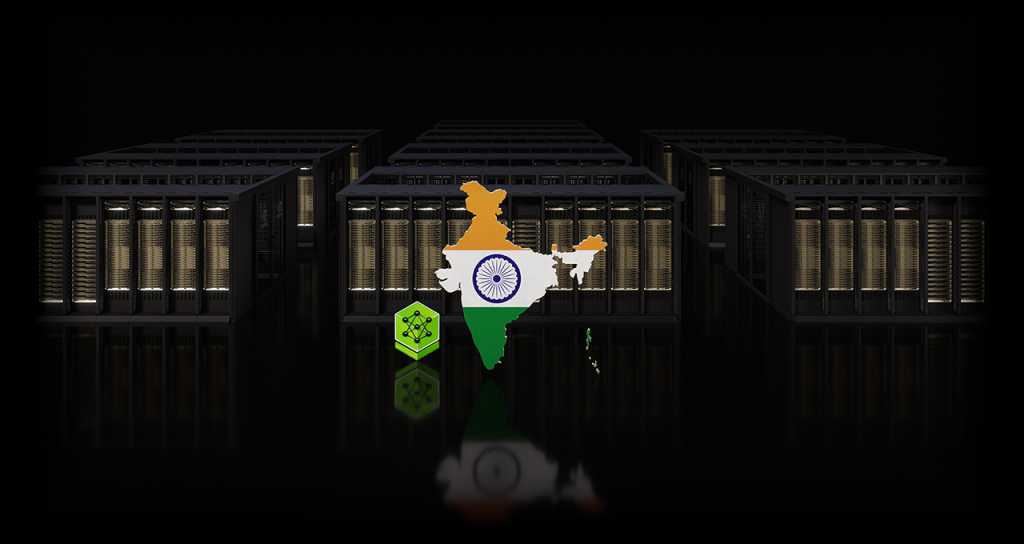
Credit: NVIDIA
India’s startup ecosystem has been regaining momentum, helped by a steady IPO market and rising domestic demand for AI tools across finance, healthcare, logistics, and government services. NVIDIA is positioning itself as a long-term partner in that growth story.
More than 4,000 Indian AI startups have already joined Nvidia’s global startup program, which supports early-stage companies building on its hardware and software stack. The program offers access to technical guidance, development tools, and go-to-market support. For many founders, joining the ecosystem means early access to GPUs and AI frameworks that would otherwise be out of reach.
The announcement comes as India hosts a major AI summit attended by global technology leaders and heads of state. NVIDIA CEO Jensen Huang had been expected to participate but withdrew, citing “unforeseen circumstances.”
The broader backdrop is New Delhi’s push to build sovereign AI capabilities under its “IndiaAI mission.” The goal is clear: develop domestic infrastructure, models, and talent so that core AI systems do not depend entirely on foreign platforms.
Sovereign AI refers to a country’s ability to build artificial intelligence based on its own infrastructure, data, and industry, so that increasingly critical AI systems don’t depend on foreign providers.
India’s government has already approved roughly $18 billion in semiconductor projects as it works to establish a domestic chip supply chain. Prime Minister Narendra Modi has framed AI and semiconductor manufacturing as pillars of India’s bid to become a global technology powerhouse.
NVIDIA’s strategy in India extends well beyond venture partnerships. The company is collaborating with government agencies and research institutions and continuing efforts to help scale domestic data center capacity. A New Delhi official recently said the country expects to attract as much as $200 billion in data center investment over the next few years.
That capital wave is already forming. Adani Group has announced plans to invest $100 billion in renewable energy-powered, AI-ready data centers. U.S. hyperscalers, including Amazon, Microsoft, and Google, have collectively committed more than $50 billion toward AI infrastructure and chips in India, CNBC reported.
On the cloud side, Nvidia has partnered with Indian providers such as Yotta, Larsen & Toubro, and E2E Networks to deploy AI chip clusters and accelerate local data center buildouts. These collaborations give Indian AI startups access to high-performance computing resources without relying entirely on overseas facilities.
NVIDIA is also promoting its “NVIDIA Nemotron models,” a family of AI models that organizations can use to build new chatbots, agents, and speech systems. Indian companies can train these models on local languages and datasets, aligning with the country’s goal of building AI systems grounded in domestic data.
Taken together, Nvidia’s India play looks less like a short-term market expansion and more like a calculated bet on a nation positioning itself at the center of the next AI cycle. With venture capital, government backing, semiconductor subsidies, and hyperscaler commitments converging, India’s AI ecosystem is entering a new phase.
For Nvidia, being embedded at every layer — startups, chips, models, and data centers — may prove just as valuable as selling the hardware itself.
Trending Now
Top Tech News Today, March 25, 2026