Render raises $100M at $1.5B valuation as AI boom fuels cloud infrastructure shift
 Nickie Louise
Posted On February 17, 2026
Nickie Louise
Posted On February 17, 2026
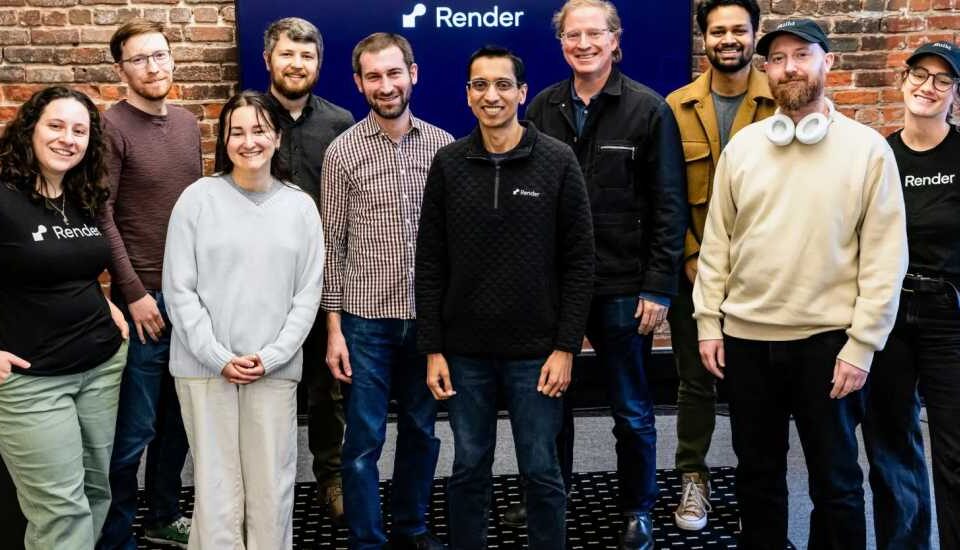
The AI coding surge is minting new winners in cloud infrastructure — and Render just joined the unicorn club.
The San Francisco AI cloud startup said Tuesday it has raised $100 million at a $1.5 billion valuation, doubling down on a bet that developers want simpler ways to deploy software in an era where chatbots can write much of the code for them.
Cloud computing has long been dominated by Amazon, Microsoft, and Alphabet. That balance has started to shift since OpenAI released ChatGPT in 2022. A new generation of companies, including CoreWeave, has built businesses that rent Nvidia GPUs to train AI models. At the same time, millions of developers began generating code with AI tools and asking a different question: where should this software actually run?
Render has become one answer.
AI Coding Boom Pushes Cloud Startup Render to $1.5B Valuation After $100M Round
With more than 4.5 million developers on the platform and over 250,000 new signups each month, Render has become one of the fastest-growing developer platforms globally. Render said the fresh capital infusion will enable the company to scale its infrastructure, invest in new capabilities, and keep up with demand as adoption continues to accelerate.
Anurag Goel, Render’s co-founder and CEO, told CNBC the company’s revenue growth is well above 100%. Founded in 2018, Render now has about 100 employees. Investors backing the company include 01A, Addition, Bessemer Venture Partners, General Catalyst, and Georgian Partners.
“We are going through a generational shift in how developers pick cloud providers,” says Anurag Goel, founder and CEO of Render. “Hyperscalers are no longer the default for teams that want to move fast. AI-assisted coding means developers can build faster than ever, and they need a cloud that can keep up. That’s what Render delivers.”
The pitch is straightforward. Developers want infrastructure that fades into the background. No server wrangling. No DevOps headaches. Just push the code and ship.
Render runs primarily on Amazon Web Services and Google Cloud Platform. Recently, the company began testing its own servers — a move that could reshape its cost structure. Goel described the shift candidly.
“We get more control over the kinds of things we can do, but the cost basis is just very different,” he said.
Owning hardware introduces new exposure. Capacity planning becomes existential. If traffic spikes and servers run short, customers feel it immediately. If the bet works, customers could see lower prices and tighter performance.
Render’s customer list reads like a cross-section of modern internet businesses: Alibaba, CBS, Hodinkee, Paradigm, Shopify, and AI-powered app builder Base44.
Base44’s founder, Maor Shlomo, had previously built on AWS at his earlier startup, Explorium. This time, he wanted less infrastructure overhead.
“I was all by myself, and so I was searching for services that can automate most of the stuff so that I don’t need to deal with infrastructure, even if it will cost slightly more that,” Shlomo said.
He chose Render. After Wix acquired Base44 last June, Shlomo invested in Render himself. He remains both a shareholder and a customer.
“It’s such a great product that we don’t need someone that’s focused only on Render,” he said.
Render’s timing may be working in its favor. Heroku, once the standard for platform-as-a-service, was acquired by Salesforce in 2011 for about $217 million. Earlier this month, Salesforce signaled it was backing away from building new features for Heroku. Developers searching for a mature alternative have taken notice.
“People now know that they’re not going to add new features to it, so they’re looking around for the most mature alternative,” Goel said.
The AI connection runs deeper. OpenAI uses Render. Codex, OpenAI’s coding app, lets users deploy web apps directly to Render. Developers can choose Cloudflare, Netlify, or Vercel instead. Vercel raised capital last September at a $9.3 billion valuation. Goel said some companies, including AI spreadsheet startup Shortcut, have moved from Vercel to Render.
There is another twist. Render has benefited from something no growth team could manufacture.
“Chatbots have effectively, almost singlehandedly, grown our business,” Goel said.
When developers ask ChatGPT where to deploy certain types of applications, Render sometimes appears in the answer. In a market where distribution is everything, AI recommendations have become a new funnel.
The broader cloud giants are not disappearing. OpenAI itself has committed to spending more than $600 billion across Amazon, Cerebras, CoreWeave, Microsoft, and Oracle clouds. Yet a layer is forming above that infrastructure — platforms that simplify deployment for the AI-native developer.
Render’s latest funding round suggests investors believe that layer could be worth billions.
Trending Now
Top Tech News Today, March 25, 2026