China’s humanoid robots perform flawless Kung Fu at the 2026 Spring Festival Gala
 Nickie Louise
Posted On February 16, 2026
Nickie Louise
Posted On February 16, 2026
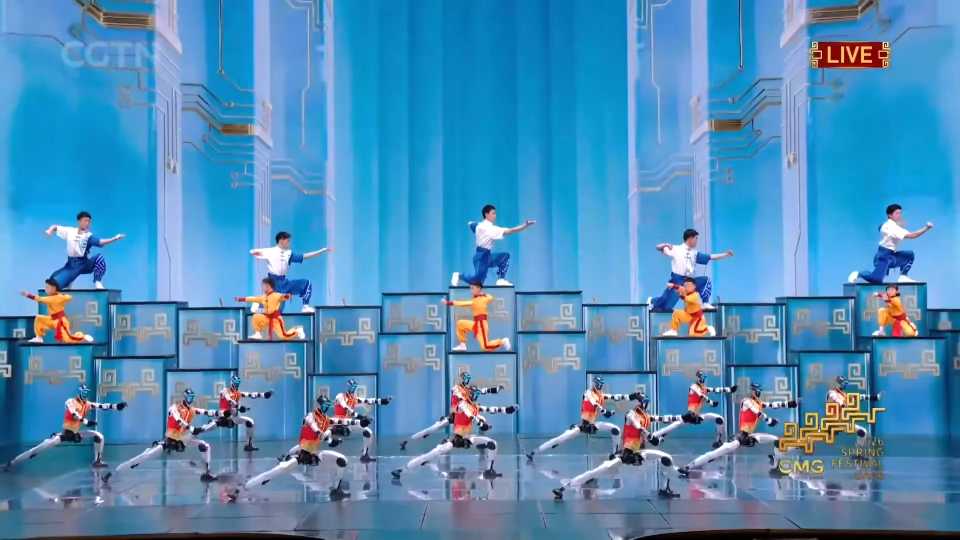
If you still think Silicon Valley owns the future of robotics, China just made its counterargument in prime time. On February 16, 2026, during the annual Spring Festival Gala broadcast by China Media Group, humanoid robots stepped onto the country’s most-watched stage and performed synchronized Kung Fu routines alongside children. For hundreds of millions of viewers, it wasn’t a lab demo. It wasn’t a teaser clip. It was national television.
Often compared to the Super Bowl for its scale and cultural weight, the gala has long been a showcase of music, comedy, and tradition. This year, it became something else: a live demonstration of embodied AI in motion.
China’s humanoid robots take center stage at 2026 Spring Festival Gala
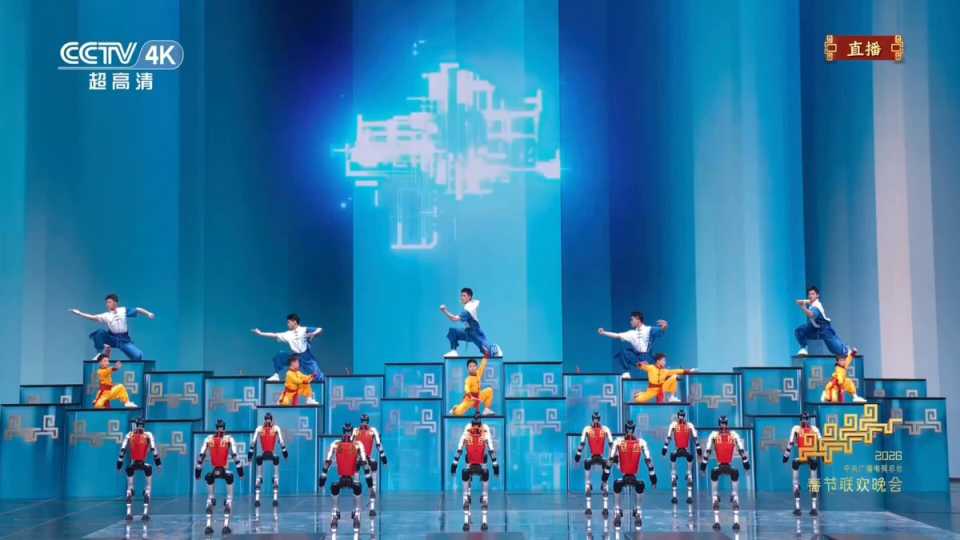
More than a dozen humanoids from Unitree Robotics delivered tightly synchronized martial arts sequences, complete with weapon work, dramatic stances, and the wobble-and-recover movements of drunken boxing. The robots wore traditional attire. They handled swords, poles, and nunchucks in close-quarters choreography. They fell. They recovered. They kept time.
Online reaction was swift. Commentators called the execution “flawless” and described it as a world-first display of fully autonomous cluster martial arts, featuring rapid movements.
This wasn’t a one-off moment staged for shock value. Earlier in February, compact humanoids from AgiBot, including the Lingxi X2 model, were filmed training Kung Fu forms alongside monks at the Shaolin Temple. The footage showed robots mirroring stances, palm strikes, and flowing combinations rooted in more than a millennium of tradition. It wasn’t perfect. It didn’t need to be. The signal was clear: these systems are learning complex, full-body motion in dynamic environments.
The gala spotlight extended beyond Unitree. Galbot appeared in the broader program lineup. Noetix joined a comedy sketch with human actors. MagicLab performed synchronized dance routines. The year before, Unitree robots twirled handkerchiefs in unison. This year, they wielded weapons.
Behind the spectacle sits scale. China produced roughly 90 percent of the world’s 13,000 humanoid robots shipped last year. Analysts expect that figure to climb past 28,000 units in 2026. State backing has played a visible role. President Xi Jinping has met with robotics founders in recent months, and appearances on the gala stage often translate into contracts, capital, and accelerated adoption.
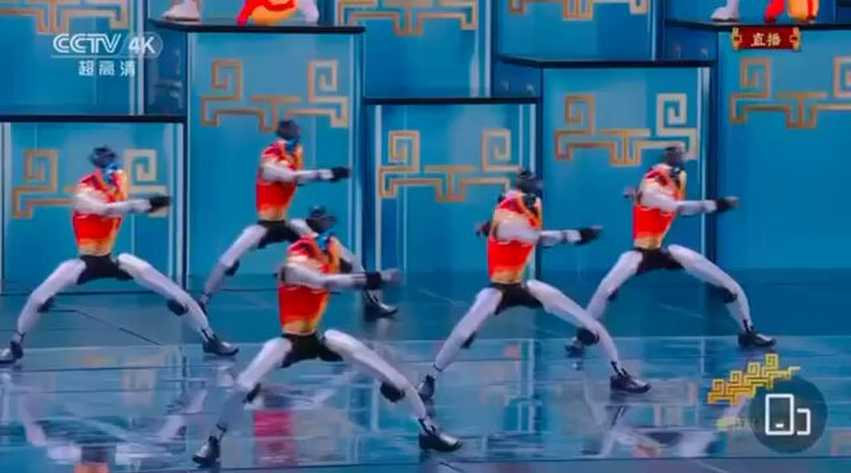
Beijing-based tech analyst Poe Zhao framed the strategy this way: “Humanoids bundle a lot of China’s strengths into one narrative: AI capability, hardware supply chain, and manufacturing ambition.” Robotics consultant Georg Stieler pointed to the direct line between industrial policy and prime-time exposure, calling the rewards “tangible.”
For global observers, the martial arts display wasn’t just entertainment. It highlighted advances in balance recovery, motion planning, perception, and reinforcement learning. A robot that can execute a spinning strike, recover from a shove, and coordinate with a dozen peers on stage carries skills that extend far beyond performance. Those same capabilities matter in factories, logistics centers, elder care facilities, and hazardous industrial sites.
Companies such as Unitree and AgiBot are already signaling plans for mass production and public listings. That puts them in direct comparison with projects like Tesla Optimus, which has drawn global attention but has yet to appear in a similarly public, synchronized demonstration of this complexity.
The viral clips tell a simple story: humanoid robots are moving past carefully staged lab walks. They are punching, spinning, coordinating, and recovering in real time under broadcast lights.
The deeper story is about narrative control. By placing embodied AI at the center of its most important annual television event, China signaled that humanoids are not a side project. They are part of a national industrial arc.
Whether that momentum translates into global dominance remains an open question. What is no longer in question is visibility. The robots didn’t just perform. They performed for the largest audience available.
And that changes the conversation. Below is a video of China’s humanoid robots in action.
Trending Now

Top Tech News Today, March 25, 2026