Matia raises $21M Series A to unify data infrastructure for AI production
 Nickie Louise
Posted On February 10, 2026
Nickie Louise
Posted On February 10, 2026

AI workloads are moving from experiments to production, and the data stacks behind them are being tested in real time. That shift is driving a new wave of infrastructure spending, and Matia is one of the companies catching it early.
Today, Matia announced a $21 million Series A led by Red Dot Capital, bringing its total funding to more than $31 million. Existing backers Leaders Fund, Secret Chord Ventures, Cerca Partners, Caffeinated Capital, and Caffeinated Capital joined the round, alongside a group of angels that includes executives from Ramp, CyberArk, Upwind, Toyota, and other data-heavy organizations.
The new capital will go toward product development and go-to-market as demand grows for data platforms that can keep up with production AI systems. Matia says demand for its unified data operations platform has surged as engineering teams look to replace fragmented tools with systems that can withstand production pressure.
That demand is showing up in usage, not slide decks. Since its seed round last October, Matia has grown more than tenfold. Teams at Ramp, Lemonade, Drata, Recharge, and HoneyBook now run core data pipelines on the platform, treating them as production systems rather than background plumbing.
Founded in 2023 by brothers Benjamin Segal and Geva Segal, Matia is a Miami-based data operations startup that brings data ingestion, reverse ETL, observability, and cataloging into a single platform built for AI workloads.
With $21M Series A Funding, Matia Aims to Replace Fragmented Data Stacks for the AI Era
The pitch is simple: stop stitching together tools that were never built to share context. Matia combines data ingestion, observability, cataloging, and reverse ETL into one system, built to be run day-to-day by engineers who need to trust what their data is doing in real time. As AI workloads move closer to customers and revenue, broken pipelines stop being an inconvenience and start becoming outages.
“Data engineering is entering an AI-native era, but AI depends on trusted data, system-wide context, and a developer experience teams can actually work with,” said Benjamin Segal, co-founder and CEO of Matia. “Matia delivers an AI-ready data layer in one unified platform, replacing fragmented point solutions that lack context.”
The shift Segal points to is visible across modern data teams. Early stacks favored best-of-breed tools, each solving a narrow task. That approach created handoffs, blind spots, and escalating costs as companies scaled. Matia’s customers say consolidation is paying off. Companies moving multiple tools onto the platform report up to 78% lower total cost of ownership, along with faster data syncs and fewer reliability issues. Some report performance gains of up to 80% after switching.
Investors see that traction as a signal that the data stack is changing shape. “Matia isn’t just improving the data stack – they’re redefining it,” said Danielle Ardon Baratz, partner at Red Dot Capital Partners. “Matia stands out by consolidating critical data functions into a single platform that actually reduces operational overhead. The speed of their growth and the caliber of their customers show they’ve hit real product-market-fit, and we’re excited to support them as they bring AI-driven automation to data operations.”
For teams running models in production, reliability now carries the same weight as application uptime. “At our scale, data reliability matters as much as application reliability,” said Ofir Ventura, Data & ML Manager at Lemonade. “Matia has helped our teams streamline how we move and operate data by providing a single platform we can run day to day as our data needs continue to grow.”
The company plans to push further into automation. Matia is building an AI data engineer that can handle tasks like pipeline creation, anomaly detection, and impact analysis with minimal manual intervention. The idea is to let smaller teams operate data systems with the same confidence once reserved for companies with large platform groups.
Matia’s bet is straightforward: as AI shifts from demos to production systems, data platforms must behave like infrastructure, not experiments. The Series A gives the company more room to prove that unified systems, rather than sprawling stacks, are how modern data work actually gets done.
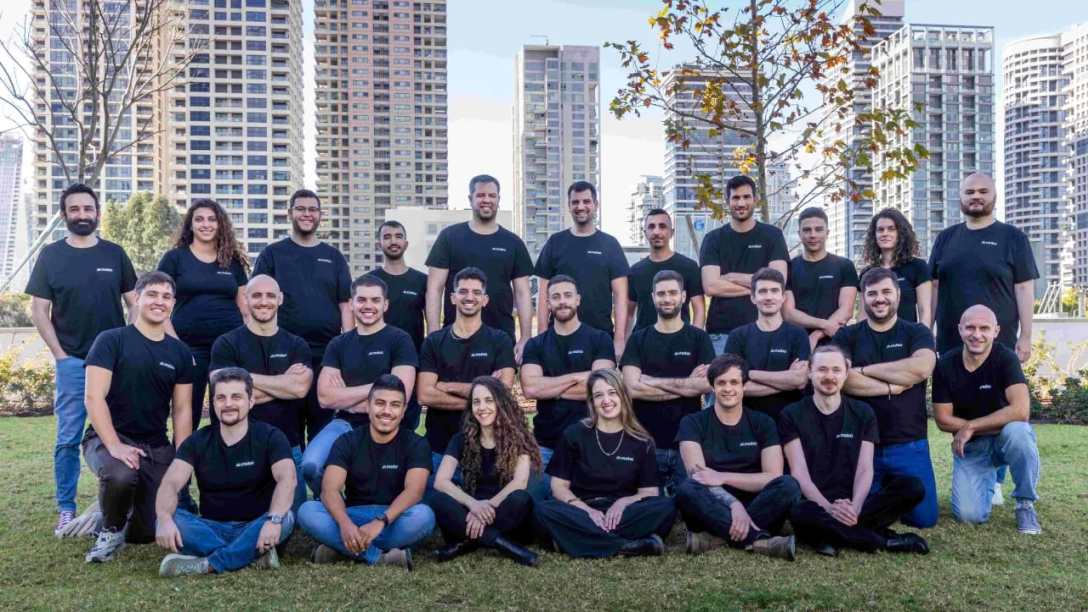
Matia Team
Trending Now
Top Tech News Today, March 25, 2026