Binance, whose founder was pardoned, now holds 87% of Trump’s stablecoin USD1
 Daniel Levi
Posted On February 10, 2026
Daniel Levi
Posted On February 10, 2026
Fortune’s investigation details the unusually high concentration of USD1 at Binance and the conflict-of-interest questions it raises.
Binance did not quietly become the dominant holder of a Trump-linked stablecoin. It happened in plain sight, through promotions, transfers, and a sequence of deals that now place the world’s largest crypto exchange at the center of a politically sensitive financial structure.
According to a Fortune investigation, Binance now holds roughly 87% of USD1, a stablecoin issued by World Liberty Financial, a crypto venture tied directly to President Donald Trump and his family. That share translates to about $4.7 billion of the token’s $5.4 billion circulating supply, a level of concentration that stands out even in an industry known for opaque balances and uneven liquidity.
“Between its own wallets and its users’ accounts, Binance holds approximately 87% of all USD1 in circulation—roughly $4.7 billion of the $5.4 billion total supply—the highest concentration at any third-party exchange among the top 10 stablecoins by market cap as of Monday, according to a Forbes analysis of data from Arkham Intel, a blockchain analytics platform,” Fortune reported.
The figure comes from an analysis of blockchain data provided by Arkham Intel, which shows USD1 sitting across Binance-controlled wallets and customer accounts. No other major stablecoin tracked among the top ten by market value shows anything close to this level of reliance on a single third-party exchange.
World Liberty Financial launched USD1 earlier this year, pitching it as a dollar-backed stablecoin meant to trade one-to-one with the U.S. dollar. Like other stablecoins, its business model rests on investing the cash reserves backing the token, largely in U.S. Treasuries and money market instruments, and keeping the yield. With rates hovering near 3.6%, the economics scale quickly when billions are involved.
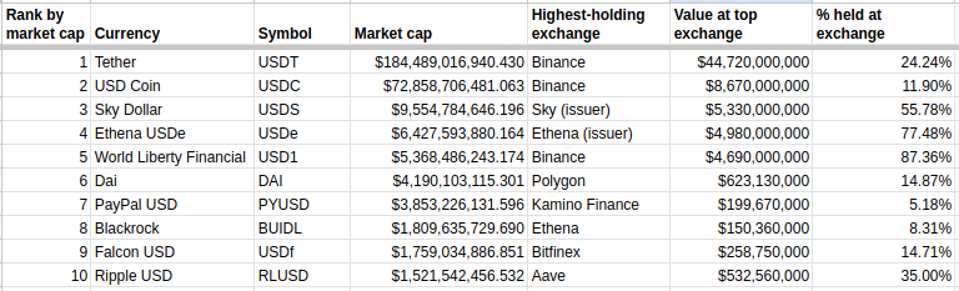
Binance’s Usd1 Holding Stands Out Among Top Stablecoins (Credit: Fortune)
An LLC affiliated with Trump and his family owns about 38% of World Liberty Financial. That stake gives the former president and his relatives a direct financial interest in the stablecoin’s growth. Trump reported earning $57.4 million from the venture on his most recent financial disclosure, with estimates suggesting the project has added roughly $1 billion to his net worth.
“It’s rare to see @heyibinance highlight a project,” World Liberty Financial co-founder and COO Zak Folkman wrote on X shortly after the promotion was announced.
Binance’s role deepened through a series of moves that more tightly tied USD1 to the exchange’s internal systems. In December, World Liberty Financial said Binance would convert the reserves backing its winding-down BUSD stablecoin into USD1, making the token part of Binance’s updated collateral structure. Months earlier, Binance had rolled out aggressive promotions for USD1 holders, including a campaign offering $40 million worth of World Liberty Financial’s governance token, $WLFI.
Two days after that promotion was announced, blockchain data shows World Liberty Financial transferring roughly that amount of $WLFI to Binance. The timing caught the attention of outside researchers tracking token flows and exchange behavior.
Molly White, an independent crypto researcher, told Fortune the concentration is unusual, though “not terribly surprising given Binance’s USD1 promotions,” which she described as the most generous she has seen. She added that there is “at least theoretical risk” when a token is concentrated on a single exchange, citing scenarios in which assets could become stuck in legal disputes or insolvency proceedings. The structure, she said, gives Binance “some degree of leverage” over World Liberty Financial, especially if part of the 87% reflects assets owned by the exchange rather than held for customers.
After Trump Pardon, Binance Emerges as Dominant Holder of Trump-Backed Stablecoin
Binance rejected the idea that its involvement goes beyond standard exchange activity. The company told Fortune that “it is not uncommon for large exchanges to hold large amounts of certain tokens,” and said there is no link between the USD1 promotions and the October pardon of its co-founder and former CEO, Changpeng “CZ” Zhao. Zhao pleaded guilty in 2023 to failing to maintain an effective anti-money laundering program and stepped down as part of a settlement with U.S. authorities. President Trump pardoned him last October.
World Liberty Financial echoed that stance. A spokesperson called the promotions “standard practice” and said any suggestion that Binance can influence the company is “patently false,” comparing the listing to a consumer brand being “happy to have shelf space at Walmart.”
The political backdrop adds weight to the numbers. Binance remains barred from serving U.S. customers under the terms of its 2023 settlement with the Treasury Department. That means most of the USD1 held on the exchange should belong to users outside the United States, assuming compliance rules are followed. Data from Arkham shows that Binance’s U.S. affiliate holds just $1,119 in USD1.
“Any implication that Binance can exert control or influence over World Liberty Financial is patently false,” World Liberty Financial spokesperson David Wachsman told Forbes, likening the Binance listing to consumer brands being “happy to have shelf space at Walmart.” Wachsman added that the company has run similar promotions on other exchanges. A Binance spokesperson said the exchange’s role with USD1 is “limited to standard listing, infrastructure, and market-access services that we provide to a wide range of projects on consistent terms,” adding that it employs “robust risk management measures” to maintain a “secure and stable trading environment.”
Regulatory pressure around Binance has eased since Trump returned to office. In 2025, the Securities and Exchange Commission dropped its lawsuit against the exchange just days after USD1 was first listed. The timing raised eyebrows among former regulators. Corey Frayer, who served as a senior adviser on crypto markets to the SEC chair during the Biden administration, told Fortune the concentration “suggests that USD1 was never meant to be a real stablecoin,” framing it instead as a mechanism to channel money tied to Trump. He pointed to Binance’s past run-ins over wash trading allegations and said, “We actually don’t know who controls those other accounts.”
Binance’s lawyers have denied those allegations, and the case was formally closed after the SEC dropped it.
The international dimension adds another layer. In May, World Liberty Financial said MGX, a state-backed Abu Dhabi fund, would use $2 billion worth of USD1 to invest in Binance. The move effectively placed a large share of USD1 reserves with the stablecoin’s own custodian, lifting both the token’s market value and the interest income flowing back to its owners. MGX said it chose USD1 for business reasons tied to its backing assets and compliance record, even though the stablecoin had just launched.
By September 2024, World Liberty Financial was presenting itself as “pioneering a new era of Decentralized Finance.” Its leadership roster lists Trump as co-founder emeritus alongside Donald Trump Jr., Eric Trump, and Barron Trump. Corporate filings confirm Trump retains control over his broader business empire through a revocable trust, with Donald Trump Jr. acting as trustee.
Why Binance Holding 87% of Trump’s USD1 Stablecoin Is Alarming Crypto Watchdogs
Scrutiny intensified again after the Wall Street Journal reported that Eric Trump signed a deal in January to sell a 49% stake in World Liberty Financial to associates of Sheikh Tahnoon bin Zayed Al Nahyan for $500 million. Tahnoon chairs MGX and holds senior roles across multiple UAE investment entities. The deal placed two of his associates on World Liberty Financial’s board. Rep. Ro Khanna later launched a congressional inquiry into whether the transaction influenced U.S. policy decisions tied to AI chip exports.
For now, the structure remains intact. USD1’s supply sits overwhelmingly on Binance. The exchange continues to promote the token. World Liberty Financial continues to earn yield on its reserves. What remains unresolved is how much of that $4.7 billion belongs to Binance and how much is held on behalf of customers. Rep. Khanna has set a March 1 deadline for records tied to the venture.
Whether the concentration holds after Binance’s latest promotion ends later this month may offer the next signal.
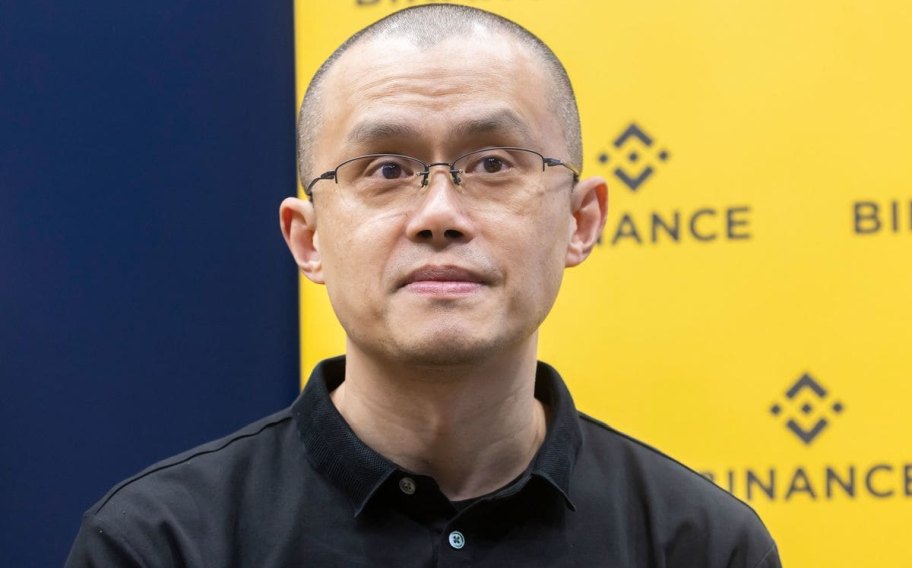
Binance Founder: Changpeng “CZ” Zhao
Trending Now
Top Tech News Today, March 25, 2026