Alphabet’s Waymo raises $16B at $126B valuation as robotaxi expansion accelerates
 Nickie Louise
Posted On February 3, 2026
Nickie Louise
Posted On February 3, 2026
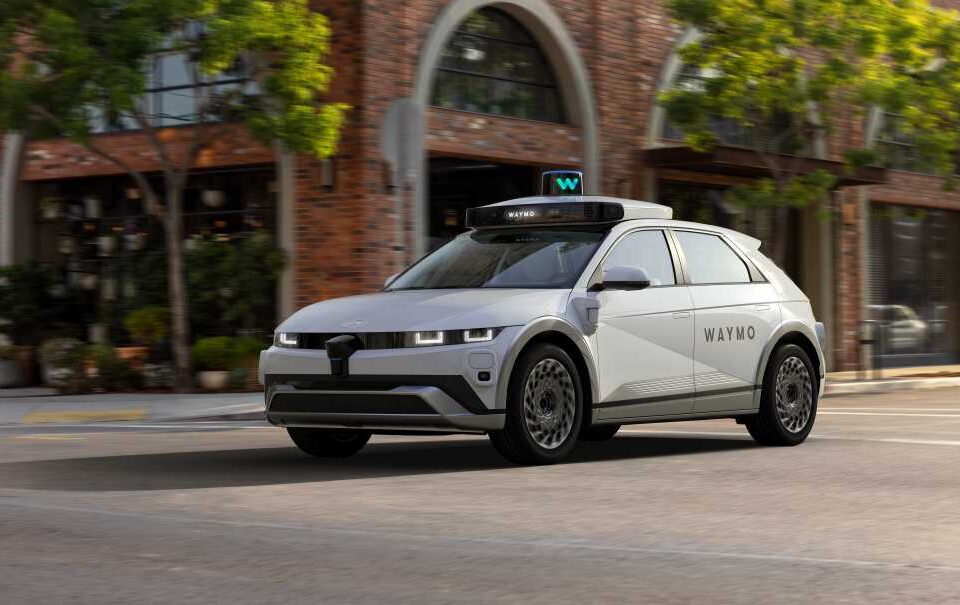
Alphabet just made its biggest bet yet on autonomous driving, and the market is paying attention.
Waymo, Alphabet’s self-driving car unit, said Monday it raised a $16 billion funding round that values the company at $126 billion post-money, a sharp jump that places it among the most valuable private technology companies in the world. The round underscores how investor focus has shifted from self-driving research to commercial scale, with real passengers, real cities, and real revenue on the line.
The raise arrives only two months after The Information reported that Waymo was already in talks to secure more than $10 billion at a valuation near $100 billion. The final number landed well above that. It also more than doubles Waymo’s valuation from its previous funding round in October 2024, when the company raised $5.6 billion at a $45 billion valuation. At the time, Alphabet committed $5 billion as part of a multiyear investment plan.
“This milestone is built on a foundation of safety that is now statistically superior to human driving,” Waymo co-CEOs Tekedra Mawakana and Dmitri Dolgov wrote in a blog post. “We are no longer proving a concept; we are scaling a commercial reality.”
Waymo’s $126B Valuation Shows How Big the Autonomous Driving Bet Has Become
Alphabet led the new round and remains Waymo’s majority investor. Returning backers include Andreessen Horowitz, Fidelity, Perry Creek, Silver Lake, Tiger Global, and T. Rowe Price. New investors joining the cap table include Dragoneer Investment Group, DST Global, Sequoia Capital, Kleiner Perkins, and Alphabet-owned investment firm GV. The size and mix of the investor group reflect broad confidence that autonomous ride-hailing has moved past its experimental phase.
Waymo says the fresh capital will enable a faster market rollout while maintaining safety standards. The company already operates paid robotaxi services in Austin, the San Francisco Bay Area, Phoenix, Atlanta, Los Angeles, and Miami, where service began in January. In 2025 alone, Waymo delivered 15 million trips, a figure few rivals can match.
Next year, the company plans to launch in Dallas, Denver, Detroit, Houston, Las Vegas, Nashville, Orlando, San Antonio, San Diego, and Washington, D.C., with London slated as its first international market. That expansion would push Waymo deeper into major urban centers, testing how well driverless systems perform outside early pilot cities.
The pace has not been without friction. In December, Waymo issued a software recall after Texas officials said its vehicles illegally passed stopped school buses at least 19 times since the start of the school year. Last month, a Waymo vehicle struck a child near an elementary school in Santa Monica, California. The incident remains under investigation by the National Highway Traffic Safety Administration, a reminder that safety scrutiny only intensifies as autonomous fleets grow.
Waymo began as Google’s self-driving car project before Alphabet spun it out as a standalone unit in 2016. Nearly a decade later, it stands out clearly in the U.S. market. Waymo remains the only company running paid robotaxi services at scale without safety drivers or in-car attendants. Its fleet now exceeds 2,500 vehicles operating across select regions.
The timing of the raise highlights how sharply sentiment has shifted around autonomy. Elon Musk said this week that Tesla has begun testing robotaxis without safety monitors in the front passenger seat, a step closely watched by investors. A large portion of Tesla’s $1.53 trillion market value rests on confidence in its self-driving roadmap and long-term robotics plans.
Alphabet, with a market capitalization of roughly $3.73 trillion, has the balance sheet to anchor Waymo’s next phase. A valuation north of $100 billion signals that autonomous mobility is no longer a distant vision. It is now a high-stakes commercial race, with global expansion, regulatory pressure, and competitive momentum all converging.
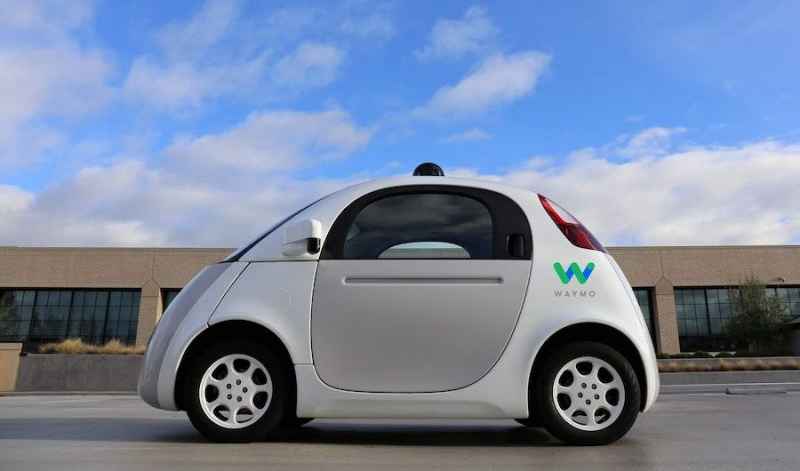
Waymo
Trending Now
Top Tech News Today, March 25, 2026